
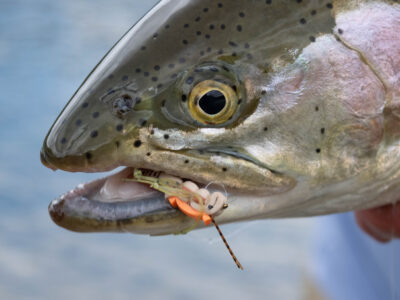
There’s a window every summer on the Missouri River where the dry fly fishing gets loud. Not technical. Not precise. Hoppers start showing up on the water in July and the fish, especially the big browns take advantage. If you’ve never slapped a foam hopper tight against a grassy bank and watched a 20-inch brown come up and eat it, put it on your list. It’s one of the most fun ways to prospect for trout on the Missouri, big fly, aggressive eat, and you never quite know what’s going to come up.
Hopper fishing the Missouri River runs July through September. That’s your window. The heat is on, the river is low and clear, and grasshoppers are doing what grasshoppers do, jumping, flying, and occasionally landing in the drink. When they do, the trout are waiting.
Where to Fish Hoppers on the Missouri River
Hoppers produce best in broken, shallow water. Think riffles, choppy runs, and the edges where current pushes against grassy banks. The fish don’t have long to decide, they see the fly, they eat it, or they don’t. That aggression is part of what makes hopper fishing so addictive.
My favorite float for hopper season is Mid Canyon to Pelican Point. This stretch has everything you want, good bank structure, grassy edges, broken water, and fish that haven’t seen as much pressure as the sections closer to Craig. If you can only do one float during hopper season, that’s the one.
Cast tight to the bank. I mean tight. If you’re not occasionally clipping the grass you’re not close enough. The fish are holding right against the edge waiting for something to fall in. A hopper that lands three feet off the bank in open water doesn’t generate nearly the same response as one that lands with a plop right in the feeding lane.
The Hopper-Dropper Rig
Most of the time when hopper fishing the Missouri River I’m fishing the hopper as the top fly with a nymph trailing off the bend. The hopper floats high, acts as a strike indicator, and catches fish on its own. The dropper catches the fish that aren’t quite willing to come to the surface but are feeding just below it.
My go-to droppers during hopper season are small Pheasant Tails, Tailwater Tinys, Zebra Midges, Little Green Machines, and small crayfish. Keep the dropper short, 18 to 24 inches off the bend. Longer than that and you lose the tight presentation you need when you’re fishing close to the bank.
Don’t ignore the hopper eat to focus on the dropper. When a big brown comes up for the foam fly the take is usually unmistakable, but give it a half second before you set. Trout sometimes miss on the first swipe and come back for it. Patience pays.
Missouri River Hopper Patterns
Not all hoppers are created equal on the Missouri. The fish here see a lot of flies and a realistic profile matters more than it does on some rivers. These are the patterns I reach for first.
Morrish Hopper My go-to. The Morrish Hopper has the right silhouette, rides well in broken water, and has those rubber legs that just move right. The more beat up it gets the better it seems to fish. I keep several in tan and olive. If I’m only throwing one hopper pattern on the Missouri this is it.
More or Less Hopper The More or Less is a deadly pattern on the Missouri, especially in peach and purple. Don’t let the colors throw you. Fish don’t see color the way we do and these non-traditional colors flat out produce. Peach is my first call on bright days, purple works surprisingly well on overcast ones.
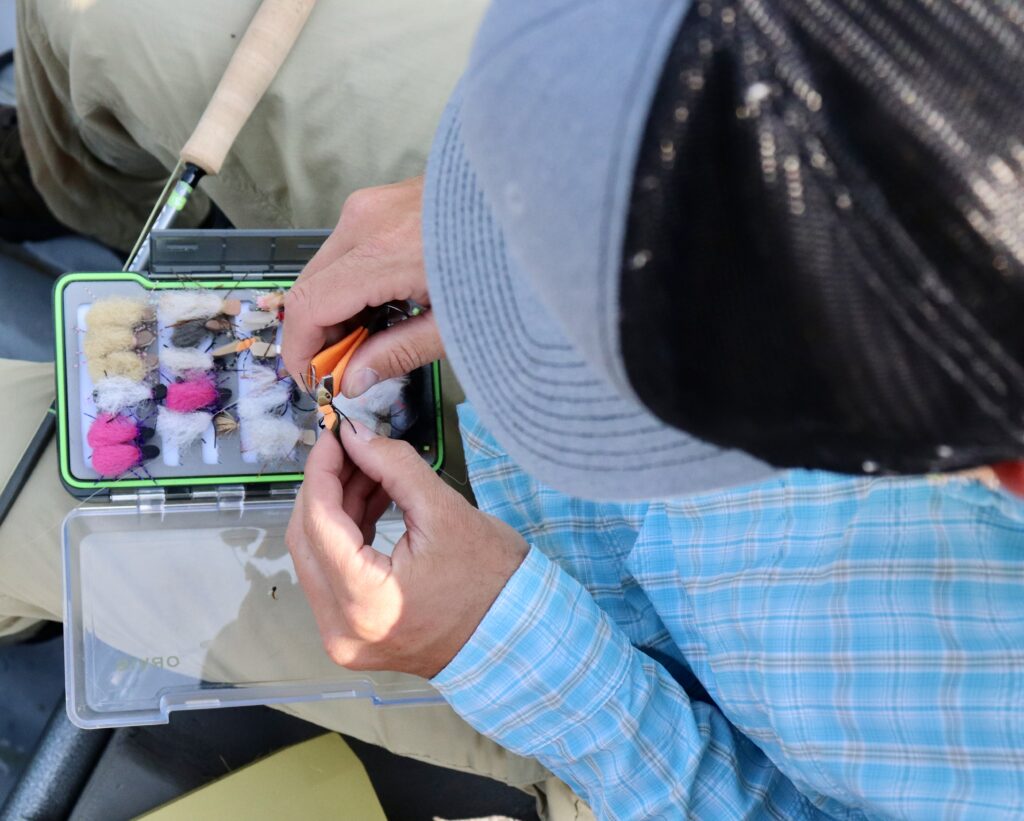
Chubby Chernobyl The Chubby is one of the most versatile dry flies ever tied and it earns its place in the hopper box every summer. On the Missouri I fish it in royal, purple, peach, and tan depending on conditions. It floats all day, handles a heavy dropper without sinking, and the fish absolutely eat it. When the Morrish isn’t getting it done the Chubby usually will.
Low Riding Water Walker When the fish get picky, and Missouri River trout will get picky even during hopper season, the Low Riding Water Walker is the answer. It sits lower in the film than a foam hopper, giving it a more realistic profile for selective fish. Fish it without a dropper when trout are refusing the bigger patterns. It’s not as visible to the angler but the takes more than make up for it.
Don’t Forget Beetles and Ants
Hoppers get all the attention but beetles and ants are just as important during terrestrial season on the Missouri, sometimes more so. On days when the hoppers aren’t producing, switching to a smaller beetle or ant pattern can turn a slow afternoon into a memorable one.
Beetles are particularly effective in slower water and back eddies where fish have more time to inspect the fly. Carry a few black foam beetles in sizes 14 and 16. Ants, both foam and CDC are deadly during the middle of the day when nothing else seems to be working. Fish them on a long fine tippet in the slicks and don’t be surprised when something big comes up for it.
The rule I follow during terrestrial season: start big with a hopper, go small with a beetle or ant if the hoppers aren’t moving fish. Between the two you’ll cover most situations the Missouri throws at you from July through September.
Tips for Hopper Fishing the Missouri River
Fish early and late. Hoppers are most active when it’s warm mid-morning through late afternoon. Early morning can be slow for terrestrials but it picks up fast once the sun hits the banks and warms things up.
Use the wind. A breeze blowing toward the bank is your friend. It pushes hoppers off the grass and into the water naturally, and fish key on this. On windy days I’ll fish the downwind bank almost exclusively.
Don’t over-mend. Hopper fishing rewards a natural drift but aggressive mending can pull the fly off the bank and kill the presentation. Use a reach cast to get a clean drift without having to mend at all if you can.
Don’t be afraid to throw a hopper into a pod of Trico eaters. It sounds wrong , fish sipping size 22 spinners aren’t supposed to eat a size 8 foam fly. But you’d be surprised. A well-placed hopper dropped into an active pod will occasionally pull up one of the bigger fish in the group that was never going to eat a Trico anyway. It doesn’t always work but when it does it’s one of the more satisfying things you can do on the Missouri.
Go heavier on tippet. You’re throwing big foam flies into the banks and hooking fish that don’t want to come out of the weeds. 2X to 3X is the right call for hoppers on the Missouri. Too fine and the fly will twist and spin in the air instead of turning over cleanly and you’ll lose fish when you hook up or fish dive into the weeds.
Hopper fishing the Missouri River is one of my favorite times of year. The fish are aggressive, the fishing is visual, and there’s something about a brown trout eating a foam bug off the surface. If you want to time your trip around it, our Missouri River float trips run all summer long, get in touch and we’ll put together a hopper trip.

 Planning a Missouri River Fly Fishing Trip
Leave a Reply