
The Science and Ethics Behind Better Trout Care
If you’ve fished with us, you know about barbless hooks. It’s how we prefer to fish, and it’s how we ask our clients to fish. Some anglers push back at first, worried they’ll lose fish. But after a day on the water, most come around. They realize barbless isn’t a handicap, it’s actually a smarter, cleaner way to fish. Let me explain why barbless hooks matter, both for the trout and for you as an angler.
The Science: Why Barbless Hooks Save Trout
Catch-and-release fishing only works if the fish we release actually survive. That’s where barbless hooks make a real difference.
Reduced Tissue Damage
Barbed hooks create significantly more trauma when they’re removed, especially big wireworms and larger streamers. The barb, that small projection designed to prevent the hook from backing out—tears through flesh on the way in and again on the way out. This creates a larger wound and increases the risk of infection. Barbless hooks, by contrast, slide out cleanly. The puncture is smaller, heals faster, and gives the fish a much better chance of survival. Research published in the North American Journal of Fisheries Management found that barbless hooks reduce hooking injury and handling time, both of which are critical factors in post-release survival.
Faster Releases Mean Better Survival Rates
Time out of water is one of the biggest stressors for trout. Lactic acid builds up, oxygen levels drop, and the fish’s ability to recover diminishes. Barbless hooks allow for faster, cleaner releases. Instead of wrestling with pliers and potentially damaging delicate tissue or jaw structure, you can pop the hook free quickly, often without even removing the fish from the water. Studies have shown that reduced handling time directly correlates with higher survival rates, especially during warm water conditions when trout are already stressed.
Less Harm to Sensitive Anatomy
Trout mouths, gills, and eyes are incredibly delicate. A deeply embedded barbed hook can cause damage, especially if it’s lodged near the gills or in soft tissue. Barbless hooks minimize this risk. Even when a fish takes the fly deep, a barbless hook can often be removed with minimal trauma. On the Missouri River, where we practice catch-and-release on every fish, this matters. These trout get caught multiple times over their lives. The less damage we inflict each time, the healthier the fishery remains.
What I’ve Seen After Years of Guiding
I’ve spent a lot of days guiding, in fresh and saltwater , and I can tell you firsthand: barbless hooks work.
Trout Recover Faster
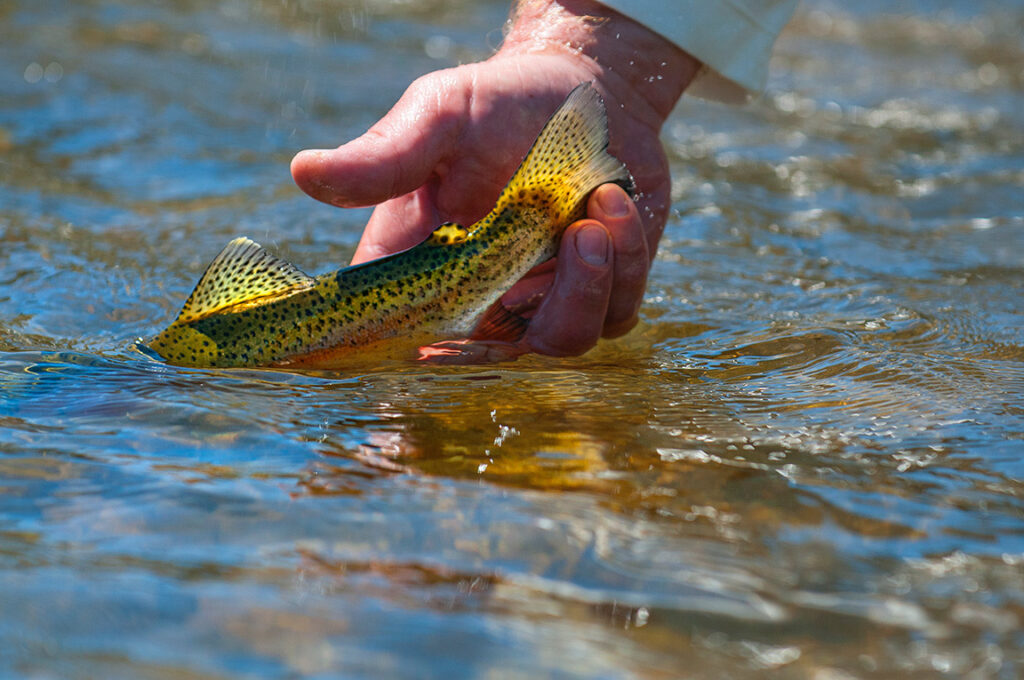
When you release a fish after fighting it on a barbless hook, watch what happens. Most trout swim off strong and steady. They don’t roll over. They recover quickly because the fight was clean and the release was fast. Compare that to a trout that’s been held out of the water for two minutes while someone struggles with pliers to remove a barbed streamer. That fish often needs time to recover in your hands before it’s strong enough to swim away. Sometimes, it doesn’t recover at all.
Clients Catch More Fish
This surprises people, but it’s true. Anglers fishing barbless often land more fish over the course of a day than those fishing with barbs. Why? Because they’re not spending minutes digging a hook out of a trout’s mouth. They release the fish quickly and get their fly back in the water. More time fishing means more fish caught. It’s that simple.
Barbless Hooks Actually Make Landing Fish Easier
Here’s the myth: barbless hooks make you lose more fish. Here’s the reality: if you’re losing fish on barbless hooks, you’re doing something wrong.
Keep Tension on the Line
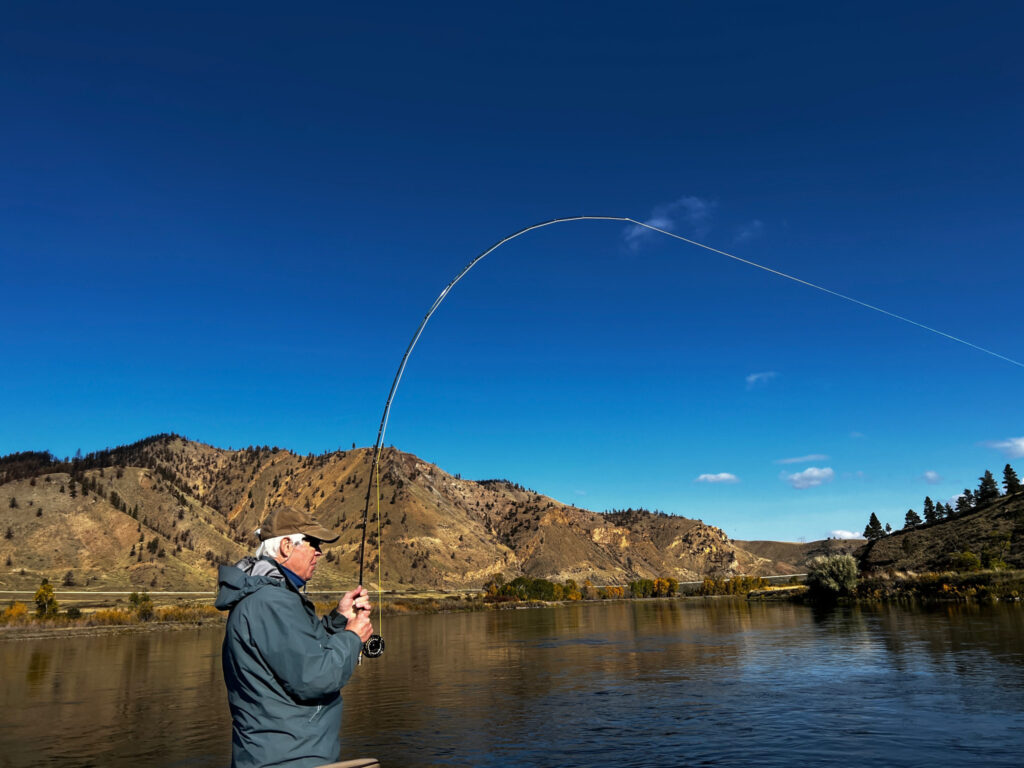
The secret to landing fish on barbless hooks is simple: maintain constant tension. As long as there’s pressure on the line, the hook stays in place. Slack line is what causes fish to throw the hook—whether it’s barbed or barbless. Most anglers who lose fish on barbless hooks are giving slack during the fight. Tighten up your technique, keep a bend in the rod, and you’ll land just as many fish as you would with barbs.
Less Damage to Your Fly
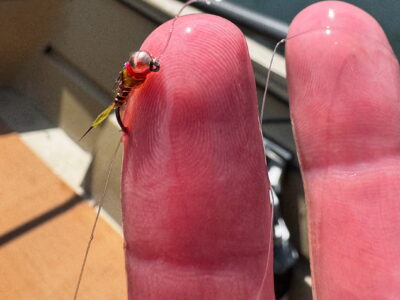
Barbless hooks are easier on your flies. When you’re fishing delicate dry flies or small emergers, pulling a barbed hook out can destroy the pattern. Barbless hooks slip free without tearing CDC, damaging dubbing, or breaking hackle. Over the course of a season, that saves you money and time at the fly-tying bench.
Safer for You
Let’s be honest, if you’ve fly fished long enough, you’ve sent a hook in yourself, your buddy or a guide at some point. It happens. And when it does, you want that hook to be barbless. A barbless hook can often be backed out with minimal pain and no trip to the ER. A barbed hook? That’s a different story. I’ve seen anglers have to cut flies off and push hooks all the way through their skin to get the barb out the other side. It’s not fun. Barbless hooks are safer for you, your guide, and anyone else in the boat.
How to Crimp Your Barbs
If you’re ready to make the switch, here’s how to do it:
1. Use needle-nose pliers or hemostats** – Grab the barb firmly at the base
2. Squeeze down** – Apply steady pressure until the barb flattens against the hook shank
3. Check your work** – Run your finger over the hook point to make sure the barb is completely flattened
4. Don’t over-crimp** – You want to flatten the barb, not weaken the hook. Most modern fly hooks crimp easily. If you’re buying new flies, look for hooks that are already barbless—it saves you a step.
Why Barbless Matters for the Missouri River
The Missouri River is one of the most incredible trout fisheries in North America. It didn’t get that way by accident. It got that way because anglers, outfitters, and fisheries managers have worked together to protect it. Fishing barbless is one small thing we can all do to keep this fishery healthy for the next generation. It’s not a sacrifice, it’s a smarter way to fish. Your catch rates won’t suffer. Your experience won’t be diminished. And the trout you release today will be there for someone else to catch tomorrow. That’s conservation that actually works.
Give it a Try
We’ve seen the results firsthand: healthier fish, faster releases, and a fishery that continues to produce trophy trout year after year. If you’re not fishing barbless yet, give it a try. Crimp down those barbs, tighten up your technique, and see the difference for yourself. The trout, and the river will thank you.

 Missouri River Swing Seasons
Leave a Reply