

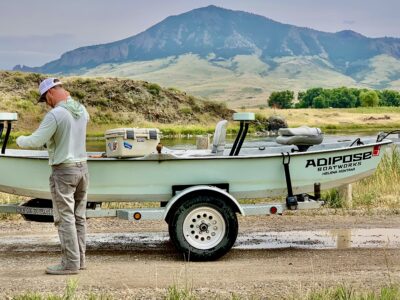
Fly fishing Cascade, Montana puts you at the downstream end of the Missouri River’s 35-mile run from Holter Dam, the last town on the water before the river leaves trout country behind. Most anglers never make it this far. They fish Craig, they fish the canyon, and they turn around before the river opens up.
Fly Fishing Cascade, Montana: Where the River Changes Character
The character of the Missouri shifts noticeably below Tower Rock, the same landmark Lewis and Clark camped under on their way upriver. Above it, the river is canyon water, defined banks, current seams, structure you can read at a glance. Below it, the valley opens onto the Great Plains, and the Missouri spreads out to match it. Braided channels, gravel bars, small islands. It’s some of the most wadeable water on the entire river.
Wind and the Cascade Stretch
This is the tradeoff for that open water: there’s nothing to block the wind. Once you’re out of the canyon, you’re fishing exposed plains, and a stiff afternoon wind can turn a relaxing afternoon float into a fight. We watch the forecast closely for this stretch specifically, more closely than we do for the canyon water upstream. If it’s blowing hard, we may shift the day to a section with more protection, or move the float earlier to beat it. Wind and angler ability is the single biggest factor in whether, and when, we float the Cascade stretch on a given day. Before we commit, we check the USGS gauge at Cascade alongside the wind forecast, flow and wind together tell us whether it’s a Cascade day.
What’s Fishing Down Here
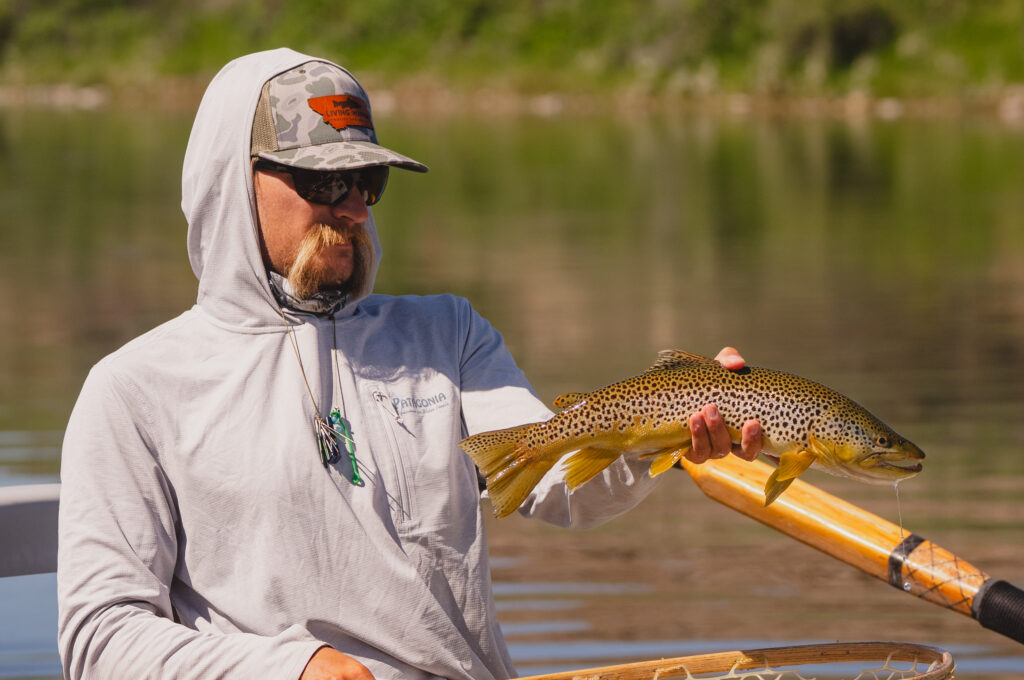
Rainbows and browns both, though the browns get more attention as you move downstream. Fish density is lower here than it is up around Holter Dam and Craig, but so is the pressure, most of the boat traffic never makes it this far. For anglers who’ve fished the upper river before and want a different look at the same fishery, the Cascade stretch is worth the drive.
How We Typically Run This Float
Most days, we put in at Prewett Creek, right at the tail end of the canyon, and float down through the Rapids and past the Sheep Creek confluence before the river opens into the meadow water that defines the rest of the float. That’s the full version of this stretch, and it covers the widest range of water in one day.
On days when we want to fish the lower water without the longer float, we’ll launch from Pelican Point instead and run the shorter stretch into Cascade. It’s less water, but it’s some of the better big-fish water, and it’s an easy call when wind or time is working against a longer day. Our access guide to the Missouri River has directions to both sites if you’re scouting them on your own.
When to Go Fly Fishing Cascade, Montana
The same hatches that bring anglers to Craig show up down here too, just with a bit less pressure behind them. It’s a good call for anglers who want to fish PMDs, caddis, or hoppers without competing for water, or for wade anglers who’d rather pick apart braided channels than fish from a boat. For the full seasonal breakdown of what’s hatching and when, see our Missouri River hatch guide.
If you’re planning where to stay, Cascade sits within easy reach of the upper river for anglers who want to fish more than one stretch of water in a trip. And if you want to understand how this stretch fits into the rest of the float, our guide to Missouri River float distances and takeouts breaks down every access point from Holter Dam to Cascade.
Give us a call to talk about working fly fishing Cascade, Montana into your next trip.

 Missouri River Fly Fishing Report – July, 2026
Leave a Reply