
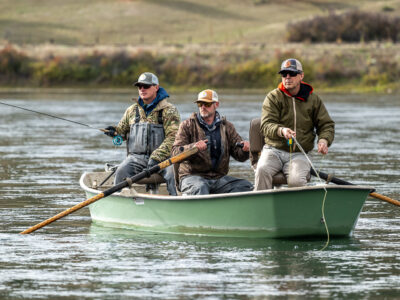
Fly fishing from a drift boat is a different game than wade fishing and most anglers figure that out about ten minutes into their first float. The platform is moving, the water is changing, and the window to make a good presentation is shorter than you think. Done right, it’s one of the most efficient and enjoyable ways to cover a river. Done wrong, you spend the day fighting your own cast. On the Missouri, almost all of our guided trips are float trips. We cover miles of water in a day, work both banks, and put you in position to fish a variety of water types that wade anglers simply can’t reach. Here’s what you need to know to make the most of it.
What is a Drift Boat?
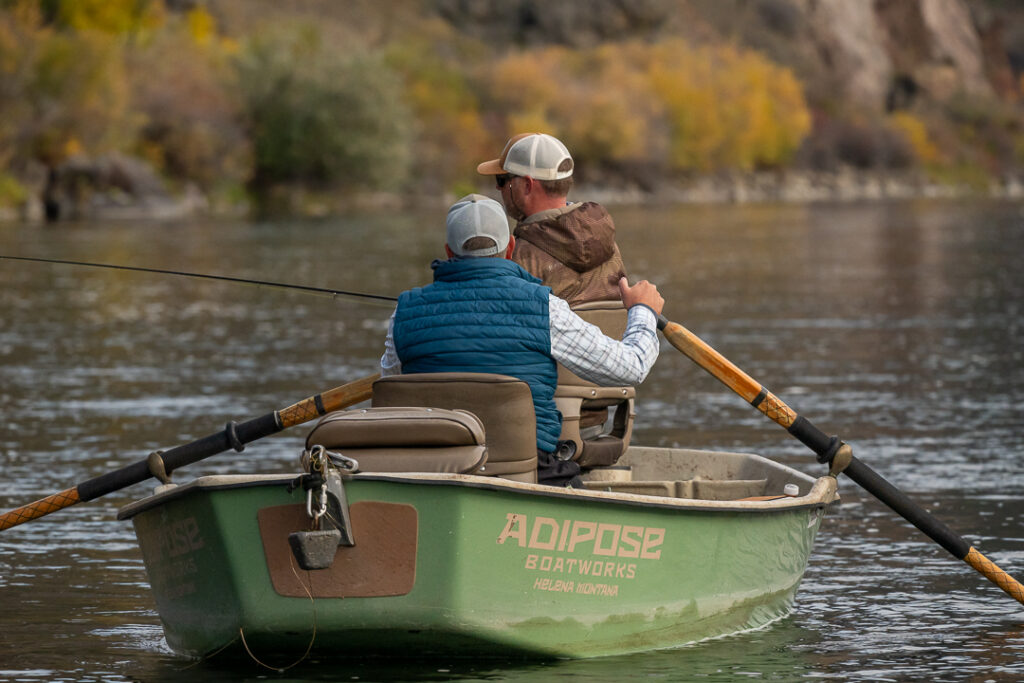
A drift boat is a specialized river fishing boat with a shallow draft, flat bottom, and elevated seats that allow a guide to control speed and position while two anglers fish from a stable casting platform. Unlike a raft or kayak, a drift boat is purpose-built for presenting flies, it minimizes drag in the current, moves quietly through productive water, and gives anglers excellent sight lines to the river. Most drift boats comfortably seat two anglers plus a guide, and are designed for all-day comfort on the water.
Tips for Fly Fishing From a Drift Boat
These are the things we cover with every client before we push off the bank. Whether it’s your first float or your fiftieth, these fundamentals are what separate a productive day from a frustrating one.
- Keep your casts short: This is the single biggest adjustment anglers need to make when fishing from a drift boat, especially when nymphing. The boat is moving downstream with you, a 50-foot cast means you’re managing 50 feet of line in moving current, which makes a drag-free drift nearly impossible. Casts of 15–25 feet are typically ideal. Your guide will position the boat to keep you in the strike zone. Short and accurate beats long and sloppy every time.
- Let it soak — time over target: Once your rig is in the water, leave it there. The objective is a long, drag-free drift, and every time you pick up and recast you’re resetting the clock. Trust the drift. Let it marinate. The takes often come at the end of the drift when the fly swings up, not on the first few feet after the cast.
- Mind your backcast: Always check your surroundings before you load up a backcast. In a drift boat you have a guide behind you at the oars, a fishing partner in the other seat, and willows or brush along the bank. A hook in a human is a bad day for everyone. Get in the habit of a quick look before every cast.
- Use a reach cast: The reach cast is the most useful tool in a drift boat angler’s kit, especially for dry fly fishing. After you make your forward cast, move the rod tip upstream as the line is falling — this places a mend in the line before it even hits the water, buying you extra drift without disturbing the fly. Here’s a quick video demonstration. Practice this on grass before your trip and it will pay dividends all day.
- Use the mend early and often: Once your fly is on the water, mending upstream keeps the indicator or dry fly tracking ahead of the line and extends your drag-free drift. A good mend costs you nothing. A missed mend costs you fish.
- Vary your casting angle: Front seat and back seat anglers should work different angles to avoid tangling and to cover different water. The front angler typically works the bank or the far seam; the back angler works closer water and mid-river structure. Talk to each other and to the guide — coordinating casts keeps everyone fishing efficiently.
- Adjust for wind: Wind on the Missouri is a fact of life, especially in spring and early summer. A good guide will position the boat to work with the wind rather than against it, but you still need to be able to cast in it. Tighten your loop, shorten your stroke, and keep casts lower to the water on windy days. Fighting the wind with a wide open loop is a losing battle.
- Practice before you come: If you haven’t cast in a while, spend some time in the yard before your trip. Even thirty minutes of practice casting will make your first few hours on the water dramatically more productive. It also means your guide spends less time coaching casting mechanics and more time putting you on fish.
Advantages of Fly Fishing From a Drift Boat
Cover more water: The Missouri River below Holter Dam runs for miles of productive water — long gravel bars, weed edges, seams, and structure that stretches far beyond what any wade angler can reach in a day. A drift boat changes the math entirely. We cover 5–10 miles in a single float, presenting flies to water that sees far less pressure than the easily accessible wade water near the boat ramps.
Ideal for all skill levels: Float trips work for beginners because the guide handles positioning and river reading, you focus on casting and fishing. They work for experienced anglers because the boat puts you in position to make precise presentations to specific fish, all day long.
Comfort on long days: A well-rigged drift boat has elevated seats, plenty of room to move, and a stable platform even in faster current. You’re not standing in cold water all day fighting for footing you’re seated, comfortable, and focused on fishing. On a full day float, that matters more than most anglers expect before their first trip.
Drift Boat vs. Wade Fishing
Both approaches have real merit, they just offer different experiences. Here’s a simple way to think about it. Choose drift boat fishing when:
- You want to cover maximum water and fish diverse water types in a single day
- You’re new to fly fishing and want guided instruction with less pressure on your feet
- You’re fishing with a partner and want a shared experience
- High flows or cold water make wading uncomfortable or unsafe
- You want access to sections of river that aren’t reachable on foot
Choose wade fishing when:
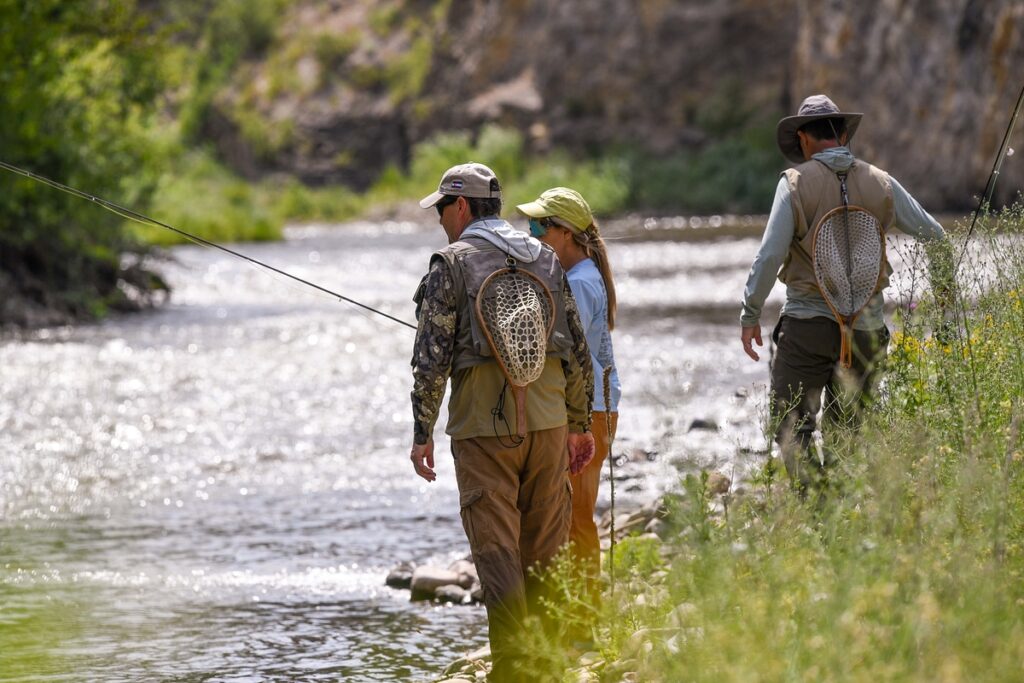
- You prefer a slower pace and working a stretch of water thoroughly
- You enjoy the physical engagement of wading and stalking fish
- You want complete control over your position and movement
- You prefer a more independent, solitary experience on the water
Not sure which is right for your trip? Read our full breakdown of wade vs float fishing here.
Book a Missouri River Float Trip
If you’re ready to experience fly fishing from a drift boat on one of the best tailwaters in the country, we’d love to put you on the Missouri. Our guided Missouri River float trips run year-round and include all gear, flies, and a shore lunch. Spring dates are filling — reach out sooner rather than later. Plan your float trip here.

 Fly Fishing Holter Lake
Leave a Reply