

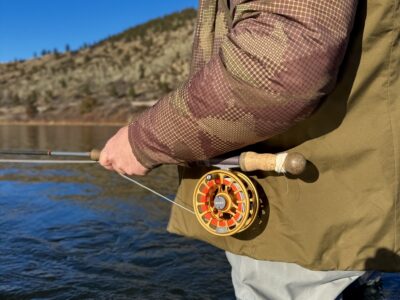
A Month-by-Month Trout Spey Guide
While the Missouri River is a world-class fishery year-round, there’s a second season that runs from October through May, one that most visiting anglers never experience. Swing season. For those who’ve felt the electric grab of a big brown or rainbow crushing a swung fly, it’s the season they plan their entire year around.
The Mo is built for trout spey. Wide, long runs, predictable flows, and wild fish make it one of the finest swing fisheries in the West. You can swing flies year-round, but the Missouri fishes best with a two-hander from October through April ,and it fishes differently in October than it does in February or May. Understanding those nuances is what separates a good day from a great one.
Here’s what to expect month by month.
October — The Season Begins
October is when the switch flips. Water temperatures drop into the optimal 50–55°F range, weeds start to die off, and the river transitions from summer crowds to something more peaceful. Brown trout are beginning to feel the pull of fall, they’re aggressive, territorial, and looking for a meal.
This is arguably the most exciting month of the swing season. Fish are active, water clarity is good, and you can often cover water efficiently without needing heavy sink tips to get down. A lighter Skagit head with a short sink tip or even a Scandi setup with a moderate leader will get you in the zone.
Tips: Leeches, articulated streamers in dark tones (black, brown, olive), and larger soft hackles. The Thin Mint Bugger is a go-to this time of year. If you haven’t fished the Fruit Roll-Up in the fall, put it on your list.
Float or wade: Both work well in October. Wade anglers have excellent access, and the lower flows make reading water more intuitive. Float trips allow you to cover more ground and find where fish are stacking ahead of the pre-spawn.
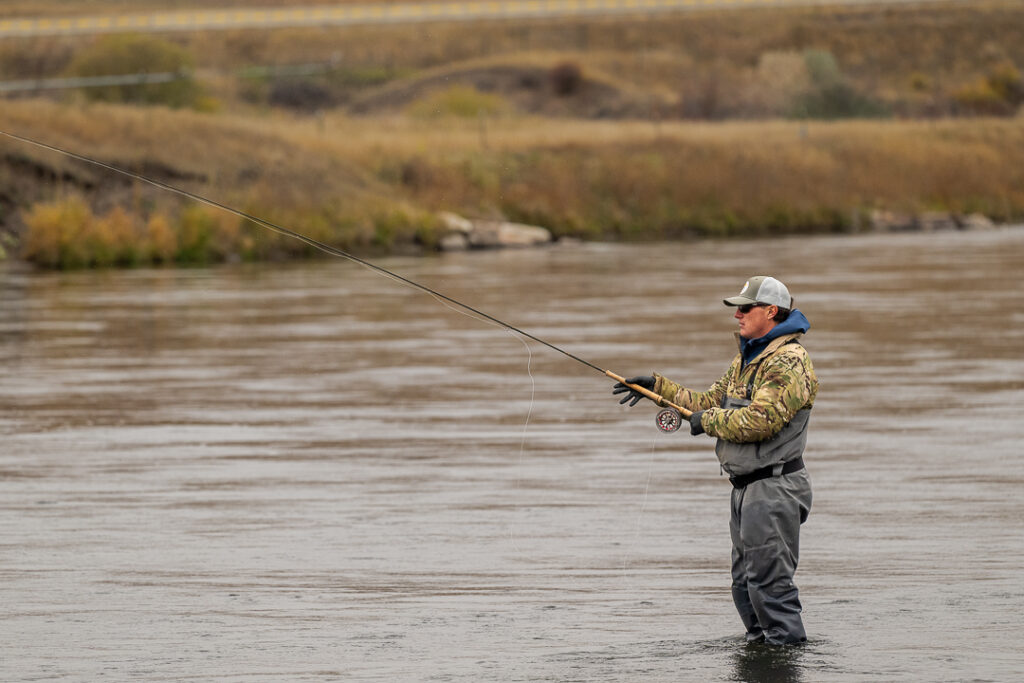
November — Peak Swing Season
If there’s one month to book a Missouri River swing season trip, it’s November. Water temps hover in the upper 40s to low 50s cold enough to concentrate fish but warm enough to keep them actively chasing. Brown trout are at their most aggressive as they move through their spawning cycle. Rainbows are fat and strong, having spent the summer feeding.
River pressure drops significantly after October. Montana’s rifle season pulls a lot of traffic off the water, and the driftboat crowds are long gone. You’ll have long runs almost entirely to yourself.
Tips: Go Flashy. The Montana Mini Intruder and Sparkle Minnow earns its keep in November, especially in deeper buckets and against structure. Skagit heads with moderate to heavy sink tips are the workhorses this time of year. Don’t overlook soft hackles on lighter tips ,swinging a soft hackle through a run of stacked fish is one of the most satisfying experiences in fly fishing.
Float or wade: November is the premier wade fishing month on the Mo. Low, clear flows make wading safe and comfortable, and fish are predictably staged in classic runs and seams. That said, floating lets you cover more of the fishery systematically.
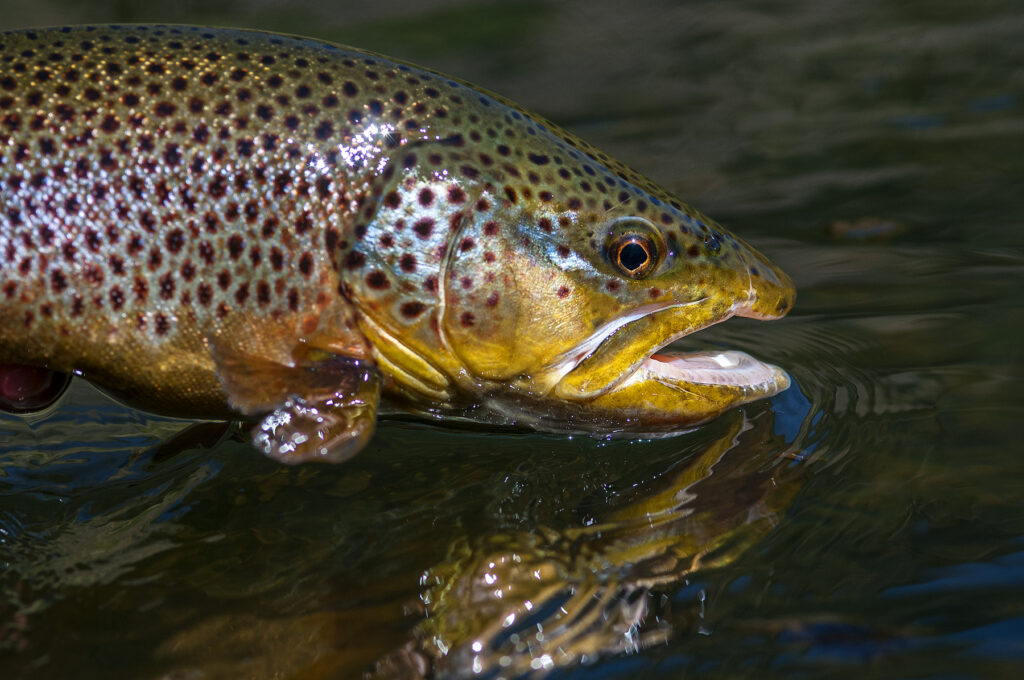
December — Cold Hands, Hot Takes
December is where commitment pays off. Air temperatures can be brutal, ice forms in the guides, and the fair-weather crowd has gone home entirely. What’s left is some of the most productive swing fishing of the year for those willing to layer up and get after it.
Water temps in December typically fall into the low 40s, which slows fish metabolism slightly. The key adjustment is fishing slower and getting your fly deeper. Longer sink tips, slower swings, and more deliberate mending keep the fly in the zone longer. Fish are still eating — they’re just a little less willing to move far for it.
Tips: Slow it down and go deep. The Grandmaster Flash shines in cold water, maintaining its profile and movement even in minimal current. Darker colors, black, purple or rust.
Float or wade: Wade fishing is our prefered method in December. A heated truck between spots come in clutch on those colder days.
January & February — Winter Warriors
These are the months that separate the devoted from the casual. January and February are the heart of Missouri River swing season, they can produce some of the most memorable trout spey fishing of the year, or they can be brutally slow. Reading conditions matters more now than any other time.
Watch water temperature closely. When temps drop below 35°F, the bite can get tough. But a warming trend, even a few degrees, can turn fish on dramatically. Midwinter winds can push temperatures into the 40’s and 50s for days at a time, triggering feeding activity that feels more like fall than February.
Sunny, stable days with temps in the mid-40s are ideal. Overcast days with midge activity on the surface can produce incredible fishing. Mending carefully and slowing your swing down to a crawl is often the key in the coldest water.
Tips: Small is often better in January and February. Swing-sized soft hackles on a light to intermediate tip, can outfish streamers when the water is cold and clear.
Float or wade: Wade, access is generally good and can be more productive when fiIccy boat ramps are something to consider
March — Spring Is Coming
March is a transitional month, and that transition works in your favor. Water temperatures begin crawling back toward the 40s°F range, and fish start moving again with renewed purpose. Rainbows begin staging ahead of their spring spawn, becoming aggressive and territorial. Browns have recovered from fall and are on the feed.
Midge hatches continue to be the primary surface activity in March, and swinging soft hackle midge patterns under a Scandi head is a great way to cover rising fish. You can swing through the same water in the morning and cast dries to risers in the afternoon — two completely different experiences on the same day.
Tips: Softer presentations start to shine. Scandi setups with lighter leaders and soft hackles can be very effective as surface activity picks up. Krelex patterns in gold and silver are worth carrying for active rainbows. Leeches remain productive.
Float or wade: March weather can be unpredictable, bluebird and warm one day, snow the next. Floating with a guide gives you flexibility to adapt as conditions change throughout the day.
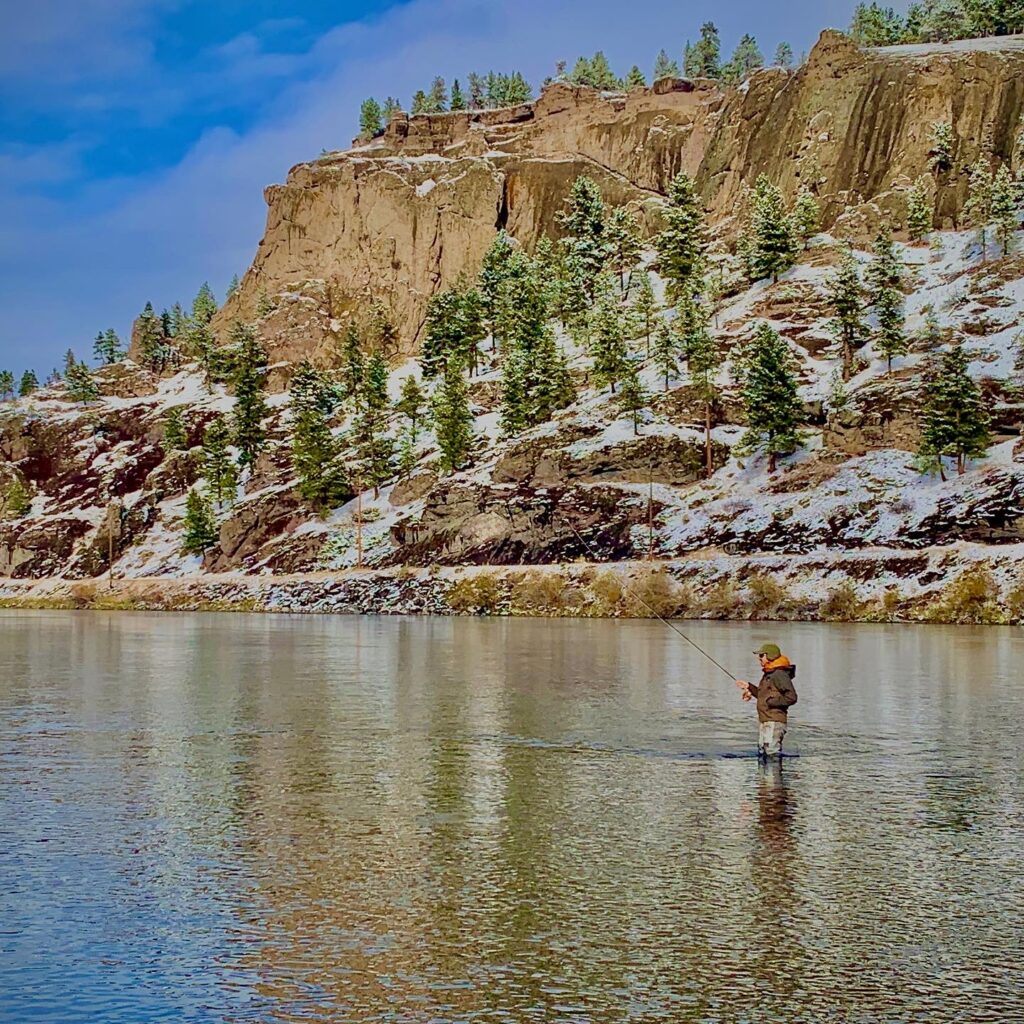
April & May — The Swing Season Finale
The end of swing season doesn’t go out quietly. April and May offer some of the fastest fishing of the year with water temperatures climbing. This is high-activity fishing — fish are covering more water, chasing aggressively, and responding to a wider variety of presentations.
By May, the river begins transitioning back into its summer patterns. BWO hatches start making their first appearances, caddis aren’t far behind, and the single-hand crowd returns. Swing season fades into the background, but not before delivering some truly outstanding fishing for those who stay with it through the end.
Tips: Experiment with brighter, flashier patterns in April. The sparkle minnow and Krelex both shine. By May, BWOs start showing up and swinging soft hackles during afternoon hatches becomes a real option — one of the best ways to close out swing season.
Float or wade: Both. April and May are excellent months for walk-and-wade fishing on the Mo, particularly for anglers who want to cover water methodically through known runs and seams. Float trips allow you to prospect and find the concentrations of active fish.
A Few Tips That Apply All Season
Match your sink tip to the water temperature. Cold water means fish hold low, you need to get down to them. As temperatures rise, fish rise in the water column and are more willing to chase a fly.
Slow down more than you think you should. The most common mistake in cold-water trout spey is fishing too fast. A deliberate, methodical swing that keeps the fly in the zone longer catches more fish.
Pay attention to the take. Trout grabs on the swing can be explosive or barely perceptible. Keep your rod angle consistent and flowing it throughout the swing.
Fish the whole swing. The lift at the end of the swing. When the fly rises from depth toward the surface — triggers some of the most violent strikes of the day. Don’t be in a hurry to pick up and recast. Let it hang for a bit.
Ready to experience the Missouri River swing season firsthand? Our guided trout spey trips cover the full shoulder season, and we provide all the gear you need. Whether you’re new to two-handed casting or a seasoned spey angler, the Missouri will not disappoint.
Pair this guide with our Trout Spey Flies for the Missouri River to round out your prep before hitting the water.

 Building A Missouri River Fly Box
Leave a Reply