

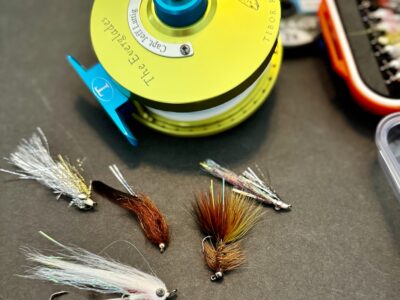
The Missouri has long riffles, consistent flows, and trout that will absolutely eat a swung fly but only if you put the right pattern in the right zone. Fly selection and sink tip depth matter as much as the cast here. Get those two things dialed and this river will spoil you. These are five flies that have earned a permanent spot in my spey box on the Mighty Mo.
1. Thin Mint Bugger – The Year-Round Producer
Best Conditions: Gray days, stained water, year-round fishing
Colors: Peacock, black, brown marabou with flash accent
Why It Works: Imitates leeches, sculpins, and crayfish
If you could only fish one pattern on the Missouri River, the Thin Mint Bugger deserves serious consideration. This versatile fly combines peacock herl, black and brown marabou, and subtle flash to create a buggy profile that trout interpret as food.
The undulating marabou tail breathes with life in current, and the flash accent adds just enough attraction without overwhelming selective fish. Swing it deep, jig it through runs, or strip it aggressively, the Thin Mint produces in all scenarios.
Most strikes on the Missouri happen as the fly lifts at the end of the swing. Keep your line tight.
2. Fruit Roll-Up
Best Conditions: Aggressive fish, tailouts, inside seams
Colors: Purple, pink, and blue iridescent blend
Why It Works: Triggers instinctive strikes from moody trout
The Fruit Roll-Up has earned its reputation as one of the best leech patterns for Missouri River trout spey. Built with iridescent synthetic materials, this fly creates a color-shifting profile that browns and rainbows find irresistible.
The key to fishing this pattern effectively is movement. Short strips or subtle jigs animate the brushed collar and synthetic tail, creating a seductive pulse that triggers reaction strikes from trout that might ignore other offerings.
Use a sink tip that reaches the 3- to 4-foot depth zone. Let the fly swing broadside through slower inside seams and tailouts where trout stack up during late fall and winter.
3. Montana Mini Intruder – Big Profile, Easy Cast
Best Conditions: Fall fishing, deep buckets, heavy structure
Colors: Natural sculpin tones, earth colors
Why It Works: Pushes water, creates big profile, casts efficiently
Borrowed from the steelhead world and scaled down for trout, the Montana Mini Intruder combines flowing dubbing, flashabou, and articulated movement to suggest a sculpin or baitfish swimming through current.
The Missouri’s largest trout target this pattern in fall when they’re looking for substantial meals. Tied on a short shank or intruder wire with a trailing hook, the Mini Intruder maintains a compact two-inch profile while riding true in heavy current.
Swing this fly with confidence through deep buckets and tight to structure where big fish hold.
4. Krelex – The Flash That Converts
Best Conditions: Spring and early fall, 50°F water temps, active fish
Colors: Gold, silver, black/purple
Why It Works: Mimics baitfish with high-visibility flash
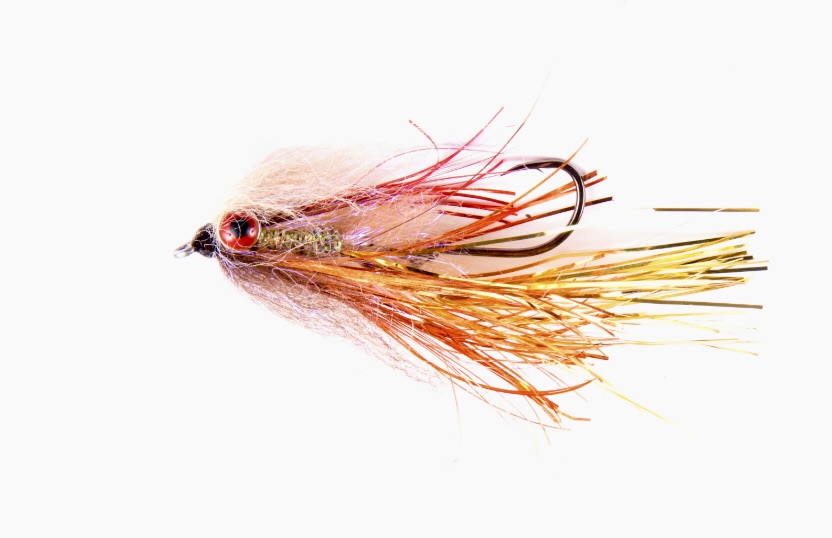
The Krelex might look simple, but it’s a proven fish-catcher. Built entirely from Krystal Flash, this pattern creates an underwater shimmer that Missouri River rainbows find hard to resist. The material tracks beautifully through current and throws off a lively, pulsing flash with every strip or mend.
This fly excels when water temperatures hit the 50s and trout are actively chasing. Unlike some modern patterns, the Krelex works well in traditional streamer form, though many anglers now tie it with trailing hooks for better hookups.
Vary your swing speed. Sometimes a slow, steady swing works best, but don’t hesitate to add aggressive strips or jigs. That erratic flash often triggers spectacular grabs.
5. Ishiwata’s Grandmaster Flash – Modern Trout Spey Perfection
Best Conditions: Cold-water months, softer current, technical water
Colors: Various (check Montana Fly Co.)
Why It Works: Perfect balance of flash, movement, and profile
Few patterns capture modern trout spey design like Ishiwata’s Grandmaster Flash from Montana Fly Co. Part streamer, part intruder, this fly combines flash, arctic fox, ostrich herl, and dumbbell eyes for just enough weight to stay in the zone.
The Grandmaster Flash truly shines during Missouri River’s colder months when trout hold in softer water. It maintains its profile on the swing and creates lifelike motion even in minimal current. The combination of color, flash, and movement creates an irresistible presentation.
Almost all versions feature trailing hooks positioned low and far back, preventing short strikes and improving hookup ratios on swinging presentations.
Trailing Hooks vs. Traditional Streamers: What Works Better?
On the Missouri, I fish trailing hooks most of the season. Most modern spey patterns come tied with them standard — and for good reason. The strikes here aren’t always aggressive. Trout will mouth a fly, feel resistance, and let go fast. A stinger hook positioned near the tail catches those fish.
Traditional streamers still work very well. Both styles produce on the Missouri. If fish are eating from behind and coming off, reach for a pattern tied with a trailing hook — it’s a simple adjustment that can turn a frustrating afternoon around.
Matching Your Fly to Missouri River Conditions
Success with trout spey flies requires more than just the right pattern you need to match your fly to current conditions:
Water Clarity: Use darker, more visible flies in stained water (Thin Mint Bugger, black/purple Krelex). Switch to natural colors in clear water (Mini Intruder, natural Grandmaster Flash).
Water Temperature: Fish aggressive, flashy patterns (Fruit Roll-Up, Krelex) in 45-55°F water. Slow down with subtle patterns in colder temps below 40°F.
Current Speed: Heavy current demands weighted flies with good profiles (Mini Intruder, Grandmaster Flash). Softer water allows lighter presentations (Fruit Roll-Up, Krelex).
Fish Activity: Active, chasing trout respond to flash and erratic movement. Lethargic fish require slower swings with more natural presentations.
Tips for Trout Spey Success on the Missouri River
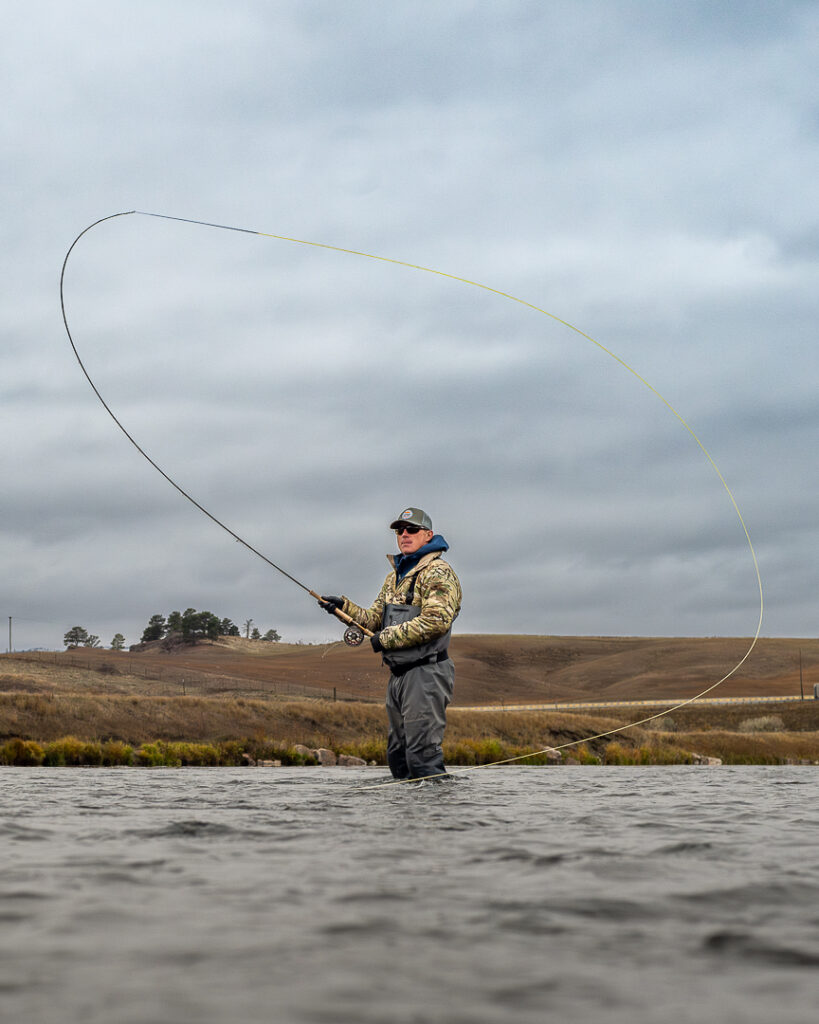
Sink Tip Selection: Match your sink tip to water depth and speed. The Missouri’s best trout spey water typically requires tips that reach 3-5 feet deep. Experiment with different grain weights until you feel your fly ticking bottom occasionally.
Swing Speed: Vary your presentation. Some days trout want a slow, steady swing. Other times, erratic strips and pulses trigger more strikes. Let the fish tell you what they prefer.
Color Rotation: Start with darker patterns on overcast days and switch to flashier options when the sun breaks through. Keep multiple color variations of each pattern in your box.
Presentation Zones: Focus on inside seams, tailouts, and long, even runs, classic trout spey water. The Missouri offers hundreds of perfect swing locations between Craig and Cascade.
Final Thoughts on Missouri River Trout Spey Flies
The Missouri isn’t a complicated river to swing flies on but it rewards anglers who pay attention. Depth, speed, and color selection matter more than having the perfect pattern. Get your fly in the right zone and these fish will eat.
Start with the Thin Mint Bugger if you’re unsure what to tie on. Add a Fruit Roll-Up and a Grandmaster Flash in a couple of color variations and you’ll have the Missouri covered in most conditions. The Mini Intruder and Krelex fill out the box for days when fish want something different. The rest is water reading and mending.
Ready to swing flies on the Missouri?
We run guided trout spey trips throughout the season , float trips, instruction, and all the gear you need.
406-465-1688

 Fly Fishing in Craig Montana
Leave a Reply