
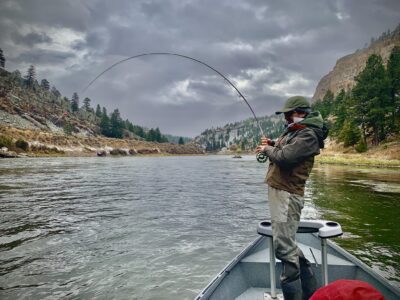
If you spend enough days nymphing rivers like the Missouri, you eventually stop arguing about whether a 10-foot fly rod is worth it and start wondering how you ever lived without one.
For years, 9-foot rods were staples. They were versatile, familiar, and “standard.” But modern nymphing—especially on big, technical tailwaters—has evolved. Deeper rigs, longer leaders, lighter tippets, more precise drifts. The game changed. And quietly, the 10-foot fly rod became the workhorse tool for anglers and guides who care about efficiency, control, and putting more trout in the net.
Nymphing Is a Game of Control
At its core, nymphing is about control—control of depth, drift, and connection to your flies. The fish aren’t chasing. They’re inspecting. Often inches matter.
That extra foot of rod length gives you leverage where it counts most: between your hand and the fly.
With a 10-foot rod, you’re able to keep more line off the water, which immediately improves your drift. Less line touching the surface means less drag. Less drag means your flies move naturally, at the speed of the current they’re in—not the current your fly line happens to be floating through.
On rivers with complex seams, variable depths, and mixed currents like the Missouri River,this advantage shows up and the 10-footer rules.
Better Mending, Fewer Problems
Mending is where most anglers lose fish before they ever know a trout was there.
A longer rod gives you more reach and more authority when mending line upstream or downstream. You can reposition the line without ripping your flies off course. Subtle corrections instead of panic moves.
That extra length allows you to mend over conflicting currents, reach across seams, and reset your drift mid-run. From a drift boat, it’s a huge advantage. From shore, it’s even more noticeable.
Hook Sets That Actually Work
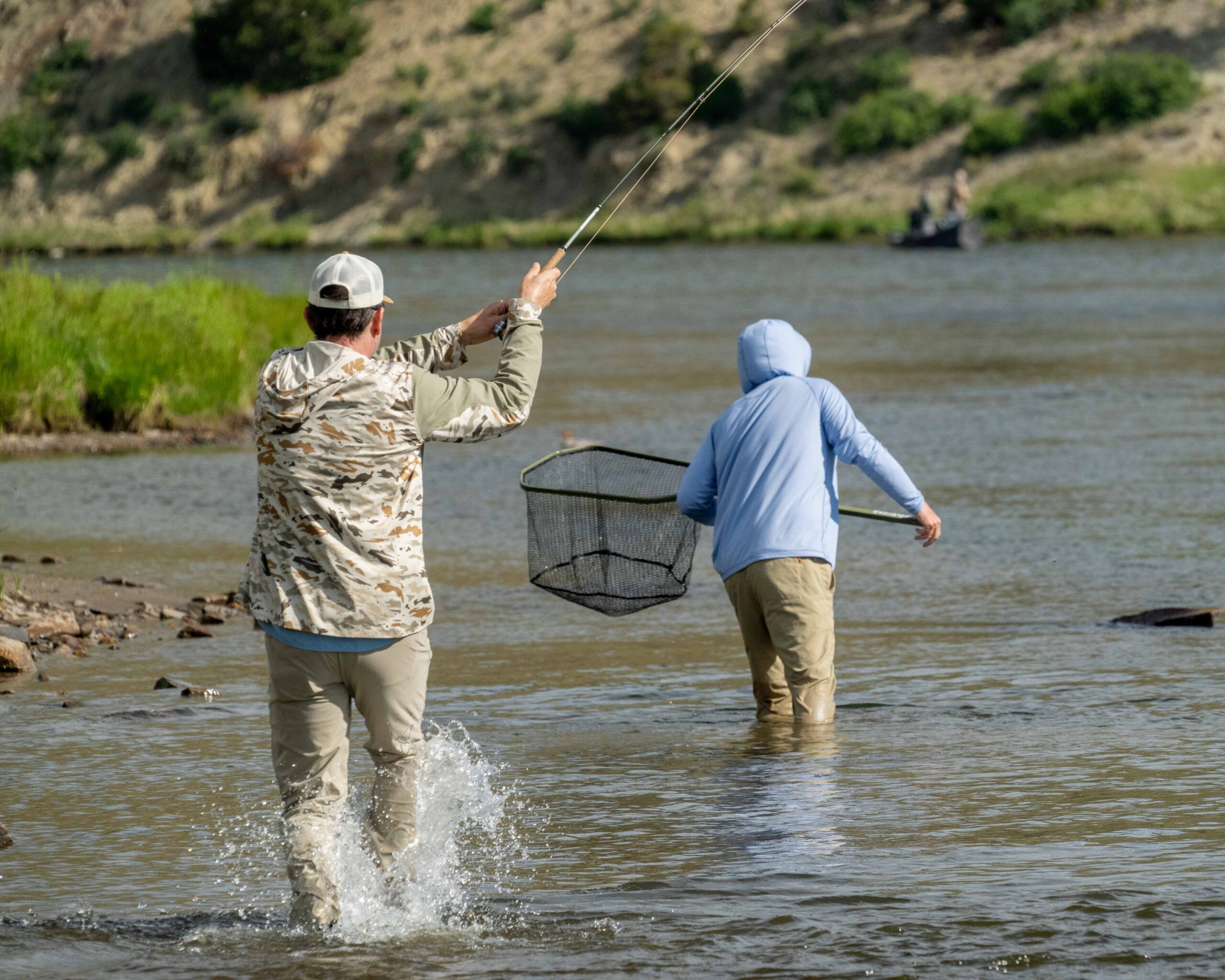
Hook sets in nymphing are rarely dramatic. You’re not strip-setting a streamer or hammering a dry fly eat. You’re lifting into pressure.
The 10-foot fly rod excels here.
That extra length creates a longer lever, allowing you to pick up line quickly and drive hooks home without overreacting. This is especially important when fishing long leaders, light tippet, or deep rigs durning high water.
Instead of a violent jab, you get a smooth, effective lift that sticks fish cleanly—often right in the top of the mouth where it belongs.
Protecting Light Tippet
Modern nymphing often means fishing 4X, 4.5X, or even 5X tippet. Long rods shine here.
Most quality 10-foot rods designed for nymphing feature softer tips with progressive actions. That softer tip protects light tippet during hook sets and head shakes while still offering enough backbone to control big trout.
On rivers like the Missouri, where 20-inch fish aren’t rare, that balance matters. You need finesse up front and strength down low. The right 10-foot rod delivers both.
Versatility Beyond Nymphing
One of the biggest myths about 10-foot rods is that they lack versatility. In reality, a good 10-foot 4 – weight is one of the most versatile tools you can own.
Need to throw a dry-dropper? Easy.
Small streamers from the boat? No problem.
Stillwater chironomids or Callibaetis? Perfect.
Long leaders and spooky trout? Ideal.
While they may not be the first rod you grab for technical dry fly work, they’re far from limited. For anglers who nymph often, let’s be honest, most trout are caught subsurface, they make up for any perceived casting trade-offs tenfold.
10-Foot Fly Rods on Stillwaters
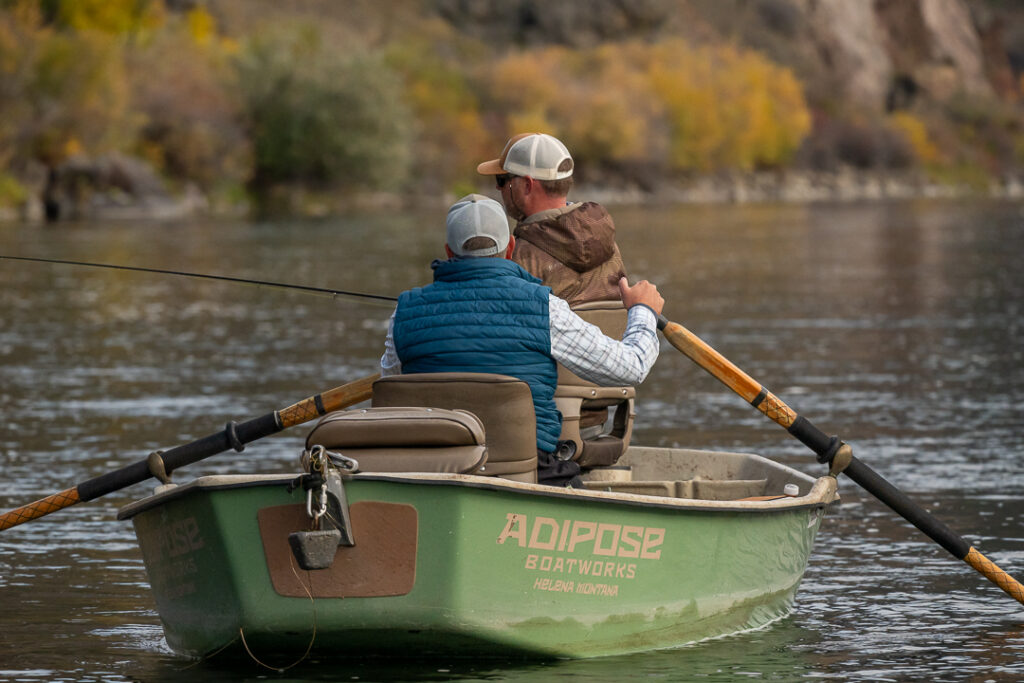
Fishing lakes and reservoirs demands patience, precision, and long leaders. Whether you’re suspending chironomids under an indicator, slow-hand-twisting leeches, or fishing balanced flies just off the bottom, a longer rod gives you a noticeable edge.
Strike detection improves as well. Stillwater takes can be painfully subtle. Fish may simply inhale the fly and sit there. With a longer rod, you maintain a straighter connection to the rig, making it easier to see tiny indicator twitches or feel slight pressure changes when fishing without one.
Hook sets on stillwater also benefit from added length. Long leaders and deep presentations create slack by default. A 10-foot rod helps pick up that slack quickly, allowing you to lift smoothly and stick fish without snapping light tippet.
For anglers who split their time between rivers and lakes or guides who want one rod that does both well, the 10-foot rod transitions seamlessly from moving water to stillwater without compromise.
Why Guides Love 10-Foot Fly Rods
There’s a reason you see so many guides rigging 10-foot rods day after day.
They’re forgiving.
They’re efficient.
They help clients land fish.
When you’re teaching newer anglers, the extra rod length compensates for imperfect timing, late hook sets, and less-than-perfect mends. It shortens the learning curve.
For experienced anglers, it allows for more technical presentations, tighter drifts, and better results when conditions get tough.
Choosing the Right Length and Weight
For most nymphing applications, a 10-foot 4-weight hits the sweet spot. It’s light enough for all-day fishing, protects fine tippet, and still has the backbone to land large trout.
A 10-foot 5-weight is a great option if you fish lakes, heavier rigs, or larger flies more often.
The Bottom Line
The 10-foot fly rod didn’t replace the 9-footer—it earned its place alongside it. But when it comes to nymphing, especially on big, technical rivers, the 10-Foot Fly Rod Rules.
More control.
Better drifts.
Cleaner hook sets.
More fish.

 Fly Fishing From a Drift Boat
Leave a Reply