

Dry fly fishing the Missouri River is technical work. The fish here see a lot of insects, the water is gin-clear, and a sloppy presentation gets refused every time.
For a full breakdown of the Missouri’s dry fly hatches, techniques, and seasonal timing, see our guide to dry fly fishing the Missouri River. What follows are the fundamentals that apply any time fish are rising on the Mo.
Why Dry Fly Fishing the Missouri River is Special
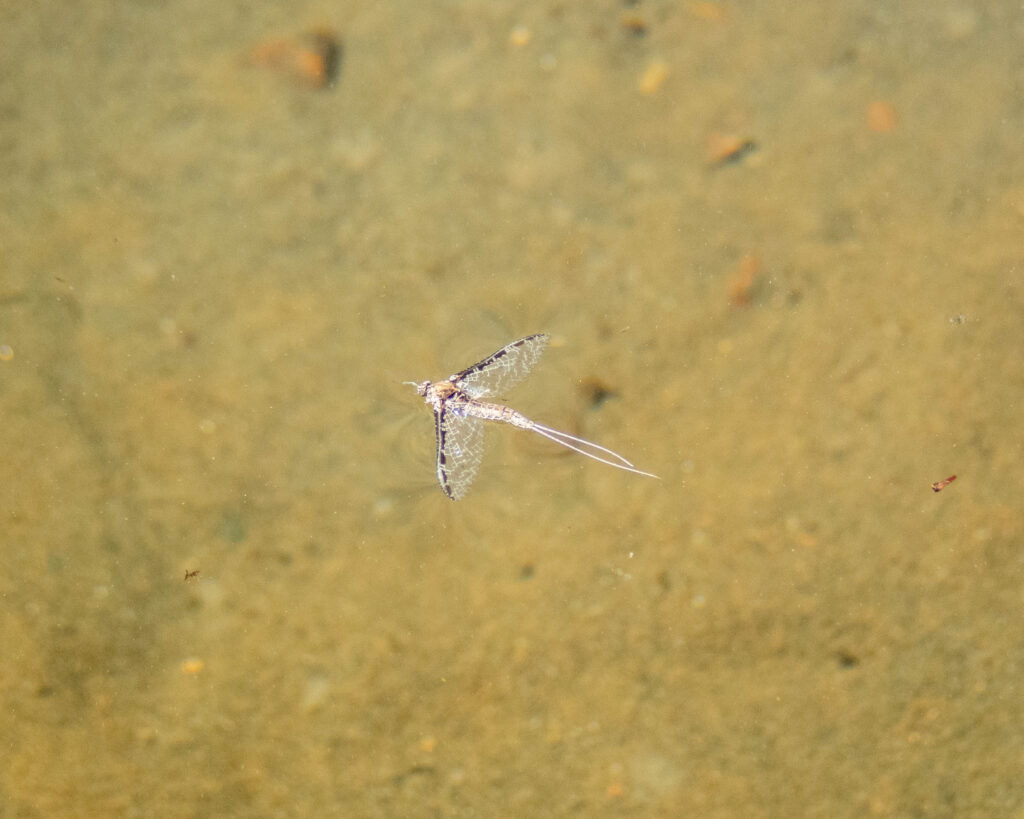
The Missouri River’s controlled flows create stable water temperatures and consistent hatches throughout the season. From the Pale Morning Dun hatches in June and July to Trico spinner falls at dawn through summer, rising trout are a regular occurrence on this tailwater.
These fish see thousands of flies throughout the season. They’ve been caught and released multiple times, and they get more educated as the season progresses. Success requires attention to detail, proper presentation, and the willingness to adapt when trout refuse your offering.
1. Clean Your Fly Line Before You Launch
A dirty fly line sinks, drags, and won’t mend cleanly, three things that will kill your dry fly game before you even make a cast. This is a five-minute job you do at the truck, not on the water. Wipe it down with a Rio cleaning towelette or a damp cloth with a little line dressing, and you’ll immediately notice the difference in how it shoots and sits on the surface. A clean line floats higher, mends with less effort, and gives your fly a longer drag-free drift. It’s the easiest performance upgrade there is.
2. Sit Down and Stay Low
Stealth is the first rule of dry fly fishing on the Missouri. The river is flat and clear, and rising trout are already on edge, feeding in the surface film, which makes them especially alert to movement and shadow. Most Missouri River guides have pulled the front casting braces out of their boats for exactly this reason. Sit down, keep your profile low, and let the boat do the positioning work.
Standing up to cast farther is almost always a mistake. You don’t need 60 feet of line, you need to be in the right position, and your guide will get you there. Short, accurate casts from a seated position beat long, sloppy casts standing up every time.
3. Time the Rise Form
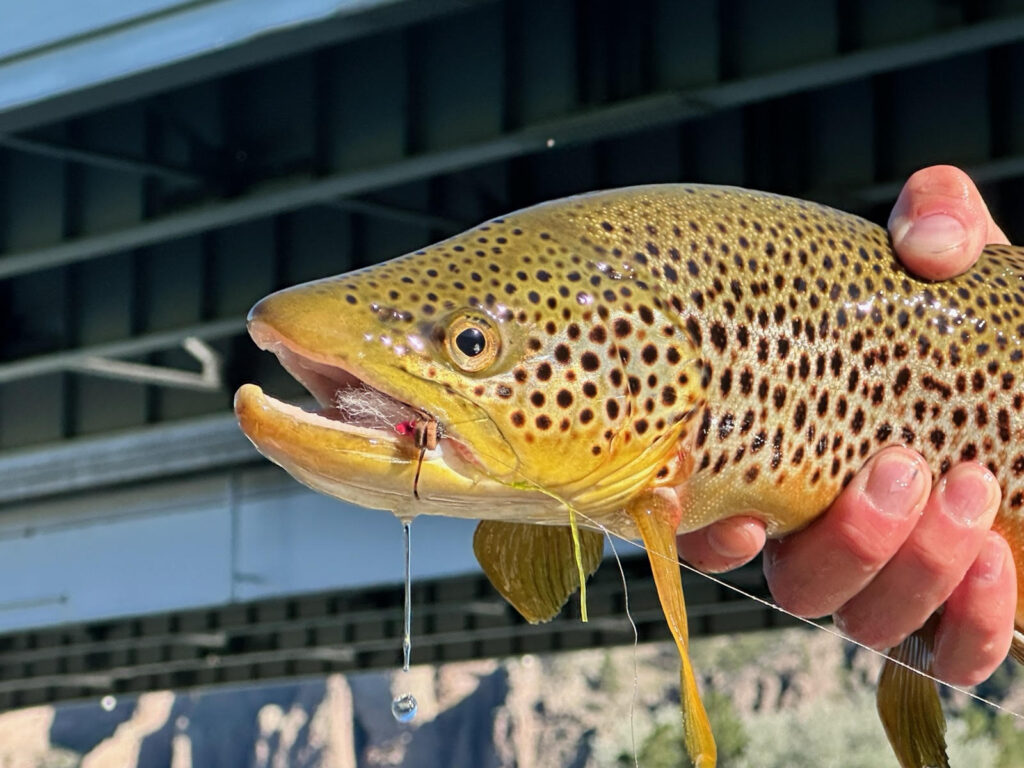
On technical water like the Missouri, casting to a rise ring and hoping for the best is a low-percentage move. Watch the fish first. Most actively feeding trout have a rhythm, they’ll rise every 8, 12, or 20 seconds with enough consistency that you can predict the next one. Count the cadence. Then place your fly in the feeding lane so it arrives just as the fish is about to come up.
A fly that’s already in position when the trout rises is far more likely to get eaten than one that splashes down on top of it. Aim a foot or two above the last rise form, close enough to drift through the lane, far enough that your leader doesn’t spook the fish on the presentation.
4. Use an Aerial Reach Cast
The reach cast is the most important tool in a drift boat angler’s dry fly arsenal. After you deliver your forward cast, move the rod tip upstream while the line is still in the air. This lays slack into the line before it even touches the water, buying you extra drag-free drift without disturbing the fly.
On the Missouri’s flat, slow water where trout have a long look at everything, that extra foot or two of clean drift can be the difference between a refusal and a take. More on mending and aerial presentations if you want to dig into the mechanics before your trip.
5. Know When to Move On
Patience matters in dry fly fishing, but so does knowing when you’re done. If you’ve made clean presentations, changed flies, adjusted your drift, and the fish still isn’t eating, leave it. Don’t burn another 20 casts on a fish that’s told you no.
The Missouri has miles of productive water and rising fish around every bend. The anglers who catch the most fish on a given day aren’t the ones who stayed on one pod the longest, they’re the ones who moved efficiently, found cooperative fish, and kept their flies in the right water. Your guide is watching the river ahead. Trust that read and move when it’s time.
6. Use the Right Floatant for the Job
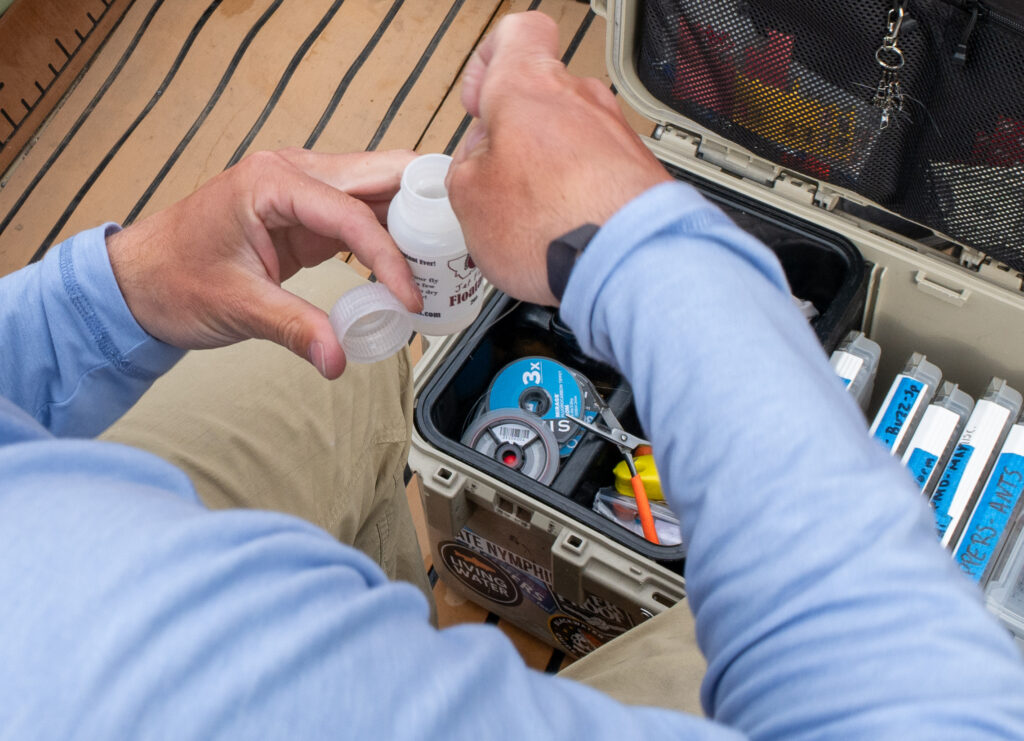
Not all floatants work the same, and matching the right product to your fly type keeps patterns riding high through technical Missouri River presentations.
Dry Powder Shake — Brush liberally into hackle and dubbing, shake off excess. Best for fresh flies out of the box. (Frog’s Fanny, Loon Dust)
Gel Floatants — Restore flies that have caught fish or taken on water. Apply sparingly to hackle and body. Works well on standard dry flies, but avoid on CDC, gels mat the delicate fibers and ruin their natural buoyancy.
Liquid Floatants — Ideal for CDC patterns and quick reapplication between fish. Dries fast and doesn’t clump fibers.
Pro tip: Carry all three. Dry shake for fresh flies, gel for standard patterns that need restoration, liquid for CDC.
A Few More Things That Matter
Leader and Tippet
Missouri River dry fly fishing demands long, fine leaders. Twelve- to 14-foot leaders tapered to 4x–4.5x are standard. Fluorocarbon tippet can sink, so stick with quality nylon for dry fly work.
Fly Pattern Selection
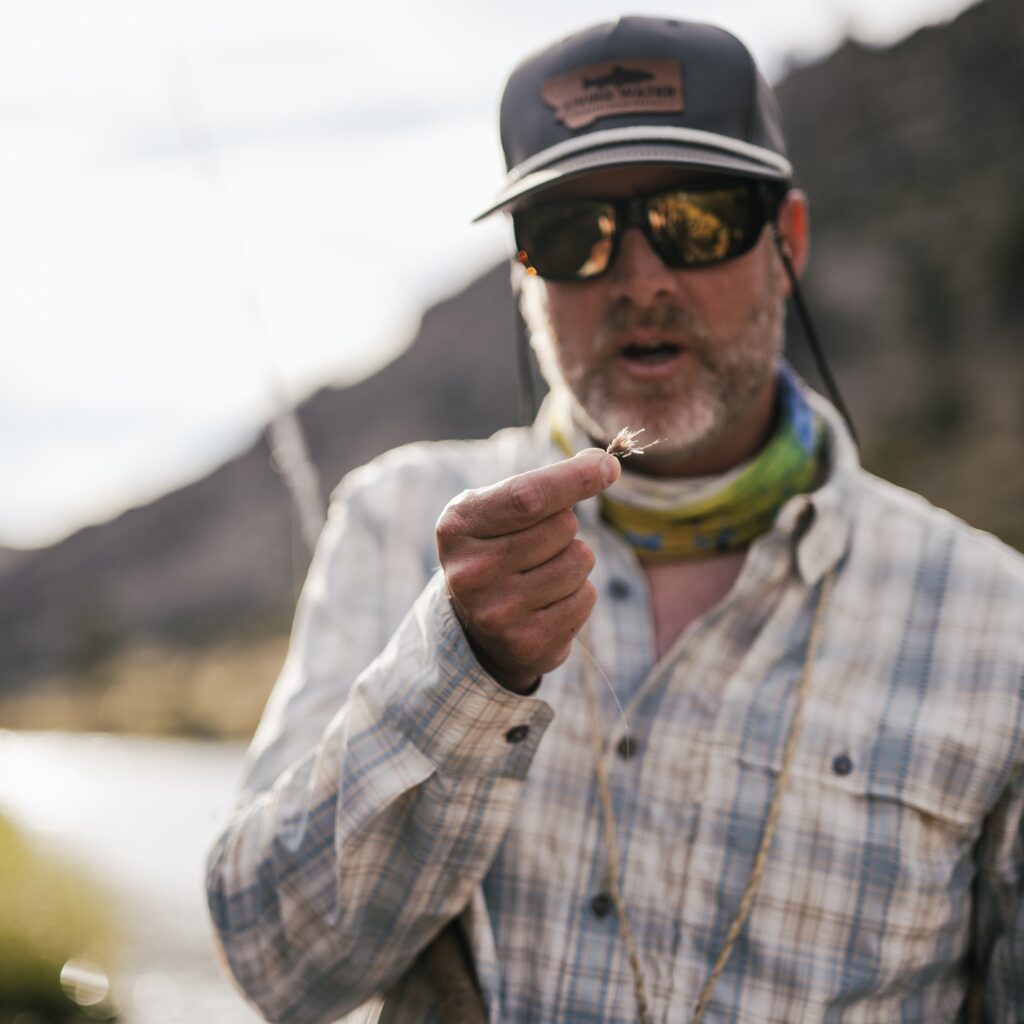
While specific patterns matter, profile and size often matter more. During any hatch, a size 16–18 fly with the right silhouette will catch fish even if it’s not a perfect match. Carry spinners, emergers, and cripples in the same size range.
Reading Water for Rising Fish
Look for:
- Consistent rise rings in the same location
- Feeding lanes along current seams
- Rise forms near structure (weed beds, boulders, banks)
- Pods of multiple fish rising together
Be skeptical of:
- Single, sporadic rises, these fish are often difficult
- Rises directly downstream from the boat (fly-first presentation is nearly impossible)
- Very fast, turbulent water unless you’re actively drifting through it
Best Times for Dry Fly Fishing the Missouri River
April – May: Blue-Winged Olive hatches. Mother’s Day Caddis can be exceptional if conditions align.
June – August: Peak dry fly season. Pale Morning Duns hatch late morning through early afternoon. Tricos, Caddis, hoppers, and ants all in play.
September – October: Blue-Winged Olives return. Sparse October Caddis and hoppers. Tie on an orange Chubby.
Experience Missouri River Dry Fly Fishing
These fundamentals, clean line, low profile, timing the rise, aerial mends, knowing when to move, and using the right floatant are what separate productive days from frustrating ones on the Mo.
Ready to experience dry fly fishing the Missouri River

 The Best Dry Fly Rods for the Missouri
Leave a Reply