
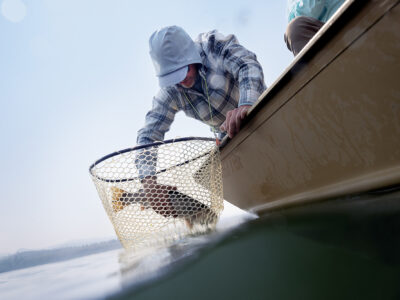
When most anglers think of the Missouri River near Helena, they picture cold, clear tailwater, long drift boat runs, and technical dry fly fishing below Holter Dam. But tucked just upstream lies one of Montana’s most overlooked fisheries — Holter Lake. For anglers willing to trade current seams for open water, this 4,800-acre reservoir offers some of the most consistent and rewarding stillwater fly fishing in the state.
Holter Lake is a true bug-driven fishery. Healthy populations of chironomids and Callibaetis mayflies sustain strong numbers of rainbow and brown trout, along with robust populations of northern pike, walleye, and yellow perch. When conditions align, the trout fishing rivals anything happening downstream on the Missouri River tailwater — with the added bonus of far fewer anglers competing for the same fish.
Why Holter Lake Fishes So Well
Holter Lake sits within the Missouri River system approximately 45 miles north of Helena, benefiting from cold, clean water and a constant influx of nutrients from upstream Hauser Dam. Unlike featureless reservoirs, Holter features diverse structure that concentrates both food and fish: rocky points that drop into deep water, shallow flats where aquatic vegetation flourishes, extensive weed beds that produce prolific insect hatches, submerged timber providing cover and ambush points, and steep canyon walls along the Gates of the Mountains section.
This structure makes Holter approachable for anglers new to stillwater while remaining technical enough to challenge experienced lake fishermen. Cold water releases from Hauser Dam keep temperatures stable, creating ideal trout habitat with abundant aquatic insect populations and healthy fish growth rates.
Chironomids: The Foundation of Holter Lake Fishing
Chironomids — commonly called buffalo midges or simply “midges” — form the backbone of Holter Lake’s trout diet and are present nearly year-round. These aquatic insects hatch in massive numbers, making them the most reliable food source trout key on throughout the season.
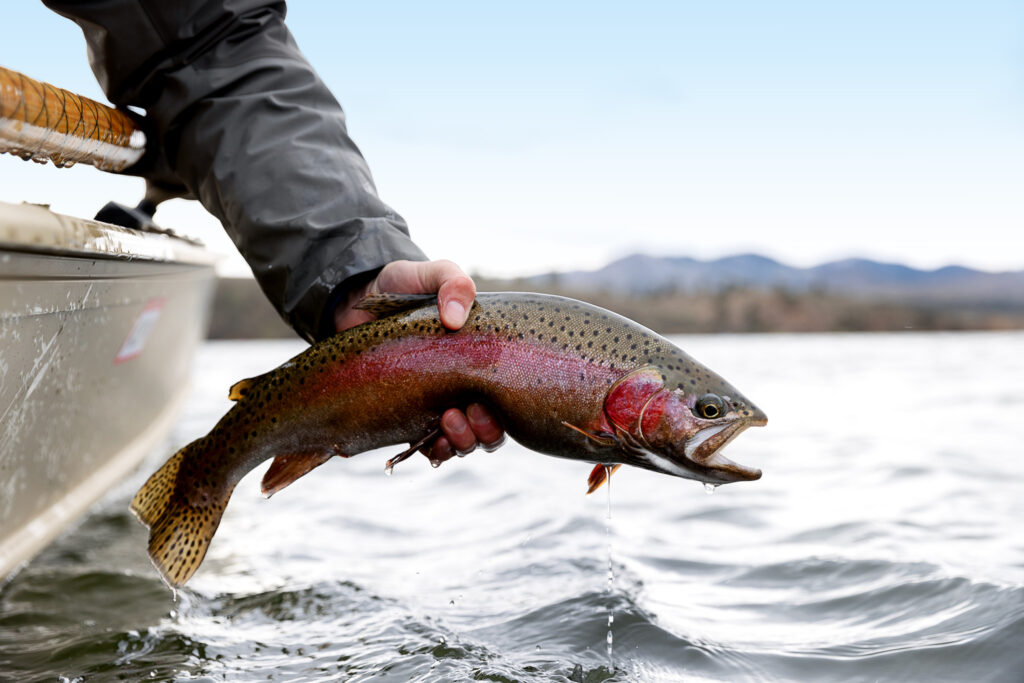
During chironomid hatches, trout stage near drop-offs and suspend in the water column rather than holding on bottom. As pupae rise toward the surface, trout move vertically to intercept them — creating classic indicator fishing opportunities where depth control is everything.
Reading the Surface
When the lake is calm, watch for subtle feeding signs: nervous water where fish are moving just beneath the surface, delicate dimples from trout sipping pupae in the film, occasional dorsals slicing the surface as fish turn to take emerging midges, and swirls indicating direction changes as fish intercept food. This is quiet, technical fishing. When you dial in the right depth with the correct pattern, the action can be steady and incredibly satisfying.
Depth Control
Being six inches off target depth can mean the difference between a banner day and a fishless outing. Start deep and work your way up, adjusting your indicator position until you locate the feeding zone. Use long leaders (12–14 feet) for precise depth control. Takes can range from subtle taps to slow, deliberate pulls — watch your indicator closely.
Effective Chironomid Patterns:
- Zebra Midge (#12–18) in black, red, olive
- Thread Midge (#14–18)
- Chromie (#14–16)
- Ice Cream Cone (#12–16)
- Frostbite Chironomid (#14–16)
Callibaetis Hatches: Visual Dry Fly Fishing
Late spring through summer transforms Holter Lake into a dry fly angler’s dream. Callibaetis mayfly hatches bring trout to the surface in dramatic fashion, creating visual fishing opportunities that rival the Missouri River’s famous PMD hatches downstream.
Callibaetis are stillwater mayflies perfectly adapted to reservoir conditions. They hatch in weed beds, along drop-offs, and over shallow flats, emerging from mid-morning through early afternoon during peak season (June–August). Unlike river mayflies that drift passively in current, Callibaetis create concentrated feeding zones as they emerge from specific locations — making them predictable once you learn the water.
Reading the Rise
When Callibaetis hatches occur, watch for gulping rises as fish take emerging nymphs and floating duns, porpoising behavior where fish show back and tail, and cruising patterns along weed edges and drop-offs. Multiple fish often work the same area as the hatch concentrates.
Sight Fishing Technique
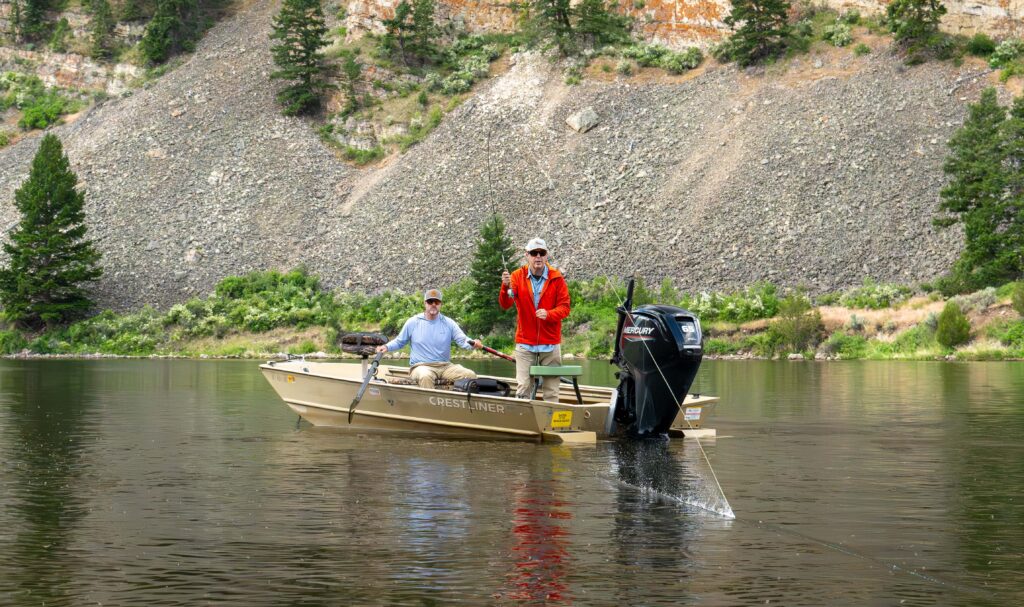
This is when Holter Lake becomes visual and addictive. Large trout cruise weed edges, flats, and shorelines, methodically sipping emergers and cripples. Kill your electric motor well before casting range and position to intercept cruising fish rather than chasing them. Lead fish by 3–6 feet, placing your fly where they’ll encounter it naturally. Accuracy matters more than distance: a 30-foot cast placed perfectly outproduces a 60-foot cast that lands poorly.
Don’t overlook the spinner fall. Callibaetis spinners collect on the surface in the evening, and fish that ignored your dun all afternoon will key hard on spent wings lying flush in the film. Keep a box of spinners handy.
Effective Callibaetis Patterns:
- Callibaetis Comparadun (#14–16)
- Callibaetis Cripple (#14–16)
- Callibaetis Emerger (#14–18)
- Parachute Adams (#14–16)
- Callibaetis Spinner (#14–16) — critical during spinner falls
Leeches: Holter Lake’s Most Overlooked Food Source
While chironomids and Callibaetis get most of the attention, leeches thrive in Holter Lake’s ecosystem year-round and represent a high-protein meal trout pursue aggressively. When insect hatches slow or water conditions make technical presentations difficult, leeches consistently outproduce more match-the-hatch patterns.
When to Fish Leeches:
- Wind pushing into shorelines — concentrates baitfish and opportunistic feeders
- Slightly off-color water reducing trout’s ability to see small flies
- Between hatches when surface activity is minimal
- Early morning or late evening when light is low
- Any time you need to cover water efficiently and trigger aggressive takes
Presentation Techniques
Leeches invite movement. Under an indicator on windy days, wave action imparts natural undulation while you focus on depth. With a slow strip, cast toward structure and retrieve with steady strips interrupted by pauses. For a sink-and-draw, let the leech settle on a long leader, lift your rod tip to raise it off the bottom, then let it fall again — trout often strike on the fall.
Effective Leech Patterns:
- Woolly Bugger (#6–10) in black, olive, brown
- Thin Mint Bugger (#6–10)
- Bruised Balanced Leech (#8–10)
- Fruit Rollup (#6–10)
Streamer Fishing: Targeting Trophy Trout and Northern Pike
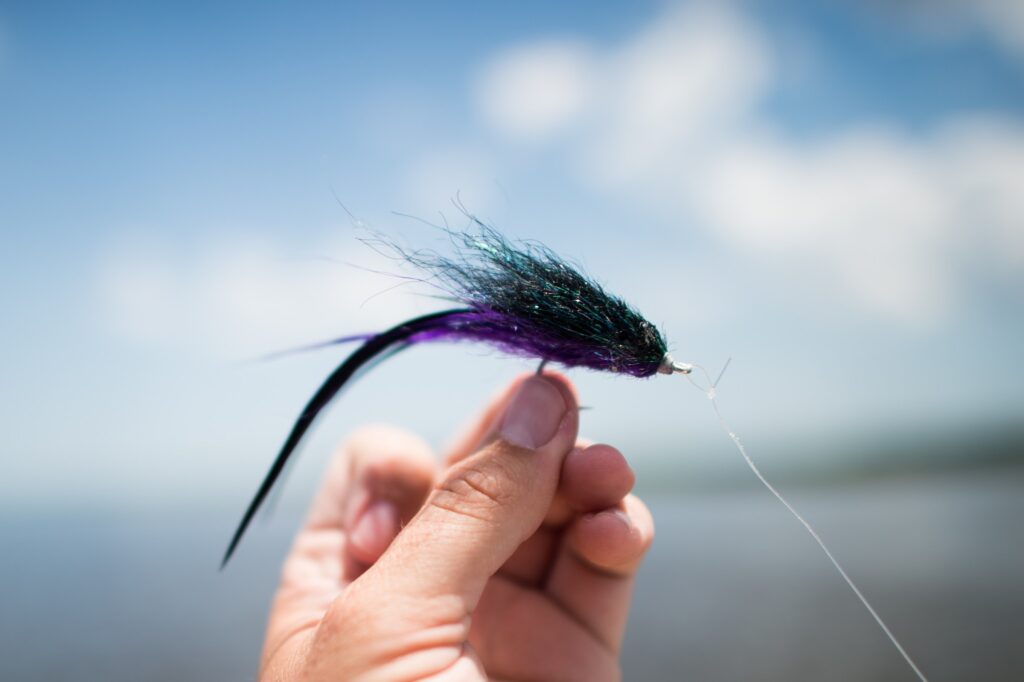
Streamer fishing is one of Holter Lake’s most underrated opportunities, particularly in fall when large trout and northern pike feed aggressively ahead of winter. As water cools from September onward, big rainbows and browns shift from selective surface feeding to opportunistic predation — chasing baitfish and anything that looks like an easy meal.
Fall Streamer Strategy
Focus on transition zones: rocky points dropping into deep water, weed bed edges, submerged timber, and the steep walls in the Gates of the Mountains section. Use a sinking or intermediate line to get your fly down, then retrieve with erratic strips that mimic wounded prey. Vary your retrieve speed — sometimes a fast, aggressive strip triggers reaction strikes; other times a slow, pulsing retrieve is more effective. When in doubt, slow down.
Northern Pike on the Fly
Holter Lake holds a healthy northern pike population that offers some of Montana’s most exciting fly fishing. Pike cruise shallow flats and weed edges, particularly in spring after ice-out and again in fall. Large, flashy flies in chartreuse, white, or black are effective — think big articulated patterns. Wire tippet (20–30 lb) or patterns tied back on a long shank hook acts a bite guard.
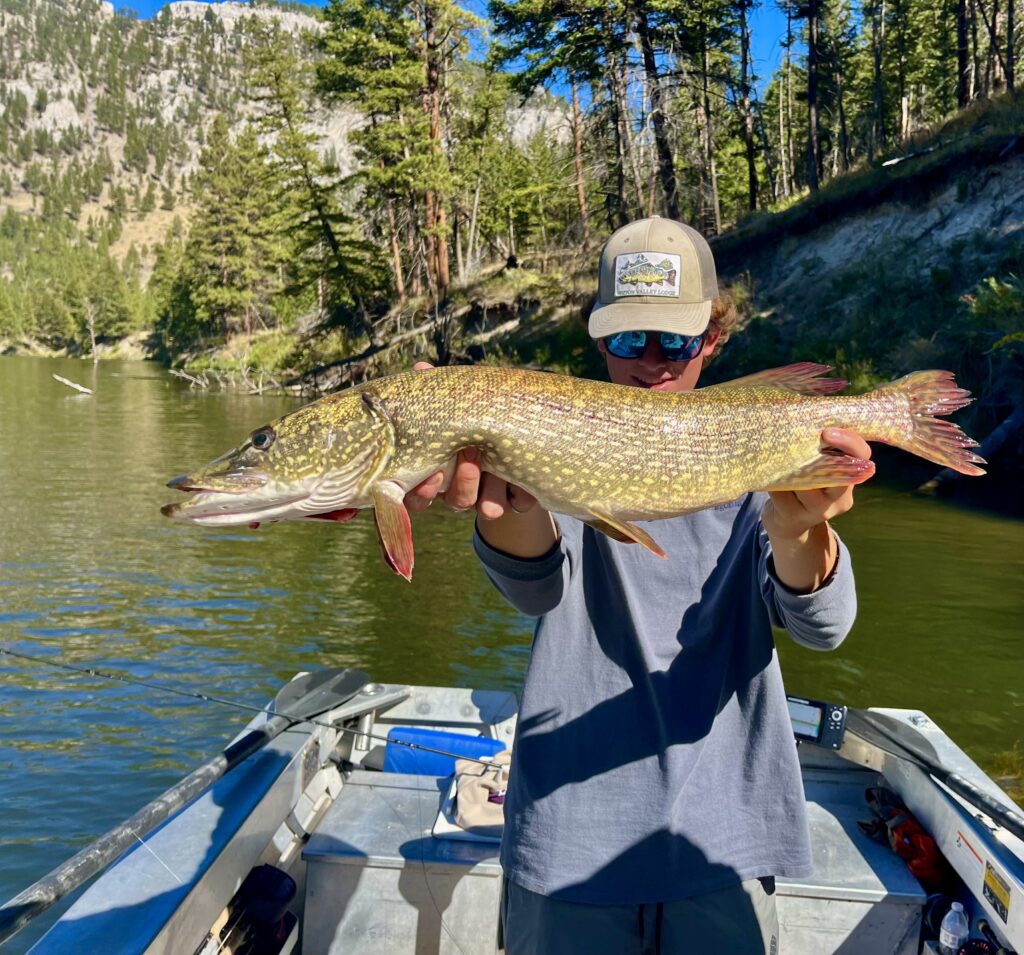
Effective Streamer and Pike Patterns:
- Woolly Bugger (#2–6) in black or olive for trout
- Clouser Minnow (#2–4) in chartreuse/white or orange/yellow
- Articulated streamer (#1/0–2/0) in yellow, white, or chartreuse for pike
- Deceiver (#1/0–2/0) in red/white or orange/white for pike
Seasonal Guide to Fly Fishing Holter Lake
Spring (April – May) Water temps: 40–55°F. Trout feed cautiously near drop-offs and deeper structure. Chironomid hatches intensify as water warms. Patient, deep presentations under an indicator produce the most consistent action. Primary patterns: chironomids and leeches.
Early Summer (June) Water temps: 55–65°F. The transition period. Callibaetis hatches begin but remain inconsistent — watch for surface activity mid-morning through early afternoon. Chironomids still the most reliable producer. Primary patterns: chironomids, leeches, early Callibaetis.
Peak Summer (July – August) Water temps: 60–68°F. Peak Callibaetis activity. Consistent hatches create extended visual feeding opportunities. Fish early mornings and evenings for best action; midday heat can push fish deep. Primary patterns: Callibaetis all stages, terrestrials, chironomids.
Fall (September – October) Water temps: 55–65°F. Trout and pike feed aggressively ahead of winter. Streamer fishing peaks. Callibaetis hatches taper off but chironomids stay productive. Fewer anglers on the water. Primary patterns: streamers, leeches, chironomids, late Callibaetis.
Late Fall / Early Winter (November – January) Water temps: 35–50°F. Challenging but fishable. Trout are lethargic but will feed during stable, warm weather windows. Patience and precise depth control are critical. Primary patterns: chironomids, small leeches.
The Gates of the Mountains: Where History Meets Fishing
Holter Lake flows into the Gates of the Mountains, the spectacular limestone canyon named by Meriwether Lewis on July 19, 1805. As the Lewis and Clark Expedition navigated upstream, Lewis described the canyon walls as appearing to close and open like a massive gate around them — hence the name.
These steep rock walls plunging into deep water create prime habitat. The canyon’s structure concentrates fish along vertical walls, ledges, and submerged boulders. Wind-driven currents push food against the walls, drawing feeding trout. It’s a rare place where excellent stillwater fishing and Montana history intersect in one of the state’s most dramatic settings.
Boat Access on Upper Holter
Holter Lake requires watercraft for effective fishing. The reservoir is too large to cover productively from shore, though some bank fishing exists near campgrounds.
Recommended Watercraft:
- Boats with electric trolling motors — quiet positioning is critical for stillwater fishing
- Pontoon boats with oars and anchor system
- Kayaks and inflatable kayaks with anchor (suitable in calm conditions)
- Float tubes — effective near shore in calm weather, but exercise caution in wind and stay close to the bank
Key Access Points:
Gates of the Mountains Marina — Full-service marina and launch at the south end of the lake, closest to the canyon section. Take Exit 209 off I-15 north of Helena, then follow Gates of the Mountains Road approximately 3 miles to the marina.
Log Gulch Campground — From Helena: Take I-15 N toward Great Falls. Take exit 226 to Wolf Creek. Turn right toward Recreation Road. Turn Left onto Recreation Road. After crossing WC bridge turn right onto Beartooth Road. Concrete boat ramp, RV and tent camping, vault toilets, managed by the BLM. Best access point for fishing lower lake. No reservation required for day-use boat launch.
Practical Notes:
- Afternoon winds on Holter can be significant .
- A fish finder dramatically improves your ability to locate drop-offs, weed edges, and suspended fish
- Cell service is limited near the Gates of the Mountains
- Long leaders (12–14 feet) and quality polarized sunglasses are essential
Gear Recommendations for Stillwater
Fly Fishing Holter Lake can require a slightly different approach for gear
- Rod: 10 foot 4-5-weight for chironomids and Callibaetis; 9-foot 8-weight for pike and streamers
- Lines: Floating line for chironomid and Callibaetis work; intermediate or sink-tip for leeches and streamers
- Leaders: 9–12 foot tapered leaders for stillwater presentations; wire tippet (20–30 lb) for pike
- Strike indicators: Adjustable Oroz or similar for chironomid depth control
- Anchor: Essential for holding position on structure or a weed edge. (We often use Two)
- Polarized sunglasses: Critical for reading the surface and sight fishing cruising fish
Why Holter Lake Deserves Your Attention
Holter Lake isn’t a backup plan for when the Missouri River isn’t fishing well — it’s a destination fishery in its own right. For anglers willing to learn stillwater tactics and embrace a slower, more deliberate style of fishing, Holter delivers consistent action throughout the season, technical chironomid fishing that sharpens your lake skills, visual dry fly fishing to cruising trout, chances at legitimate trophy trout 24 inches or bigger, northern pike on the fly, far less pressure, and year-round fishing opportunities in some of Montana’s most spectacular scenery.
The Missouri River gets the headlines. Holter Lake delivers the goods
Ready to experience it?
(406) 465-1688

 Winter Fishing on the Missouri River
Leave a Reply