
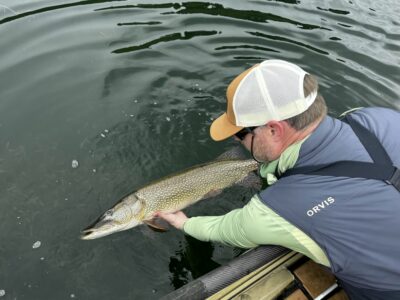
Best known for its blue ribbon trout streams, Montana is quietly home to one of the most underrated predator fisheries in the West. Pike fishing Montana doesn’t get the headlines that Missouri River trout do but ask anyone who’s had one blow up a big streamer on Holter Lake and they’ll tell you the trout can wait.
We guide pike trips on Holter Lake and the surrounding Missouri River reservoir system.
The Northern Pike
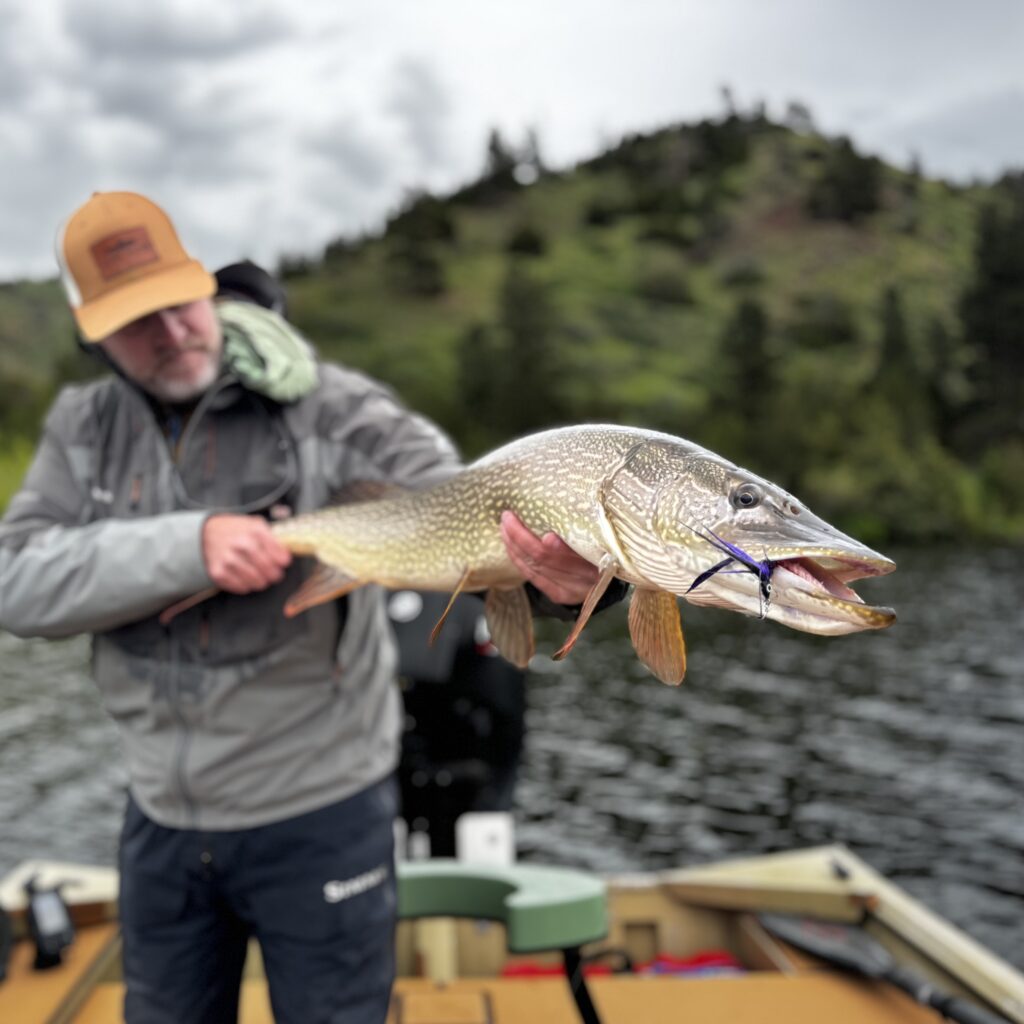
Northern pike are one of Montana’s most effective freshwater ambush predators. They reach over 40 inches, top 35 pounds, and they are built around one thing: eating. Razor sharp teeth, a body that can accelerate from still to full speed in less than a rod length, and a willingness to attack almost anything that crosses their sightline. Fly fishing for northern pike in Montana is a different game than chasing trout. You’re not matching a hatch. You’re triggering a predator.
Once you’ve watched a 40-inch pike track a fly across a shallow flat and eat it in two feet of clear water, it’s a hard thing to forget.
Holter Lake – The Fishery We Know Best
Holter Lake is a roughly a 4000-acre reservoir on the Missouri River system. The Land of the Giants trout fishery gets most of the attention in this canyon country, as it should. But the pike fishery doesn’t, which means good numbers of fish and water that doesn’t see much pressure from fly anglers.
The structure on the lower reaches is exactly what pike are built for: shallow weedy bays, submerged timber, weed-edge drop-offs with clear sight lines to open water. In spring, we’re sight fishing in two to four feet of water, spotting fish, making the cast, watching the eat. It’s some of the most technical visual fishing you’ll do on any species. There’s no guessing. You see the fish, you see the fly, and you see every bit of what happens next.
Montana holds pike on both sides of the Continental Divide, in lakes, reservoirs, and slower-moving rivers. We focus on the Missouri River reservoir system because it’s what we know and where we guide. If you’re looking for fly fishing for northern pike in Montana with a guide who fishes this water every season, this is the fishery.
Sight Fishing for Pike -What It Actually Looks Like
Spring on Holter is the clearest window into what makes this fishery unusual. Water clarity over the flats can be exceptional , you’re scanning for shapes, not just casting to likely water. The long, dark silhouette of a cruising pike in three feet of clear water is unmistakable once you’ve seen it.
When you spot one, the approach is deliberate. You lead the fish, cast to where it’s going, not where it is. The fly lands, the strip starts, and you watch the fish respond. A pike that flares its gills and tips down is committed. One that angles away needs a faster strip or a hard pause to trigger a reaction. You’re reading the fish in real time, adjusting the retrieve to match what the fish is telling you.
That sequence, spot, cast, strip, eat, is one of the better things you can do on a fly rod. It rewards patience and accurate casting more than power, and the eat is always visible.
When to Fish
Spring and early summer
Spring (April – June)
Water temperatures climbing through the 50s pull pike out of their winter holding areas and onto the shallow flats where they’re most visible and most aggressive. This is the sight fishing window, long days, clear water, big fish moving in the shallows. The biggest fish of the year typically come from this period.
We book spring pike dates early. If May or June is on your list, reach out before those slots are gone.
Early Summer (July – August)
Rising water temperatures push fish off the flats and into deeper weed lines and shaded structure. The fishing tightens up, but it doesn’t shut down. Early mornings and evenings remain productive; midday slows, same as it does for trout in August. If you’re flexible with timing and willing to structure your day around the light, summer pike fishing on Holter is still worth doing.
Fall (September – October)
Cooling water brings another hard feeding period as fish respond to dropping temperatures with sustained aggression. Fall also lines up with streamer season on the Missouri. If you want to run a day that covers pike on Holter and trout on the Land of the Giants, fall is the window. We run those combo days regularly and they make for a full and varied fishing experience.
Reading Pike Water
Pike don’t wander. They hold in specific structure and ambush from it. On Holter or any Montana pike water, look for the same elements:
Weed flat edges — The line where aquatic vegetation ends and open water begins is a primary hunting lane. Pike stage here and make short bursts into the shallows to feed.
Submerged timber — Deadfall and flooded brush provide shade, cover, and a clear angle to attack from. Fish tight to the structure, not around it.
Drop-offs — Where a shallow flat breaks into deeper water, pike transition through the day. Early and late light pushes them up; midday heat drops them down.
Back bays and side channels — Slower water with some current break. Pike conserve energy when they can. Slack water with an access lane to the main flat is classic holding water.
Gear Setup for Fly Fishing Northern Pike
Rod and Reel
An 8 or 9-weight covers most situations on Holter. Heavy enough to turn a big fish away from weeds and throw large air-resistant flies, manageable enough over a full day. You don’t need a 10-weight unless you’re fishing big articulated patterns in wind, which does happen in Montana in April. A quality large-arbor reel with a reliable drag is more important. Pike runs are short and violent, not long.
Leader and Tippet
Six to 7 feet of 30–40 lb fluorocarbon as the main leader, then 10-12 inches of single-strand wire bite tippet in the 20–30 lb range. (We use shorter leaders when fishing sinking lines. )Pike teeth will cut through any monofilament or fluorocarbon on a solid eat, wire tippet is not optional, it’s how you keep flies and fish from parting ways mid-fight.
Polarized Sunglasses
Amber or copper lenses for Montana’s light. You’re looking through the water column to spot fish, track follows, and watch the eat. The wrong lenses wash out contrast and you miss fish that are right there. Sunglasses matter more on a sight fishing day than any other piece of gear.
Fly Patterns for Pike
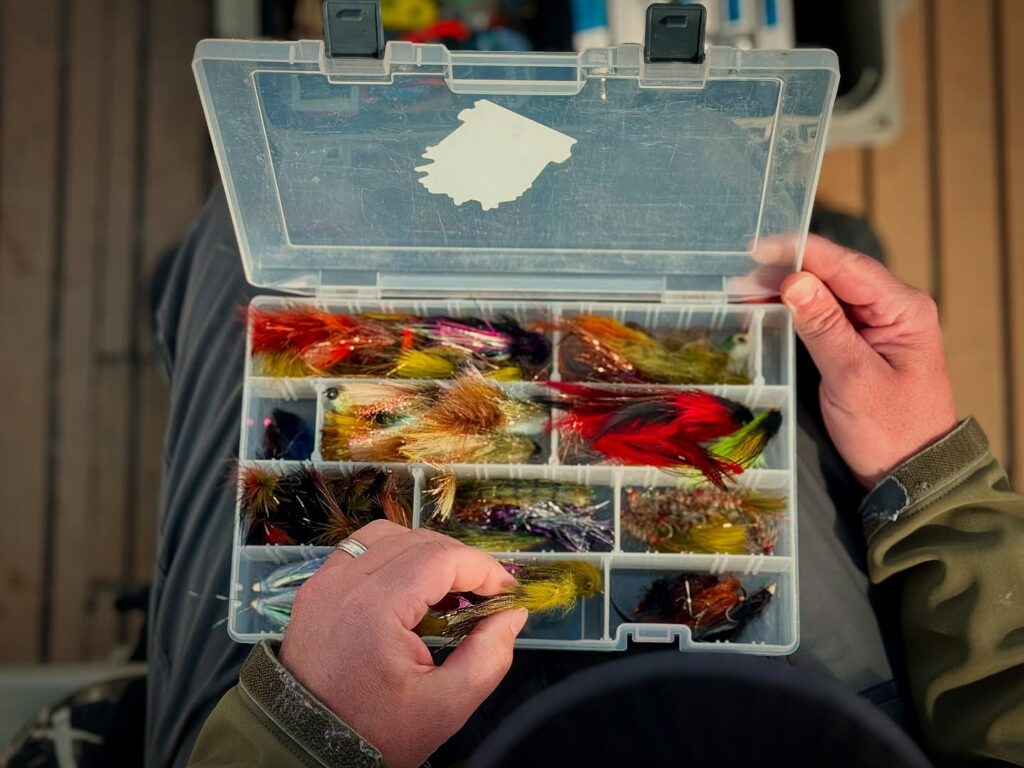
Articulated Streamers
Four to six inches, some flash. The articulated connection between the front and rear hook gives the fly a swimming action that stiffer patterns don’t produce and that kick on the pause is often what seals the deal. Carry chartreuse/white, all-white, and black/purple. Clouser Minnow, Bunny Leech, and larger sculpin-style articulated patterns are the workhorses.
Poppers
When fish are actively feeding in very shallow water, a large popper producing surface commotion draws explosive strikes. The appeal is partly visual, you see and hear everything that happens. Foam-bodied poppers with rubber legs or bucktail, sized up from what you’d fish for bass. Strip and pause, let the rings flatten, strip again.
Dahlberg Diver
A searching fly that bridges surface and subsurface. The buoyant head gurgles and dives on the strip, then rises on the pause. The rabbit strip tail pulses the whole time. Useful on overcast days and in choppier water when pike aren’t visible but you want something that covers different depths in the water column on a single retrieve.
Retrieve
Start with a hard two-strip pause and vary from there. The pause is when most pike commit — the fly rises and the fish tips down. If fish are following without eating, try a faster, more erratic strip sequence. If there’s no interest at all, slow everything down and give the fly more time at depth. Watch your follows closely. Fish will tell you what they want.
The Thrill of the Fly Fishing for Northern Pike
Fly fishing for pike is a fundamentally different experience from chasing trout. There’s no match-the-hatch puzzle, no delicate presentation, no 5x tippet. You’re hunting. You’re scanning water, making long casts, and triggering a predatory response from one of the most wired-up fish in freshwater.
Montana isn’t just a trout state. Holter Lake pike fishing is proof of that, and it’s a fishery we’re genuinely proud to share with anglers who are ready for something outside the norm. If you’ve been fishing Montana trout for years and want something that hits differently, fly fishing for northern pike in Montana is worth a dedicated trip on its own.
Book a Guided Pike Trip
Montana isn’t just a trout state. If you want to see what else this river system holds or if pike are the reason you’re coming out here in the first place give us a call.
View Guided Pike Trips and Rates →
Call us at (406) 465-1688 .
Frequently Asked Questions
Do I need experience fly fishing for pike specifically? No. If you’re comfortable on an 8-weight, can make consistent casts in the 30–40 foot range, and know how to strip a fly, you have the skills. The presentation is assertive rather than delicate, closer to throwing streamers for trout than dry fly work.
What’s the best month to book a pike trip? Late April, May and early June for the sight fishing window on the flats and weed beds. September and October for the fall feeding period and the possibility of combining pike and trout on the same day.
Can I add a Land of the Giants trout day to a pike trip? Yes. Fall is the natural window when both fisheries are running well at the same time. We can structure those days to hit both peak feeding windows.
Where do trips launch from? We guide the entire Missouri River system for Pike. We use multiple launch points depending on season, and weather. Our primary launch point is the Gates of the Mountains marina or Holter Lake, about 20 miles north of Helena and 35 miles from Craig.
Do I need to bring flies? No. We bring the flies. Articulated streamers, poppers, divers , whatever the conditions call for that day.

 Hell’s Bay Professional Review
Leave a Reply