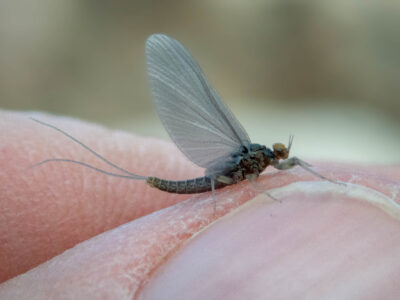
The Missouri River near Craig is famous for its prolific insect hatches. As local guides who fish this water daily, we’ve compiled this hatch chart to help you understand timing, patterns, and techniques that produce results throughout the season.
This chart covers the tailwater section from Holter Dam through Craig to Cascade.
Quick Reference: Missouri River Hatch Calendar
Detailed Hatch Information
Blue-Winged Olives (Baetis)
Peak Season: April-May (Spring) | Mid-September-October (Fall)
Sizes: #16-20 (Spring), #18-22 (Fall)
Best Conditions: Overcast, drizzly or snow days
BWOs provide the Missouri River’s first major dry fly opportunities and return in fall. These small mayflies hatch best on gray, overcast days—the weather that keeps most anglers home creates the best BWO fishing.
Where to Fish: Slower water—tailouts of flats, inside seams, soft water near riffle corners, back eddies.
Top Patterns: Parachute Adams #16-20, 401k Baetis #18-20, RS2 #18-20, BWO Cripple #18-20
Technique: Long leaders (12-14 feet to 5X) and drag-free drifts. Spring BWOs (#16-18) while fall BWOs are smaller (#18-22).
Midges
Peak Season: Year-round
Sizes: #18-22
Best Conditions: Calm mornings
Midges are the foundation of the Missouri River’s productivity. Trout consume thousands daily. Any nymphing rig should include a midge pattern.
Top Patterns: Zebra Midge #18-20 (black, red, olive), WD-40 #18-20, RS2 #18-22, Griffith’s Gnat #18-22
Technique: Fish deep with split shot during cold months. Fish in that (2-6 feet deep) during warmer months when hatches occur.
Pro Tip: Carry midge patterns in multiple colors. If black isn’t working, try red, or olive.
Caddis
Peak Season: May-July
Sizes: #14-18
Best Conditions: Late afternoon through evening
Caddis hatches define Missouri River dry fly fishing. These insects swim to the surface and skitter across the water, triggering explosive rises.
Hatch Timing: Mid-to-late afternoon. The most intense activity occurs in the final 1-2 hours before dark.
Where to Fish: Caddis emerge from riffles but trout feed in slower water downstream where insects accumulate.
Top Patterns: Corn Fed Caddis #14-18, X-Caddis #14-18, CDC Caddis #14-18, Elk Hair Caddis #14-16
Technique: More forgiving than mayfly hatches. Use 4X-5X tippet. A slight twitch can trigger strikes.
Pro Tip: Fish a caddis dry with a caddis emerger dropper. The emerger often outproduces the dry fly.
Pale Morning Duns (PMDs)
Peak Season: Mid-June through July
Sizes: #14-18, most commonly #16
Best Conditions: Mid-morning through early afternoon
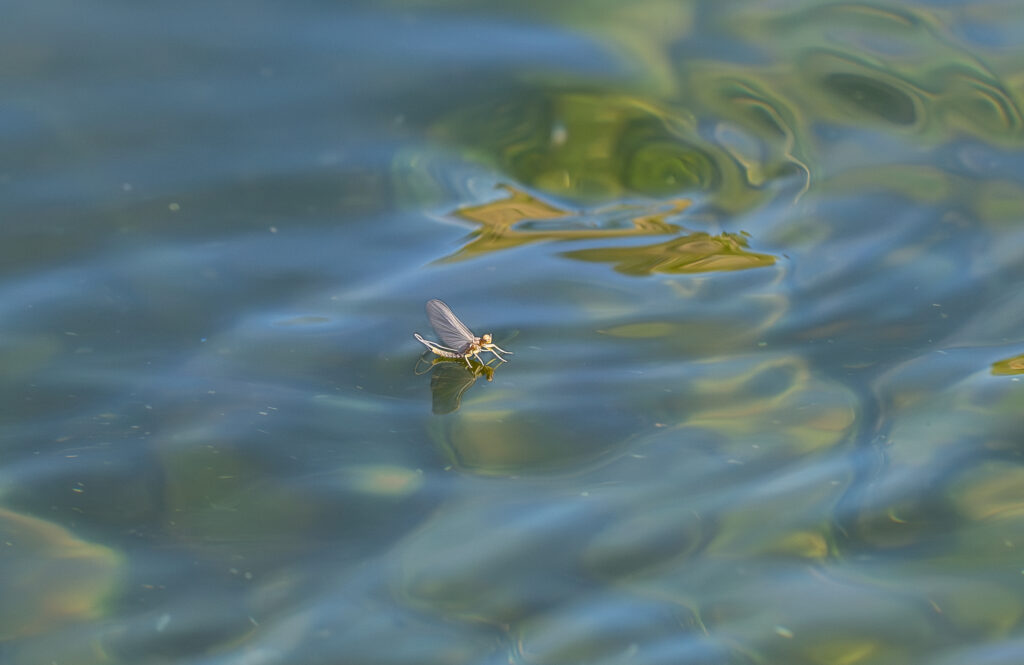
PMD hatches create the Missouri River’s most celebrated dry fly fishing. These summer mayflies hatch in prolific numbers, bringing pods of trout to the surface for hours.
Hatch Timing: Typically starting 10am-11am, continuing through mid-afternoon.
Where to Fish: Riffles, runs with moderate current, and transition zones where fast water meets slower pools.
Top Patterns: PMD Comparadun #14-16, PMD Cripple #14-16, Rusty Spinner #16-18, Hi-Vis Spinner #16-18
Technique: Use 4X-5X tippet and 12-14 foot leaders. PMD spinners fall in early evening—fish low-riding spinner patterns in back eddies.
Pro Tip: Cripple and Spinner patterns outperform standard duns. Trout target struggling insects.
Trico Mayflies
Peak Season: Late July through August
Sizes: #18-22
Best Conditions: Calm mornings, dawn through 10am
Trico hatches represent the Missouri River’s most technical dry fly fishing. These tiny mayflies emerge at dawn, then fall as spent spinners 2-3 hours after sunrise.
Where to Fish: Slow, flat water—back eddies, inside bends, slow pools.
Top Patterns: Hi-Vis Spinner #18-22, Trico Spinner #18-22, CDC Trico #20-22
Technique: Long, fine leaders (12-14 feet to 4.5X-6X), perfect drifts, accurate casts.
Terrestrials (Hoppers, Ants, Beetles)
Peak Season: Mid-July through September
Sizes: Hoppers #8-12, Ants #14-18, Beetles #14-16
Best Conditions: Warm, breezy days
As summer progresses, terrestrial insects become increasingly important. Grasshoppers, ants, and beetles provide opportunistic meals for trout.
Where to Fish: Grassy banks, overhanging vegetation, windy shorelines.
Top Patterns: Morrish Hopper #10-12, Chubby Chernobyl #8-12, Foam Beetle #14-16, Parachute Ant #14-18
Technique: Cast hoppers tight to banks. Fish ants and beetles in back eddies and foam lines.
Pro Tip: Use foam-bodied terrestrials as indicator flies with a small nymph dropper.
March Browns
Peak Season: Late April through May
Sizes: #12-14
Best Conditions: Overcast, light winds
March Browns are unpredictable and sporadic but create memorable fishing when conditions align.
Top Patterns: March Brown Comparadun #12-14, Hare’s Ear Parachute #12-14
Pro Tip: Don’t plan a trip for March Browns—they’re too unreliable. Focus on BWOs and caddis.
Skwala Stoneflies
Peak Season: March-April
Sizes: #8-10
Skwalas provide early-season opportunities though their emergence is subtle.
Top Patterns: Skwala Dry #8-10, Pat’s Rubber Legs #8-10 (nymph)
Pro Tip: The nymphs are more productive than dry flies.
Yellow Sally Stoneflies
Peak Season: June-July
Sizes: #12-16
Yellow Sallies hatch primarily in canyon sections (Stickney Creek to Prewett Creek). Nymphs are consumed regularly.
Top Patterns: Yellow Sally Nymph #14-16, Pat’s Rubber Legs (yellow/olive) #-12
Pro Tip: Fish the nymphs rather than dry flies.
October Caddis
Peak Season: Late September through October
Sizes: #8-10
October Caddis provide fall’s most exciting dry fly fishing. These large, orange-bodied caddis create opportunistic feeding from trout preparing for winter.
Hatch Timing: Late afternoon through dusk, peaking mid-October.
Top Patterns: October Caddis Dry #8-10, Stimulator (orange chubby) #8-12
Pro Tip: October Caddis nymphs (#8-10) work well for fall nymphing.
Seasonal Strategy
Early Season (March-April): BWO and midge hatches. Nymphing dominates.
Prime Dry Fly (May-July): Caddis and PMD hatches. Peak Missouri River dry fly fishing.
Technical Summer (Late July-August): Dawn Trico fishing. Terrestrials midday. Evening caddis.
Fall (September-October): Fall BWOs. October Caddis. Excellent short leash and streamer fishing.
Winter (November-February): Nymphing with midges, sow bugs, scuds. Streamer fishing for trophy browns.
Best Times to Visit
Peak Dry Fly Fishing: June 15-Aug 15 (PMD and caddis hatches)
Technical Fishing: Late July-Early August (Trico specialists)
Fall Fishing: Early October (BWOs and October Caddis)
Beginner-Friendly: Late May-June (forgiving caddis hatches)
Trophy Fish: October-November (streamer fishing for big browns)
Book Your Missouri River Fly Fishing Trip
Our guides fish the Missouri River daily year-round, staying current with hatch activity and adjusting techniques based on conditions.