

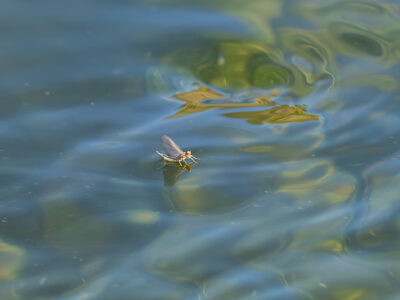
The emergence of the Pale Morning Dun on the Missouri River is one of the most anticipated events in Montana fly fishing. Watching these mayflies come off the water while trout rise with purpose is hard to describe to someone who hasn’t seen it, you just have to be there. PMDs hatch on rivers across the state, but what happens on the Missouri is in a league of its own. The sheer volume of insects, the size and quality of the fish, and the consistency of the hatch year after year make this one of the great dry fly experiences in the country.
When Does the PMD Hatch Happen?
The Pale Morning Duns begin to hatch around the second week of June and runs through much of July. PMD nymphs spend nearly a year living in the riverbed before emerging as winged adults, and warming water temperatures in late spring are what set things in motion.
Water temperature is your best indicator. As the river warms through the upper 50s into the low 60s (°F), expect the hatch to build. Keep an eye on conditions at Holter Dam — the Missouri’s controlled releases mean water temps are more predictable here than on most rivers, which is part of what makes the PMD hatch so reliable. The Missouri River hatch chart is a great resource for planning your trip around the season.
On a typical PMD day, look for the hatch to build mid-morning and carry through early afternoon. Overcast days tend to slow things down and spread the hatch out over more hours, which can actually make for better fishing.
Life Cycle of the Pale Morning Dun
Knowing the life cycle of the PMD helps you understand what the fish are doing — and more importantly, which fly to reach for.
Egg Stage: Adult females deposit eggs on the water’s surface, where they sink to the riverbed and begin the cycle.
Nymph Stage: PMD nymphs live on the stream bed for several months to a year, molting multiple times as they grow. During non-hatch periods, nymph patterns fished along the bottom are consistently productive.
Emergence: When the nymph is ready to hatch, it swims to the surface and sheds its final exoskeleton to become a dun. This is the most vulnerable moment in the PMD’s life — and trout know it. Emerger and cripple patterns that imitate insects struggling to break through the surface film can be extremely effective during this stage.
Adult (Dun) Stage: The newly hatched dun drifts on the surface drying its wings before taking flight. It has an upright, sailboat-shaped wing profile and a distinctive pale yellow coloring — easy to spot on the water once you know what you’re looking for.
Spinner Stage: Adults mate, and the female returns to the water to deposit eggs before dying. Spent spinners lie flat on the surface with wings outstretched, collecting in the slower, softer sections of the river. Spinner falls can trigger some of the most selective and rewarding dry fly fishing of the entire season.
Fly Fishing Techniques During the PMD Hatch
During the hatch, both rainbow and brown trout become highly active and can be found rising throughout the river. The key is reading what stage they’re feeding on before you tie on a fly.
Watch the rise forms carefully. Soft, subtle sips usually mean fish are eating emergers or spinners in the film. More deliberate, splashy rises often indicate fish taking duns off the surface. Let the trout tell you what they want before you start casting.
Both nymphing and dry fly fishing are productive during PMD season. Before the hatch gets going, a nymph rig fished near the bottom can be very effective as the nymphs become active and start moving through the water column.
Top PMD Dry Flies for the Missouri
Hi-Vis CDC Spinner — One of the best patterns during the PMD hatch. Easy to track on the water and very effective when fish are sipping spent flies in the film. A reminder: skip the gel floatant on CDC patterns — it mats the fibers and kills the fly’s action.
Rusty Spinner — The rusty, dull coloration of this pattern imitates the spent female PMD perfectly. When trout are keyed in on dead bugs lying flat on the surface, this is the fly to have on. Read more about fishing the Rusty Spinner.
Film Critic (size 16) — An excellent choice when fish are focused on emergers struggling in the surface film. This is often the most productive stage to imitate during a heavy PMD hatch, and the Film Critic does it as well as anything.
Smoke Jumper (sizes 16–18) — A proven Missouri River pattern for fish feeding on cripples and emergers. Reliable and effective when trout are being selective.
Last Chance Cripple (sizes 16–18) — A time-tested pattern for picky fish. PMDs frequently get stuck in their shucks during emergence, and trout target these crippled insects because they’re easy, guaranteed calories. When nothing else is working, a cripple pattern is often the answer.
The Best PMD Nymphs for the Missouri
Split Case PMD — The split body construction with a sliver of yellow realistically imitates the PMD nymph breaking from its case. A highly specific and effective pattern during the pre-emergence window when nymphs are active in the water column.
Pheasant Tail Nymph (sizes 14–18) — A classic for a reason. The Pheasant Tail imitates a wide range of mayfly nymphs and really shines when PMDs start moving toward the surface. Tie them thin and keep a good range of sizes.
Egan’s Frenchie (sizes 14–18) — A Missouri River staple year-round, but especially effective during PMD season. The hot spot dubbing on this pheasant tail variation triggers strikes from fish that might otherwise ignore a more natural-looking pattern.
Little Green Machine (sizes 16–20) — A highly productive mayfly imitation that works not only for PMDs but also for BWOs and Tricos. One of the more versatile nymphs in the box for Missouri River fishing.
Come Fish the Pale Morning Dun Hatch
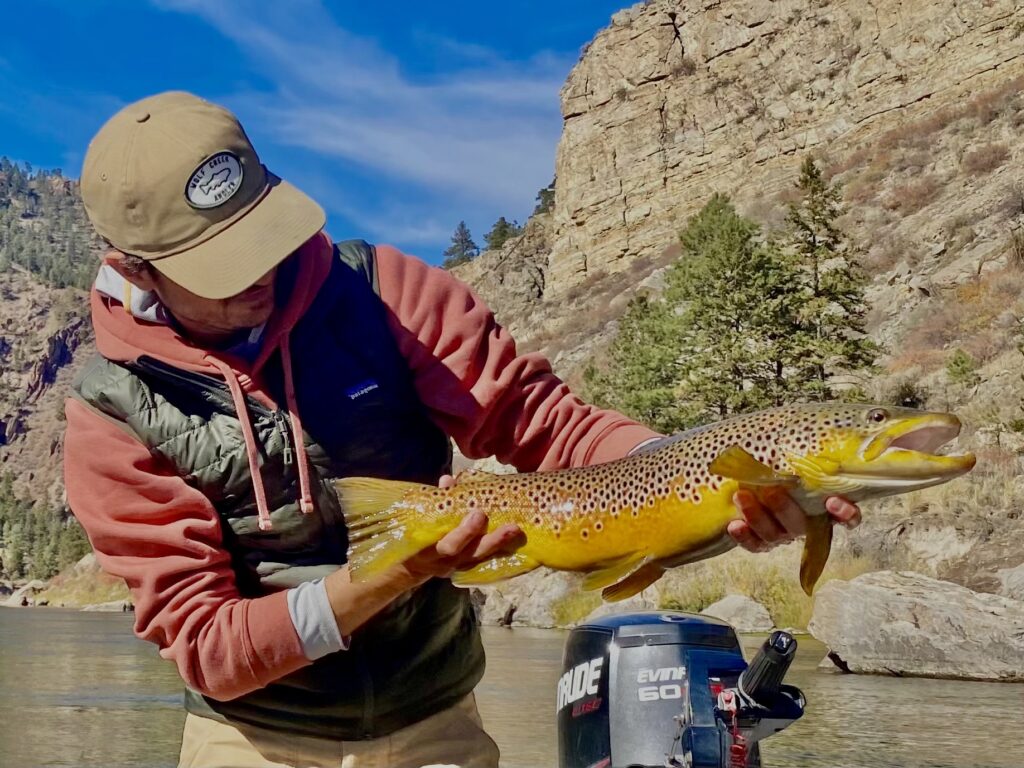
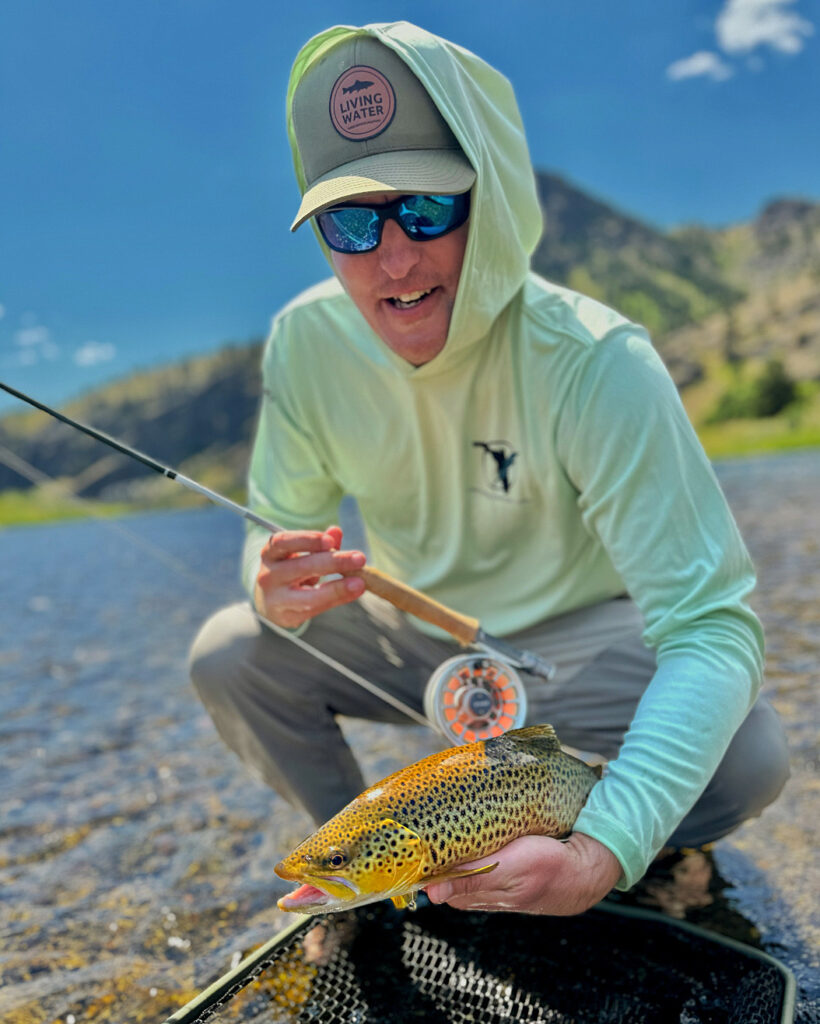
The Pale Morning Dun hatch draws anglers from all over the world to the stretch of river between Wolf Creek and Craig, Montana and for good reason. If you want to experience it firsthand, we’d love to put you on the water.
Ready to plan your trip?
406-465-1688

 It’s Not All About the Numbers
Leave a Reply