
If you’re fishing the Missouri River below Holter Dam and you don’t have sow bugs in your box, you’re leaving fish on the table. Simple as that.
Sow bugs or isopods live in the Missouri year-round. They don’t hatch, they don’t migrate, and they don’t disappear in August. They crawl through the weeds and along the rocky substrate 365 days a year, and the trout know it. Rainbows and browns in the upper Mo eat sow bugs constantly between hatches, during hatches, when nothing else is happening. They’re the most reliable food source in the river.
Sow bug patterns are in my box every single trip. Here’s exactly what I use, how I fish them, and when each one earns its keep.
The Best Sow Bug Patterns For the Missouri River
These five patterns cover every situation you’ll run into on the Mo — from January nymphing in deep runs to October weed-bed fishing in six inches of water.
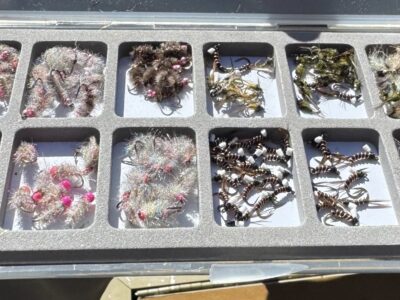
Ray Charles
The most versatile sow bug on the Missouri. Gray, tan, or pink — tie a few of each. The Ray Charles works year-round in sizes 14–18. When I don’t know what’s going on, this is the first fly I reach for.
- Scud dubbing or ostrich herl body for a realistic profile
- Colors: Gray, tan, pink — carry all three
- Best: Year-round, size 14–18
Firebead Sow Bug
The hot bead triggers strikes when trout are sluggish and need a little extra provocation. This is my go-to from October through June — especially in cold, off-color water when visibility is low. The pink or orange bead gives fish a target. Don’t overthink it.
- Bright pink or orange bead head
- Must-have October through June
- Best: Cold water, low light, overcast days
Tailwater Sow Bug
One of the best Missouri river sow bug patterns. Unweighted, and that’s the point. In fall when the weed beds are dense and fish are sitting shallow, a weighted fly snags constantly. The Tailwater Sow drifts just above the vegetation where the trout are actually feeding. Slow and natural. Let it move with the current and keep your indicator high.
- Unweighted — designed to fish over weed beds
- Slow, natural dead-drift over shallow structure
- Best: Fall, shallow water, weed edges
Soft Hackle Sow Bug
When fish are being picky, inspecting flies and refusing ,the CDC soft hackle gives them movement. A real sow bug wiggles slightly as it’s pushed by current. The CDC fibers replicate that. This is a technical fish pattern, not a searching pattern.
- CDC soft hackle adds subtle, lifelike movement
- Best for educated, pressured fish
- Use on slow, clear water where fish can see detail
Pederson’s Sow
Tied by Missouri River guide Matt Pederson. This is the fly you throw when everything else fails. The tungsten bead gets it down fast in deeper runs where fish are hugging the bottom in cold water. I’ve watched clients switch to this pattern and immediately start catching fish that weren’t responding to anything else.
- Tungsten bead for fast sink rate in deep water
- Designed for deep nymphing in winter and early spring
- Best: Deep runs, tough conditions, January–April
How to Fish Sow Bug Patterns on the Missouri
Rigging matters as much as pattern selection. Here’s how I set up clients for sow bug fishing on the Mo.
Indicator depth: Set your indicator to the depth of water you are targeting. On the Missouri, that often means 4–6 feet of leader below the indicator. Adjust depth and weight based on the water you are fishing.
Split shot: Run split shot 14-18 inches above your top fly. You want the rig to tick the bottom on the drift occasionally — just adjust your indicator as needed.
Tippet: 3X is standard for most sow bug fishing on the Missouri. Drop to 4X in low, clear conditions or when fish are being especially selective.
Two-fly rig: Most days I’m running a weighted sow bug as the point fly with a smaller, lighter pattern trailing 12–18 inches behind. A Firebead Sow up top and a size 16 Ray Charles off the bend is a proven combination.
The drift: Dead-drift, period. Mend upstream immediately after the cast to kill any drag. Watch the indicator — any hesitation, sideways movement, or slight dip is a take. Missouri River trout eat sow bugs softly.
Sow Bug Fishing by Season
Sow bugs are available to trout year-round, but how you fish them changes with the seasons.
Winter (December–February): This is when sow bugs really shine. Midges are sparse, PMDs aren’t happening, and trout are holding deep in slow runs conserving energy. A Pederson’s Sow or Firebead fished slow and deep will out-fish everything else on the river. Fish — sizes 14–18. Fish are lethargic; the fly needs to come right to them.
Spring (March–May): Pre-runoff is prime sow bug time. Water is cold, flows are manageable, and fish are actively feeding. Run a Firebead Sow as your point fly with a Ray Charles dropper. The hot bead gets attention, the Ray Charles closes the deal.
Summer (June–August): Sow bugs take a back seat to PMDs, Tricos, and Caddis during the peak hatch months — but they’re still a valuable searching pattern in the mornings before the hatches start, and in between hatches. A size 18 Ray Charles as a dropper behind a Parachute Adams will pick up fish all summer.
Fall (September–November): The weed beds are at their peak density and the sow bug and scud population is huge. This is when the Tailwater Sow earns its keep. Fish are sitting on weed edges in surprisingly shallow water, think short leash. Fish the unweighted patterns with a long, light leader and fish soft landing indicators. Some of the best sow bug fishing of the year happens in October.
Where to Find Trout Eating Sow Bugs on the Missouri
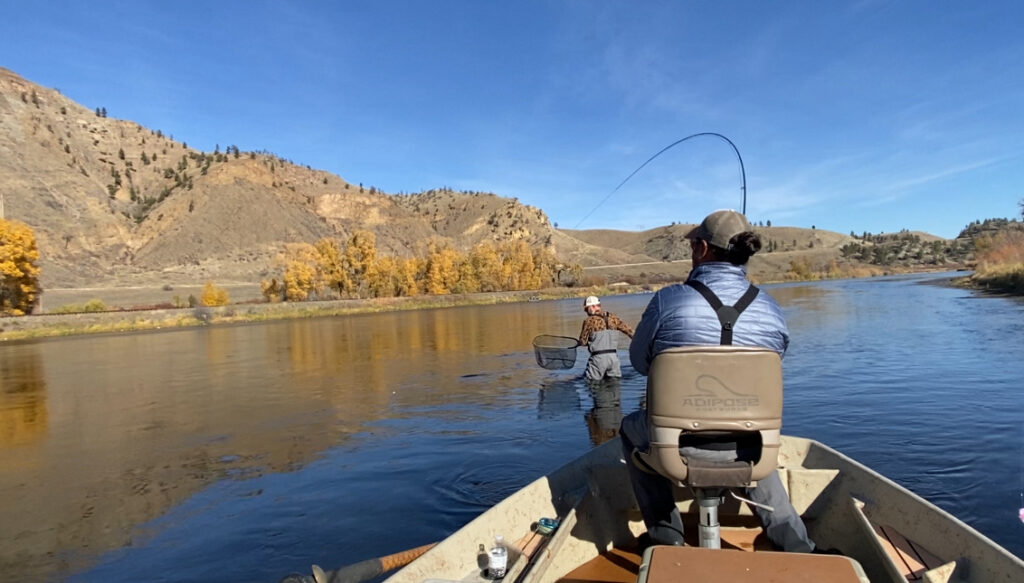
- Weed beds and weed edges: The heaviest concentration of sow bugs on the Mo is in and around the aquatic vegetation. Fish hold on the downstream edge of weed beds, waiting for sow bugs to get dislodged by current.
- Soft seams: The transition between fast water and slow water is where sow bugs collect. Fish stack in these seams and pick them off easily.
- Rocky substrate: Below Holter Dam, the rocky bottom provides ideal habitat. Target the slack water directly downstream of larger rocks — both trout and sow bugs congregate there.
- Shallow flats in fall: Don’t ignore water that looks too shallow. October fish push into 1–3 foot flats to feed on dense sow bug populations. Some of the biggest fish of the season are caught in ankle-deep water.
If you’re wading, focus on the inside bends with weed growth and slow current. That’s where the fish are.
Ready to Fish the Missouri?
Sow bugs are non-negotiable on this river. I fish them every month of the year. Living Water Guides runs float trips and walk-and-wade trips below Holter Dam. Check the Missouri River Hatch Chart to plan your timing, or contact us to book.

 Streamer Fishing for Trophy Browns
Leave a Reply