
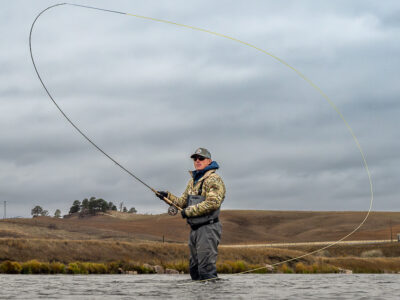
While most anglers on the Missouri use traditional single hand rods for nymphing or presenting dry flies to rising fish. More anglers are discovering the thrill of Trout Spey. Swinging flies for trout with light spey rods offers a refreshing approach to targeting trout while providing effective down and across presentations.
What Is Trout Spey?
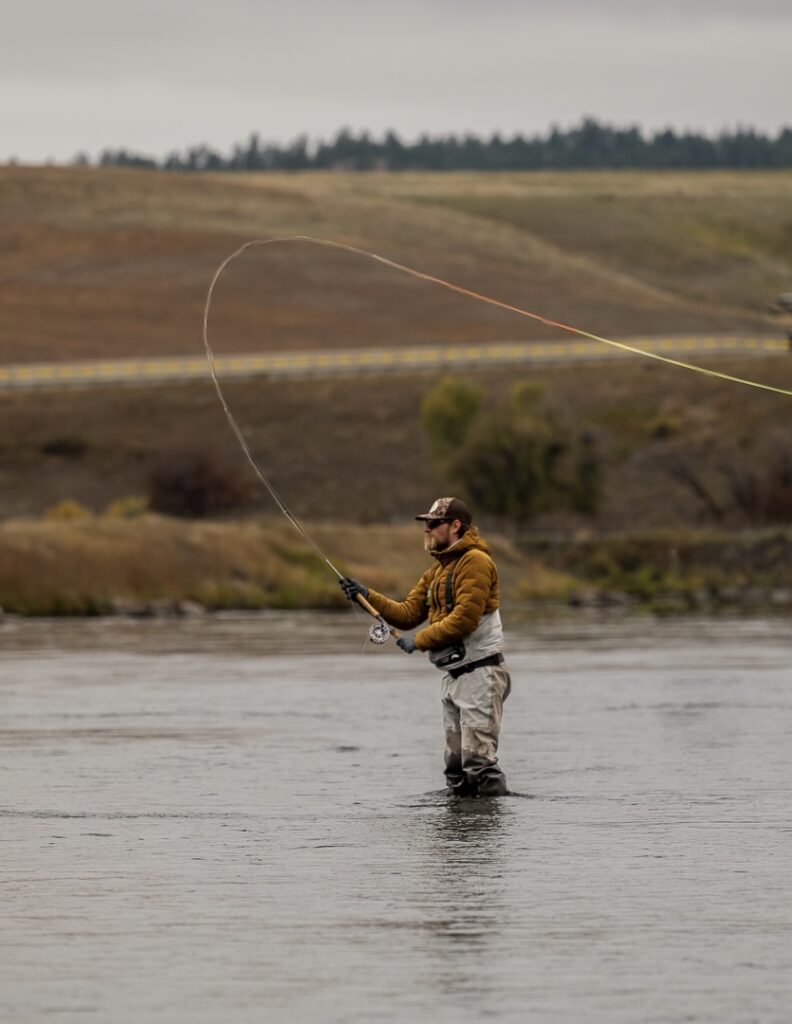
Trout spey is simply the use of a smaller, lighter two-handed rods to target trout. Most trout spey or “micro Spey” rods range from 1 to 4 weight that are 10 – 12 feet long. Rods of this size are perfect for swinging small streamers, soft hackles, or leeches. Because trout don’t require the long, heavy rods used in traditional steelheading, these lighter setups provide all the fun without the fatigue. While Spey casting has its roots in the rivers of Scotland and the Pacific Northwest, it has found a home on the Mighty Missouri.
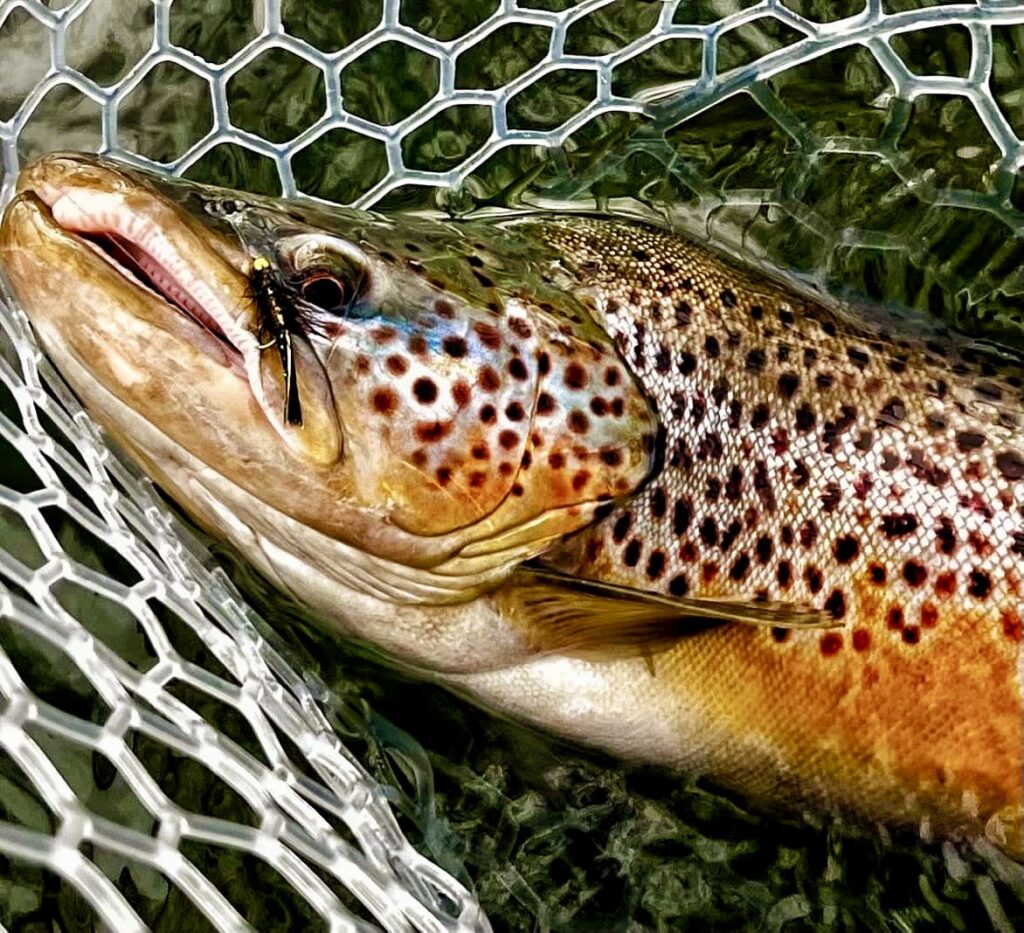
Why Trout Spey the Missouri River?
The Missouri, with its long runs, and steady flows, is tailor-made for a two handed casting. The longer more powerful rods allow casters to cover the river methodically, working from one run to the next while maintaining tension throughout the swing, a deadly approach for aggressive browns and rainbows. Spey casting isn’t just about distance, it’s about control, effortless presentations and of course the take.
Advantages of Trout Spey
The biggest advantage of trout spey is you’re always fishing. Unlike traditional streamer fishing, where the fly is stripped back in short bursts, a swung fly is constantly in motion. Every second of the swing offers an opportunity for a take, often a heartstopping grab that feels electric. Perhaps the greatest appeal of trout spey on the Missouri river is its ability to shine during shoulder seasons. Fall , winter and spring offer prime conditions for swinging streamers and soft hackles patterns.
Gearing Up for Trout Spey
Getting started doesn’t require a huge investment, but choosing the right gear makes a big difference. A 3-4 weight, 11-foot trout spey rod paired with a Skagit or Scandi head is the most versatile option for Montana waters.
- Scandi Heads :
Designed for finesse and presentation, Scandi lines excel when fishing smaller and lighter flies. Their longer, tapered design makes them perfect for delicate casts and smooth turnovers. On the Missouri River, Scandi setups shine during caddis or mayfly hatches, or anytime trout are keyed in on smaller patterns. If you want accuracy and subtle presentations, a Scandi head is the right tool. - Skagit Heads :
Skagit lines are short, powerful, and built to deliver heavier flies and sink tips. When Spey fishing the Missouri River, Skagit setups are ideal when fishing deeper or faster water with streamers, leeches, or baitfish patterns, especially during colder months when trout hold lower in the water column. The extra power of a Skagit head pairs well with sinking tips and larger flies. - Sink Tips and Leaders: Lighter sink tips are a key part of a versatile trout spey setup for the Missouri. With the proper grain weight and length, a light sink tip aids in getting the fly in the strike zone when fishing different depths and currents.
The Best Seasons for Trout Spey on the Missouri River
While you can swing flies year-round, some seasons are better than others.
- Spring (March-May): As water temperatures rise and trout shake off winter lethargy, they become more aggressive toward streamers. This is an excellent time to swing small leech patterns and flashy baitfish imitations.
- Fall (September-November): Perhaps the best time for Spey anglers. Brown trout are in pre-spawn mode and highly territorial, making them particularly responsive to swung streamers. Additionally, cooler water temps keep fish active throughout the day.
- Winter (December-February): The swing game changes. This is the time to run heavier tips and targeting the slower winter water. A well-presented leech or small baitfish pattern fished deep and slow can still entice a take from a sluggish but opportunistic trout.
Full Swing season Break down Here
A highly Effective Method of Trout Fishing
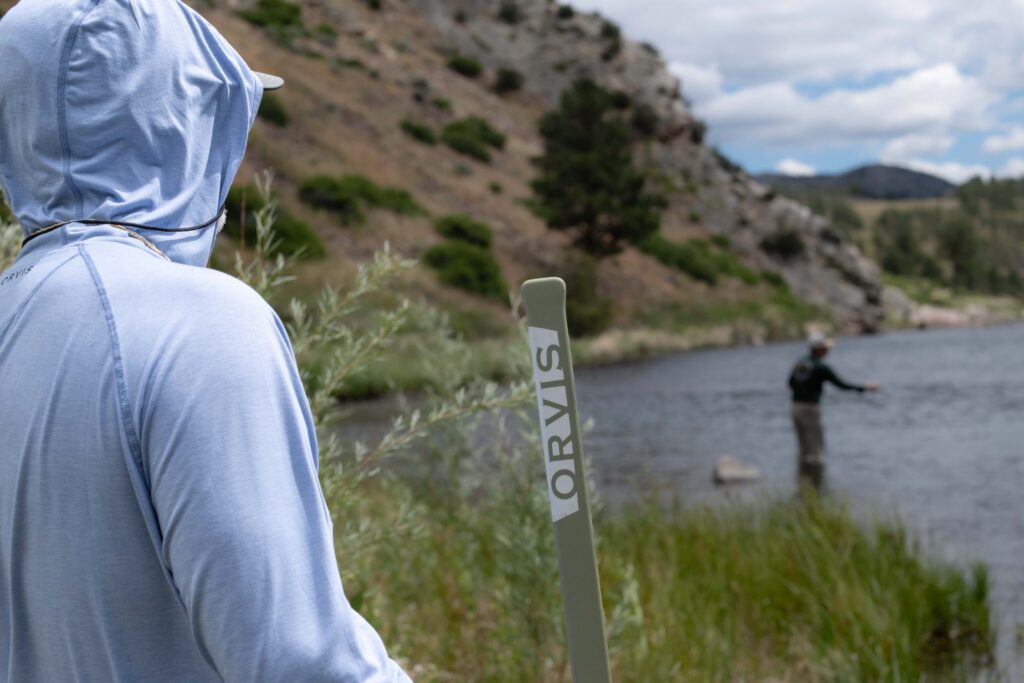
Spey fishing the Missouri River offers a refreshing and highly effective way to target trout in one of the finest trout fisheries in North America. Whether you’re fishing soft hackles during a hatch, swinging streamers in the colder months, trout spey is pure fun.
Frequently Asked Questions
What is trout spey fishing?
Trout spey is a fly fishing technique using two-handed rods (switch rods or spey rods) to swing streamers through current, targeting aggressive trout with swinging presentations.
When is the best time for trout spey on the Missouri River?
Fall through spring offers excellent trout spey conditions, with October through April being prime months. Colder water temperatures position trout in perfect swing water.
Do I need special equipment for trout spey?
Yes. Trout spey requires a two-handed rod (typically 11-13 feet), appropriate spey line, sink tips of various grain weights, and streamer flies designed for swinging.
Can beginners learn trout spey fishing?
Absolutely. While the casting technique differs from traditional fly fishing, instruction helps beginners learn quickly. Guided spey trips provide excellent learning opportunities.
What size trout can I catch trout spey fishing?
The Missouri River produces trout from 12 to 24+ inches, with 16-20 inch fish being common.