
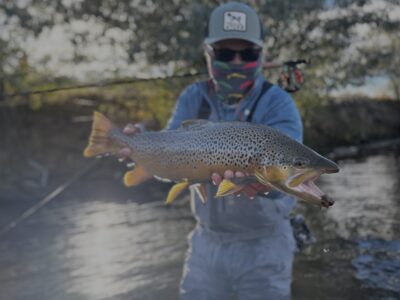
The Missouri River below Hauser Dam holds some of Montana’s largest brown trout—aggressive, predatory fish that willingly attack large streamers. While many anglers focus on nymphing or dry flies, streamer fishing targets the river’s apex predators: browns exceeding 24 inches that feed primarily on baitfish, sculpins, and other trout.
Understanding advanced streamer techniques, proper gear, and effective fly patterns dramatically increases your odds of hooking trophy brown trout. This is not a numbers game—it’s about quality over quantity, patience over productivity, and the possibility of landing the fish of a lifetime.
Why Streamer Fishing Targets Trophy Browns
Large brown trout become increasingly piscivorous (fish-eating) as they mature. A 20-inch brown trout can consume a 6-inch whitefish or rainbow—a single meal providing far more calories than hundreds of mayflies. This shift in feeding behavior makes trophy browns susceptible to large streamer presentations that smaller trout ignore.
Behavioral Advantages:
Brown trout are ambush predators. Unlike rainbows that hold in current and feed opportunistically, large browns establish territories near structure—undercut banks, fallen timber, deep pools, and rock ledges—where they can conserve energy while waiting for substantial prey to pass.
Streamers trigger predatory instincts. The erratic movement, substantial profile, and vulnerable appearance of a well-presented streamer provokes strikes from fish that might refuse smaller offerings. Trophy browns often feed during low-light periods (dawn, dusk, overcast days), making streamer fishing especially effective during these windows.
Gear for Streamer Fishing for Trophy Browns
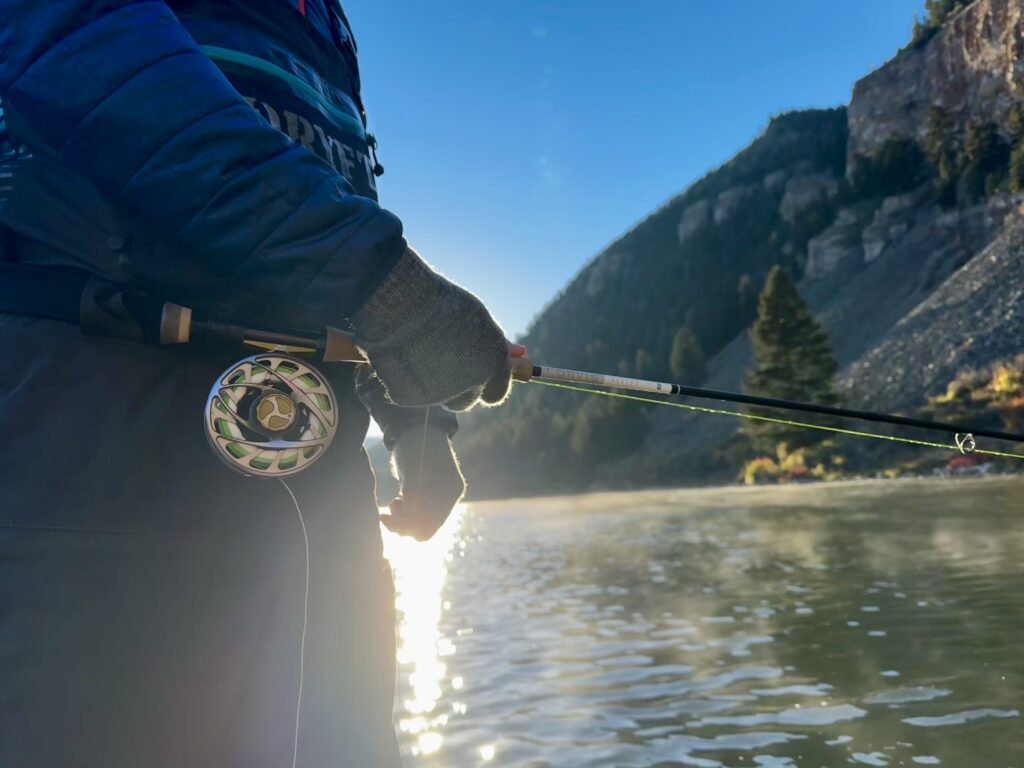
Rod Selection
6-Weight: Minimum for effective streamer fishing. Handles moderate-sized streamers and fish up to 20 inches comfortably.
7-Weight: The sweet spot for Missouri River streamer fishing. Sufficient power to cast large articulated patterns, enough backbone to control big fish in heavy current, yet not so heavy that it fatigues anglers casting all day.
8-Weight: For oversized articulated streamers (6+ inches) and targeting the absolute largest fish. More tiring to cast but necessary for moving heavy flies and applying maximum pressure on trophy browns.
Fast-action rods are preferable—they generate line speed for casting heavy flies and provide the stiffness needed to set hooks through tough brown trout mouths.
Reel and Line
Large Arbor Reels: Essential. Trophy browns make powerful runs, and large arbor reels retrieve line quickly and reduce line memory.
Line Selection:
Intermediate Sinking Lines: Sink rates of 1.5-4 inches per second. Versatile for moderate depths (3-8 feet) and allow streamers to swing naturally through the water column.
Full Sinking Lines: Sink rates of 4-6 inches per second. Necessary for reaching fish in pools exceeding 10 feet or during cold water periods when trout hold deep.
Floating Lines with Sinking Tips: Useful for shallower water (2-4 feet) or when you need fly depth but want line control for mending.
Match sink rate to water depth and current speed. Fishing too shallow misses fish; fishing too deep snags bottom constantly.
Leaders and Tippet
Short, Heavy Leaders: 3-7 feet maximum. Streamer fishing prioritizes turnover power over delicate presentation.
Tippet: 12-20 lb fluorocarbon for most applications. Heavy tippet doesn’t deter trophy browns attacking streamers—they’re targeting substantial prey, not sipping mayflies.
Tapered Butt Sections: Butt diameter transfers casting energy efficiently, turning over heavy, wind-resistant streamers.
Effective Streamer Patterns for Trophy Browns
1. Woolly Bugger (Sizes #4-10)
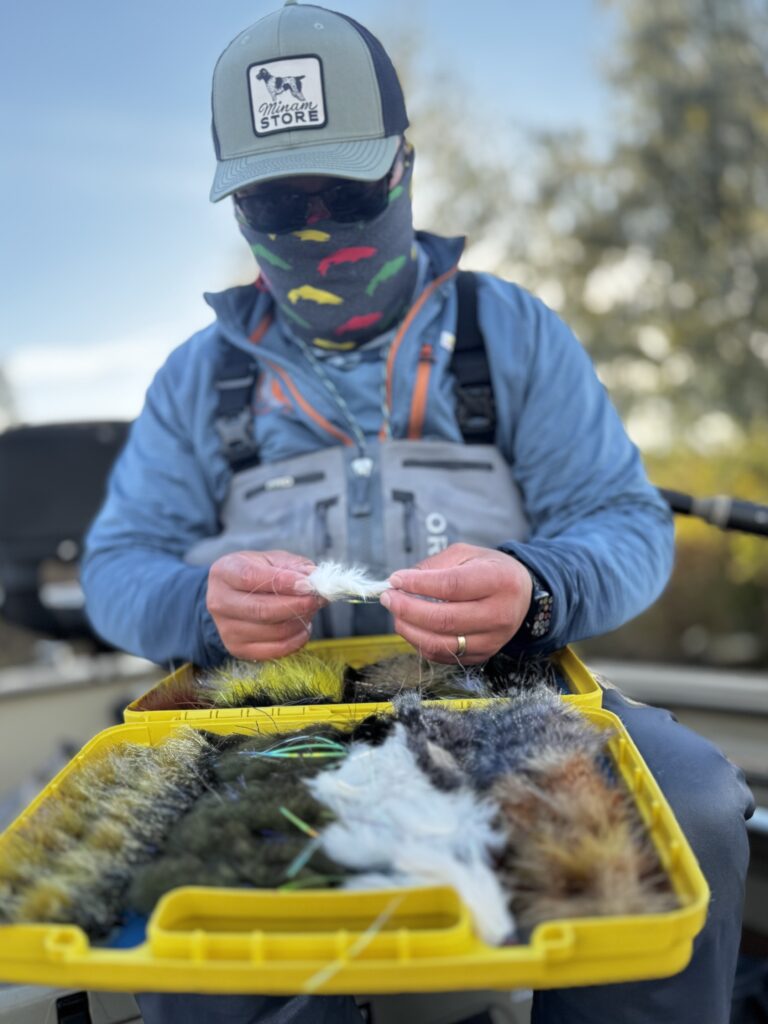
Why It Works: Imitates leeches, sculpins, small trout, and generic “food.” The undulating marabou tail creates lifelike movement with minimal retrieve. Black, olive, and brown are most productive on the Missouri River.
When to Fish: Year-round effectiveness. Particularly good in stained water or low-light conditions where silhouette matters more than precise imitation.
2. Sculpzilla (Sizes #4-6)
Why It Works: Realistic sculpin profile. Heavily weighted head creates jigging action on the strip-pause retrieve. Missouri River browns feed heavily on sculpins—this pattern matches that forage precisely.
When to Fish: Fall through spring when browns are most aggressive. Especially effective in rocky sections where sculpins are abundant.
3. Articulated Streamers (4-6 inches)
Patterns: Circus Peanut, Sex Dungeon, Drunk and Disorderly
Why They Work: Articulated construction creates swimming action that solid-body streamers can’t match. Large profile targets the biggest, most aggressive fish. Multiple materials (rabbit, marabou, flash) provide both movement and visual appeal.
When to Fish: When targeting absolute trophies. These flies catch fewer fish but the fish they catch are significantly larger on average.
4. Sparkle Minnow (Sizes #6-8)
Why It Works: Excellent baitfish imitation combining flash (Krystal Flash) with natural movement (marabou). Particularly effective in off-color water where flash helps fish locate the fly.
When to Fish: After storms or runoff events when water clarity decreases. Also effective during bright conditions when flash creates triggering points.
5. Game Changer (Sizes #2-6)
Why It Works: Articulated shanks create realistic swimming motion. Wide profile pushes water, helping fish locate it in murky conditions or low light. Available in numerous color combinations to match specific baitfish.
When to Fish: When imitating specific forage like whitefish or juvenile trout. Particularly effective during fall when young-of-year trout are vulnerable.
6. White Streamer Patterns
Patterns: Skiddish Smolt, white Woolly Bugger, white Sparkle Minnow
Why They Work: High visibility in stained or deep water. Imitates whitefish, a primary food source for trophy browns. Creates strong contrast that fish can track easily.
When to Fish: Overcast days, stained water conditions, or very deep pools where visibility is limited.
Advanced Streamer Techniques
1. The Swing
Execution: Cast across or slightly downstream. Allow the streamer to swing through the current arc with minimal manipulation. The current provides movement—your job is controlling depth and swing speed.
When to Use: Moderate current speeds, defined structure (banks, ledges), fish holding in predictable lies.
Variations:
- Mend upstream to slow the swing and keep the fly deeper longer
- Mend downstream to accelerate the swing, creating more aggressive movement
2. Strip and Jerk Strip Retrieve
Execution: Cast across or upstream. Strip line in varying patterns—short, quick strips followed by long pauses; steady medium strips; or erratic combinations.
Strip Patterns:
- Aggressive: Quick 6-inch strips with minimal pause (fleeing baitfish)
- Moderate: Steady 3-4 inch strips with brief pauses (cruising sculpin)
- Erratic: Vary strip length and speed randomly (injured or disoriented prey)
When to Use: Slack water, pools, back eddies where current doesn’t provide natural movement.
3. Jigging
Execution: Use rod tip to impart vertical movement. Lift the rod 12-18 inches, then drop it sharply while stripping slack. The weighted head dives then rises, imitating bottom-dwelling prey like sculpins.
When to Use: Deep pools, along rocky bottom, targeting fish you can see or know are present in specific locations.
4. Dead Drift
Execution: Cast upstream, mend to achieve drag-free drift. Allow the streamer to tumble naturally downstream like a dead or stunned fish.
When to Use: After hooking fish in an area (injured fish trigger feeding response), during very cold water when fish are lethargic, or when you’ve raised fish on active retrieves but haven’t hooked them.
Reading Water for Streamer Fishing
Prime Streamer Water:
Deep Pools: 8-12+ feet deep. Large browns hold in security, ambushing prey from below. Fish streamers through the entire pool—don’t just hit the head and move on.
Undercut Banks: Especially those with overhanging vegetation or exposed root systems. Cast tight to the bank and strip away, imitating prey fleeing cover.
Rock Ledges and Boulders: Structure breaks current and provides ambush points. Fish within inches of structure—big browns won’t move far.
Current Seams: Transitions between fast and slow water concentrate both predators and prey. Fish the seam itself and the slower side where browns can rest while monitoring the faster water for food.
Tailouts: Where pools dump into riffles. Fish stage here before moving upstream and often feed aggressively in the transitional water.
Timing Your Streamer Fishing
Best Conditions:
Overcast Days: Low light reduces brown trout’s natural caution. Cloud cover extending through midday can produce all-day streamer fishing.
Dawn and Dusk: Prime feeding windows. Trophy browns that remain hidden during bright conditions become active during low light.
Stained Water: Slight off-color from recent rain or snowmelt. Browns feed more confidently when visibility is reduced, and they rely more heavily on movement and vibration to locate prey.
Fall (September-November): Pre-spawn aggression. One of the best times to streamer fish for trophy browns. Fish feed heavily before winter, becoming less selective and more willing to chase streamers.
Spring (March-May): Post-spawn recovery. Browns that spawned in fall need to rebuild energy reserves and feed aggressively on high-calorie baitfish.
Conservation: Handling Trophy Browns
When streamer fishing for trophy brown trout remember they are the fishery’s breeding stock and its most valuable resource.
Spawning Fish If you see spawning fish on or near reeds LEAVE THEM ALONE.
Keep fish in the water Proper handling ensures their survival. If you must lift for a photo, WET YOUR HANDS, support the fish horizontally, limit air exposure.
Use barbless hooks Recommended. Reduces handling time and tissue damage.
Revive thoroughly. Hold fish facing into current until it swims away strongly under its own power. Large fish require longer revival than small fish.
Consider the conditions. Avoid fishing for large trout during extremely warm water (over 65°F) when fish are vulnerable.
Experience Streamer Fishing
Streamer fishing for Missouri River trophy browns requires —reading water, understanding fish behavior, selecting appropriate flies and techniques, and covering water efficiently from a boat.
Our Land of Giants jet boat trips provide access to prime streamer water.
Ready to Streamer Fish for Trophy Browns?
EXPLORE LAND OF GIANTS JET BOAT TRIPS
Call (406) 465-1688
Related Reading:

 Helena’s Lakes and Reservoirs
Leave a Reply