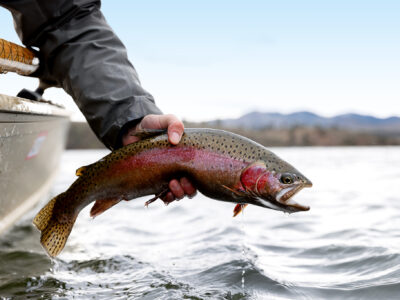
The Missouri River below Holter Dam is one of the most productive trout fisheries in the United States. The cold, nutrient-rich tailwater out of Holter Dam creates ideal conditions — consistent temperatures, abundant food, and a river that never really shuts off. These aren’t stocked fish. Missouri River trout are wild, strong, and well fed on a year-round diet of sow bugs, scuds, midges, and mayflies.”The result is a trout population that punches well above its weight compared to most rivers in the West.
Here’s what you’ll be targeting.
Rainbow Trout
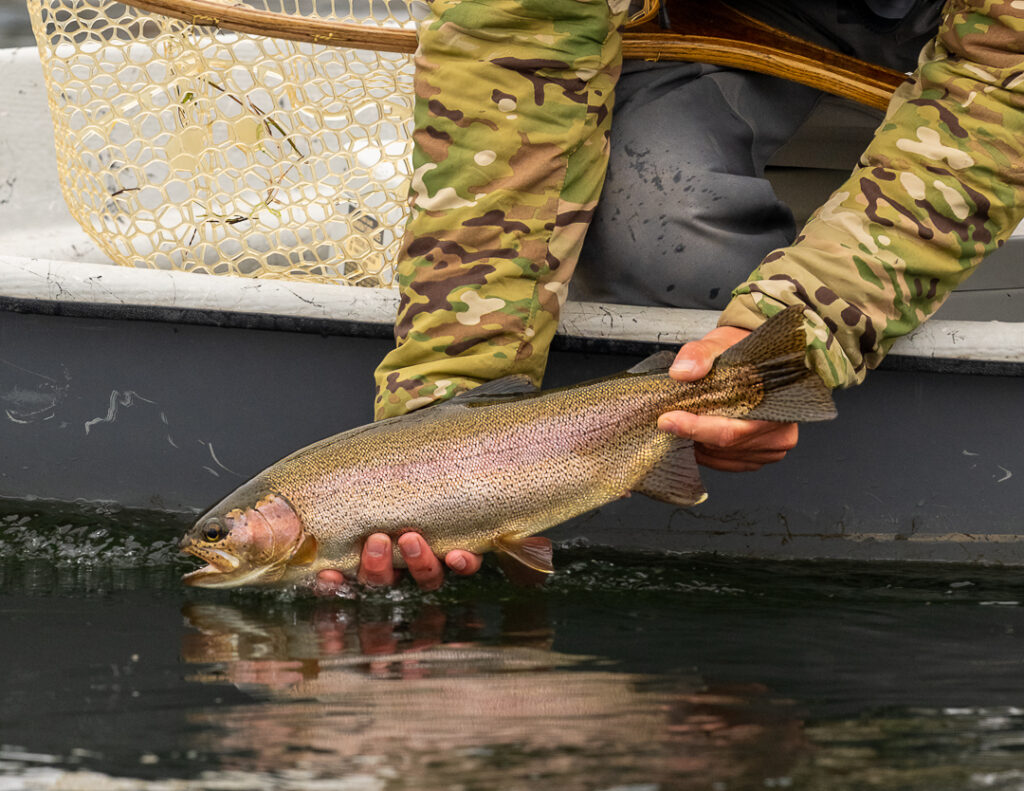
Rainbows are the heart of the Missouri River fishery. Of the 4,000 to 5,000 fish per mile, the vast majority are rainbows. They like seams, flats, and rising in the slicks during a hatchs. If you’re fishing the Mo, you’re fishing for rainbows.
On the lower Missouri below Holter Dam, the average fish runs 16 to 18 inches. These aren’t skinny fish — the tailwater diet produces chunky, deep-bodied rainbows that fight hard and jump. A lot. On the Land of Giants section below Hauser Dam, the average bumps up to 18 to 20 inches, and we see fish over 24 inches every couple of trips — especially during the spring and fall when the big fish are active and aggressive. ( Hatchery rainbows are released in the Land of Giants section)
Missouri River rainbows will eat just about everything — nymphs, dry flies, streamers. During a PMD or caddis hatch Missouri River trout can be as picky as any fish you’ve ever fished to. Strip a streamer past a big one in October and the take will rattle your cage. That range of behavior is part of what makes this river so compelling.
Average size: 16–18 inches on the lower Mo, 18–20 inches on the Land of Giants
Trophy: 24 inches and up — we see them regularly
Best techniques: Dry fly fishing during hatches, nymphing year-round, streamers in spring and fall
Best time: Year-round — the Missouri never really turns off for rainbows
Brown Trout
Browns make up roughly 500 fish per mile of the total population — a smaller percentage than rainbows but don’t let that fool you. The browns on this river are something else entirely. They run bigger, they’re warier, and when you hook one in the right conditions it’s one of the best things that can happen to you on a trout river.
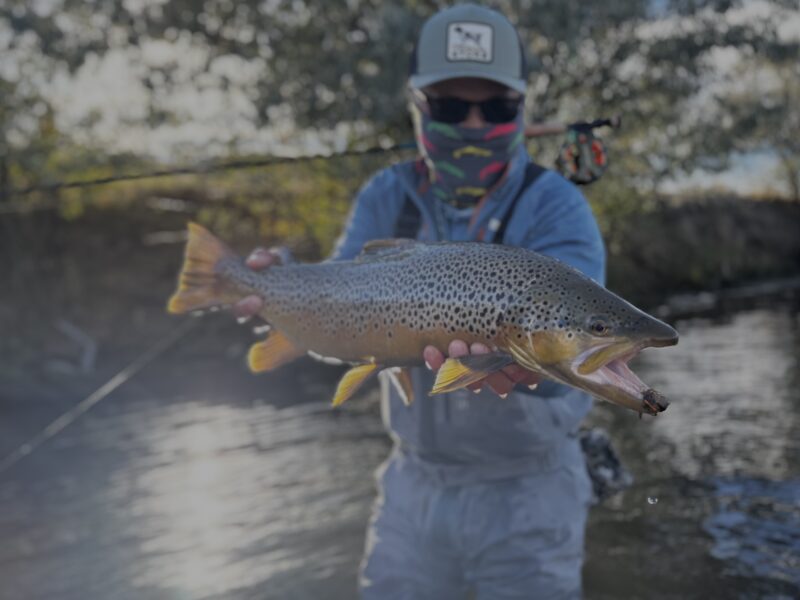
On the lower Missouri the average brown runs 16 to 18 inches — same ballpark as the rainbows, but they carry more weight for their length. On the Land of Giants we have landed browns over 30 inches. That’s not a typo. The combination of cold water, abundant food, and relatively light pressure on that section produces fish that most anglers never encounter anywhere else.
Fall is brown trout season on the Missouri. As water temperatures drop and days shorten, the big browns come out of the woodwork. They’re aggressive, territorial, and will absolutely eat a well-presented streamer. Spring is good too — we see two-foot-plus fish showing up regularly during the pre-runoff window when the river is still cold and clear.
Average size: 16–18 inches on the lower Mo, larger on the Land of Giants
Trophy: 24 plus inches — the Land of Giants section can and does produces some giants
Best techniques: Streamers in fall and spring, dry flies during technical hatches, nymphing year-round
Best time: Fall and spring for trophy fish, year-round for consistent action
What Makes Missouri River Trout Different
Two things set these fish apart from trout on most other rivers.
They’re wild. There are no hatchery fish in this system below Holter Dam. Every fish you catch was born in the river, grew up in the river, and has been eating real food its entire life. That shows in how they fight, how they look, and how selective they can be during a hatch. The exception is the Land of Giants section above Holter Dam, where Montana FWP releases approximately 250,000 Arlee and Eagle Lake rainbows annually. Those fish mix with the wild population and grow fast in the nutrient-rich water — by the time you’re fighting one on the end of your line you’d never know the difference.
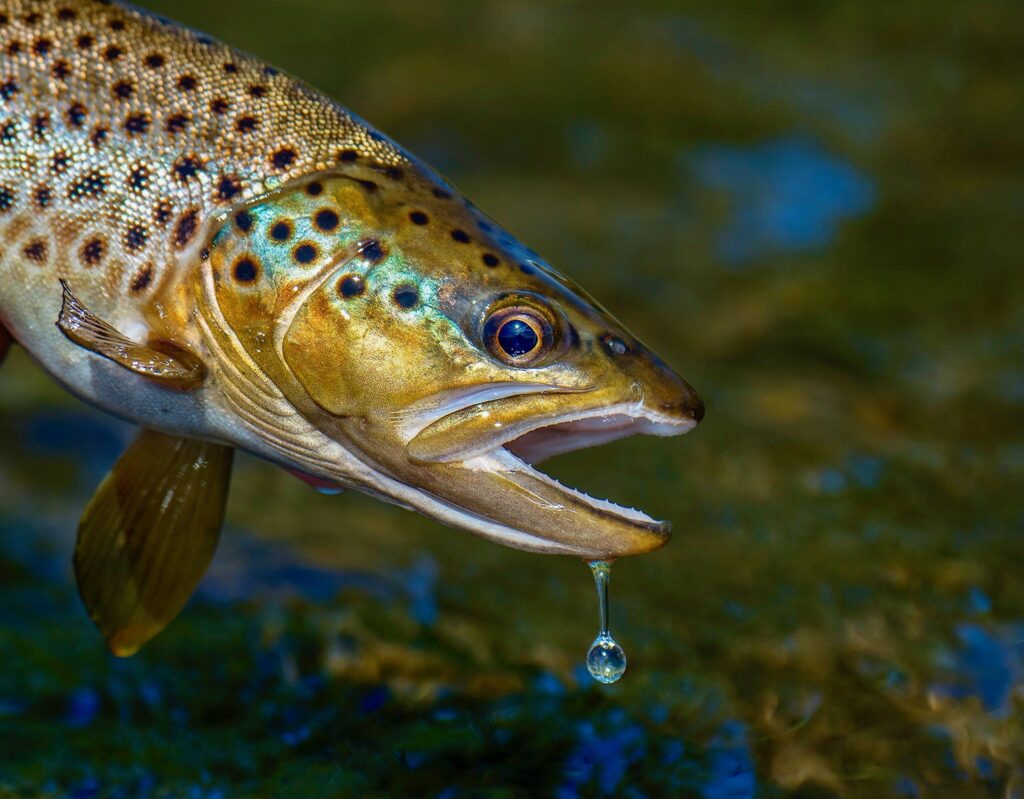
They grow fast. The tailwater environment — cold, stable temperatures and an endless supply of sow bugs, scuds, and aquatic insects — means these fish put on size quickly. A three-year-old Missouri River rainbow is bigger than a five-year-old fish from most freestone streams in the state. That’s what endless calories a day in a nutrient-rich tailwater does for a trout.
Kokanee Salmon
One of the more unique experiences on the Missouri River system happens every fall in the Land of Giants section below Hauser Dam. Kokanee salmon — landlocked sockeye — swim up from Holter Reservoir into the river system to spawn. It doesn’t happen on the lower Missouri below Holter Dam. It’s specific to this section and it’s something most fly anglers have never experienced.
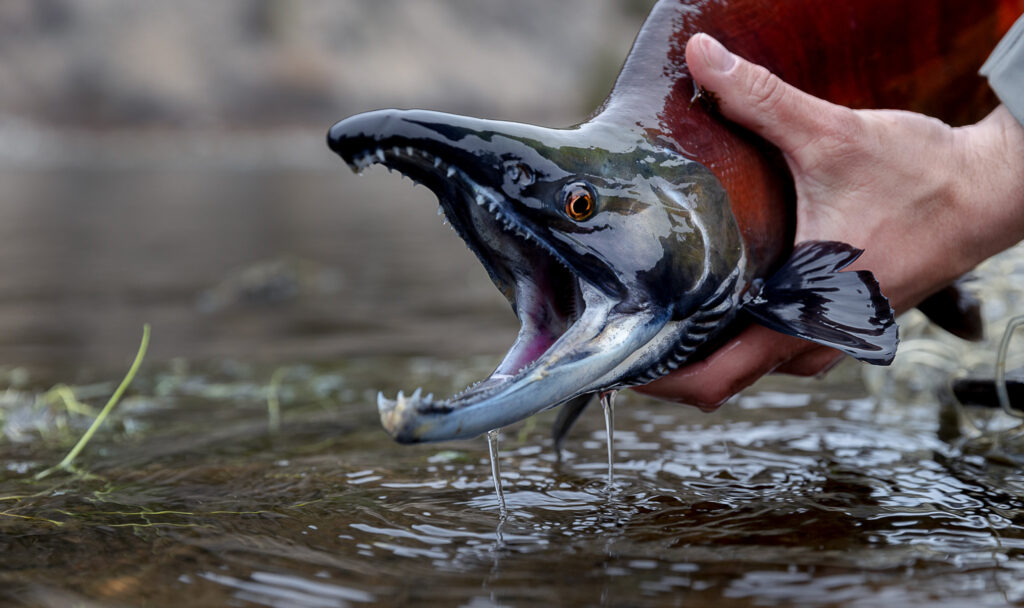
Kokanee are not aggressive during the spawn and can be tough to catch, vibrant red in color, and a completely different animal than the trout you’ve been fishing all day. If you’re planning a fall Land of Giants trip it’s worth knowing they’ll be in the mix. Not every trip produces them, but when it does it’s memorable.
Missouri River Trout by the Numbers
The Missouri holds a historic average of 4,000 to 5,000 trout per mile — all of them 10 inches or better. In 2024 FWP counted over 8,000 per mile in some sections. Of that total, roughly 500 fish per mile are browns. The rest are rainbows.
Average size on the lower Mo runs 16 to 18 inches for both species. On the Land of Giants that bumps up — rainbows push 18 to 20 inches and the browns get serious, with fish over 30 inches caught regularly in the right seasons.
Fish counts fluctuate year to year depending on water conditions and spawning success — but even in a down year this is one of the most densely populated wild trout rivers in the country.
Ready to chase these fish? Get in touch and let’s put together your Missouri River trip.