

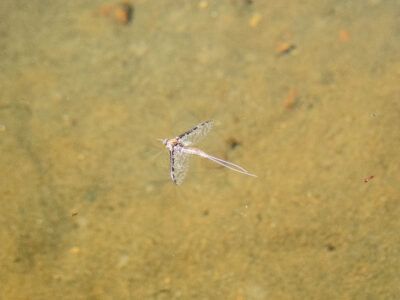
With all the flies that fill a guide’s box, one pattern stands above the rest on Montana’s Missouri River: the Rusty Spinner. This deceptively simple dry fly has earned its reputation through season after season of fooling some of the most selective rainbow and brown trout in the country.
The Rusty Spinner imitates the spent stage of a mayfly’s life cycle. After mayflies emerge, mate, and deposit their eggs, they fall to the water’s surface with wings flat and outstretched — exhausted and dying. This is the “spinner fall,” and it’s one of the most important feeding windows on the Missouri River. The reddish-brown color of the fly closely mimics the natural appearance of spent mayflies specific to this tailwater, making it one of the most reliable patterns in the box from late spring through fall.
Why It Works So Well on the Missouri
Fly fishing the Missouri River between Holter Dam and Craig, Montana puts you on one of the most productive tailwaters in the West, and mayflies are the reason. The river’s consistent flows and rich aquatic ecosystem produce prolific hatches — Pale Morning Duns, Blue Winged Olives, Tricos — that build toward dense spinner falls throughout the season. When thousands of spent mayflies are on the water at once, Missouri River trout lock in and feed with precision. A well-presented Rusty Spinner in the right size is often the only thing they’ll eat.
To know exactly when these hatches are happening and which bugs are on the water each month, check out our Missouri River Hatch Chart — it’s one of the most useful planning tools you can have before your trip.
The Missouri’s fish are educated. They see a lot of flies and they can afford to be picky. The Rusty Spinner’s low-riding profile sits flush in the film just like the real thing, and that subtle, realistic presentation is often what it takes to close the deal on a fish that’s been refusing everything else.
Tips for Fishing the Rusty Spinner on the Missouri
Watch before you cast. Spinner falls often look subtle — trout sipping quietly with small rings rather than splashing rises. Slow down, observe, and identify what’s happening before you tie anything on.
Size matters. Missouri River trout are detail-oriented. Match the size of the natural insects on the water. A size 18 PMD spinner and a size 22 Trico spinner are very different flies to a Missouri River rainbow.
Fish fine. Use a long leader — 12 to 15 feet — with 4x or 5x tippet. The Missouri’s flat, clear water punishes heavy tippet and sloppy presentations.
Drift, don’t drag. Even the slightest drag can kill your chances. Pick a lane, reach cast upstream, and let the fly dead-drift naturally into the fish’s feeding window.
Long Live the King
The Rusty Spinner isn’t flashy, and it doesn’t need to be. Season after season on the Missouri River, it outperforms more complicated patterns precisely because it’s an honest, accurate imitation of what the fish are already eating. If there’s one dry fly that belongs in every box before a Missouri River trip, this is it.
For a deeper dive into technique and gear, check out our full guide to Dry fly fishing the Missouri River post.

 Fishing the Blue Wing Olive Hatch
Leave a Reply