
Montana has more blue-ribbon trout water than most anglers will fish in a lifetime. From the technical tailwaters of the Missouri River near Craig to the wild freestone runs of the Clark Fork, Blackfoot, and Gallatin, each river has its own personality and its own fly box requirements.
That said, there’s a core group of patterns that travel well. Flies that work on the Madison work on the Yellowstone. Flies that produce on the Missouri’s technical flats will produce on spring creeks across the state. This guide to the best flies for fly fishing Montana covers the essential patterns that belong in every angler’s vest regardless of which river they’re headed to. We’ve organized them by type so you can build your box systematically and fish with confidence from opening day through the end of fall.
Best Dry Flies for Montana
Elk Hair Caddis – Sizes #12–18
The Elk Hair Caddis is one of the most versatile dry flies ever tied and an absolute Montana staple. Caddis hatches drive some of the best dry fly fishing of the season on rivers across the state, and this pattern covers everything from the Mother’s Day hatch in May through the long summer evening emergences. It floats high, lands quietly, and holds up to repeated strikes.
Fish it dead-drifted during the hatch or skittered across the surface to imitate egg-laying females. It also doubles as a dry fly in a hopper-dropper rig with a bead head nymph suspended below — one of the most effective setups on Montana rivers all summer long. Tan and olive are the most versatile colors; carry both.
Parachute Adams – Sizes #12–20
If you could only carry one dry fly in Montana, the Parachute Adams would be a reasonable choice. It imitates a broad range of mayflies convincingly enough to fool fish across the season — from Blue-Winged Olives in early spring to Pale Morning Duns in summer. The white post makes it easy to track on the water, which matters on long drifts in broken light.
As an attractor pattern in larger sizes (#12–14), a purple or royal variation works exceptionally well on freestone rivers where trout aren’t keyed to a specific hatch. On technical tailwaters like the Missouri, size down to #18–20 and match the specific mayfly on the water.
Chubby Chernobyl – Sizes #6–12
The Chubby Chernobyl is the workhorse of Montana’s big dry fly season. It covers stoneflies, grasshoppers, and general attractor fishing all in one foam package. During the salmon fly hatch on freestone rivers, a large orange Chubby is often the first fly in the water. By mid-summer on the Missouri, a tan or olive Chubby becomes the lead fly in a dry-dropper rig that catches fish all day.
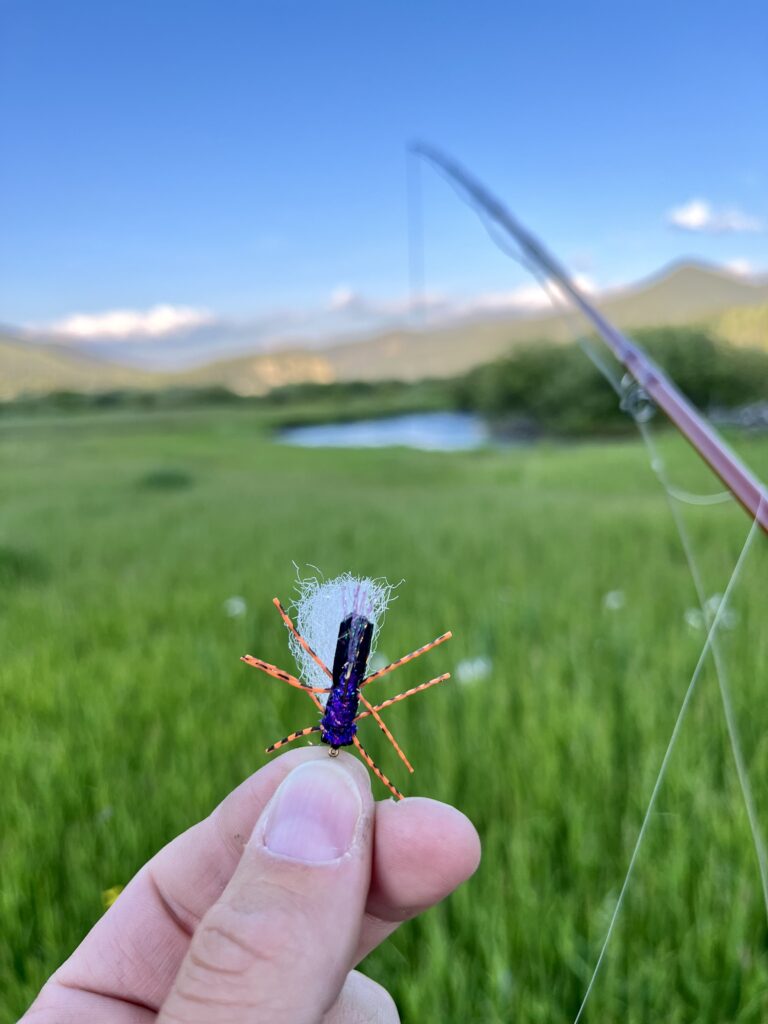
Foam construction means it floats indefinitely without re-applying floatant, and it’s buoyant enough to support a heavy nymph below. Critical when nymph fishing runs deep. Carry sizes #6–8 for salmon fly season, #10–12 for general summer use.
Foam Grasshopper — Sizes #8–14
From mid-July through September, grasshoppers are one of the most important food sources on Montana rivers. When the wind picks up in the afternoon and hoppers start blowing off the banks, trout that have been finicky all morning will move aggressively to eat them. A well-placed hopper cast tight to a grassy bank landing with a splat, is one of the most exciting moments in dry fly fishing.
Fish hopper patterns close to the banks where naturals fall in, and don’t be shy about giving the fly a twitch. Trout expect hoppers to struggle. The hopper-dropper rig, with a Pat’s Rubber Legs or bead head nymph trailing 18–24 inches below, is a go-to setup for guides across Montana all summer.
Best Nymphs for Montana
Pheasant Tail Nymph – Sizes #14–20
The Pheasant Tail is the most universally effective mayfly nymph ever tied, and Montana’s rivers are full of the mayflies it imitates. Slim, natural-looking, and effective from early spring through late fall, it belongs in every angler’s box in multiple sizes. The bead head version sinks faster and adds a little flash — ideal for deeper runs and indicator rigs. The unweighted version fishes beautifully in the film during emerger activity.
On the Missouri, a #16–18 Pheasant Tail is a year-round producer. On freestone rivers, size up slightly in early season when runoff brings bigger nymphs to the surface.
Hare’s Ear Nymph- Sizes #12–18
The Hare’s Ear is one of the great searching patterns in fly fishing. The rough, buggy dubbing suggests life even when there’s nothing specific hatching, and trout across Montana take it as a mayfly nymph, a caddis pupa, or simply something edible drifting along the bottom. A gold ribbing wrapped through the thorax adds flash and improves the segmented profile significantly.
This fly shines as a dropper off a larger dry fly, and it’s a consistent producer on Upper Holter Lake and the lower Land of Giants section during Callibaetis hatches. Fish it in natural tan and olive; carry a bead head version for deeper water.
Prince Nymph – Sizes #10–16
The Prince Nymph has been catching western trout for decades and shows no sign of slowing down. It doesn’t imitate anything specific, it suggests everything. The white biot wings, peacock body, and soft hackle legs create a profile that trout seem to find irresistible across a huge range of conditions. Dead-drift it under an indicator, swing it through the tail of a run, or fish it on a tight line. It works in all three scenarios.
On big freestone rivers like the Madison, Yellowstone, and Blackfoot, a #10–12 Prince covers stonefly nymph activity throughout the season. Size down to #14–16 on more technical water.
Pat’s Rubber Legs – Sizes #4–10
Pat’s Rubber Legs is the essential stonefly nymph for Montana’s freestone rivers. On the Gallatin, Madison, Blackfoot, Clark Fork, and Yellowstone, large stonefly nymphs are present year-round and trout eat them year-round. This pattern’s rubber legs create movement even in slow water, and the oversized profile triggers strikes from fish that aren’t interested in smaller presentations.
It’s especially critical during salmon fly season when stonefly nymphs are migrating toward the banks. Fish it deep, tight to structure, on a short tight-line rig or below a large indicator. Black and brown are the most effective colors; #6 is the most versatile size.
Zebra Midge – Sizes #18–20
On tailwater fisheries like the Missouri River, midges are the most important insect in the ecosystem. They hatch every day of the year, and during winter and early spring when nothing else is going on, a Zebra Midge fished deep below an indicator or short-leash nymphed along soft banks is often the most productive pattern on the water. Black with a silver bead is the classic, but red and olive variations are worth carrying. Don’t leave home without them if you’re fishing any of Montana’s tailwaters.
Best Streamers for Montana
Woolly Bugger Sizes #4–10
The Woolly Bugger is the most versatile streamer in fly fishing, and when it comes to the best flies for fly fishing Montana, it earns a spot in every box. It imitates leeches, sculpin, small baitfish, and large nymphs all at once, and trout across the state eat it in every season. Black is the most consistent color year-round; olive works well in warmer months; white produces on bright days in clear water.
Strip it aggressively to trigger reaction strikes in cold water, dead-drift it through deep slots, or swing it through the tail of a run. On freestone rivers in fall, a weighted Woolly Bugger swung through holding water is one of the best ways to find large brown trout that have pushed out of their summer lies.
Sparkle Minnow / Conehead Sculpin – Sizes #4–8
Montana’s rivers are full of sculpin and small baitfish, and the largest brown trout in the system spend much of the year eating them rather than insects. A weighted conehead sculpin or articulated minnow pattern fished tight to the bank, swung through undercut structure, or bounced along the bottom of deep runs is the fly choice when you’re specifically hunting big fish.
On rivers like the Missouri, the Land of Giants section near Cascade is famous for producing trophy browns on streamers — especially in fall and early winter when big fish are aggressive and actively feeding before the cold sets in.
Best Terrestrials for Montana
Foam Ant / Parachute Ant – Sizes #14–18
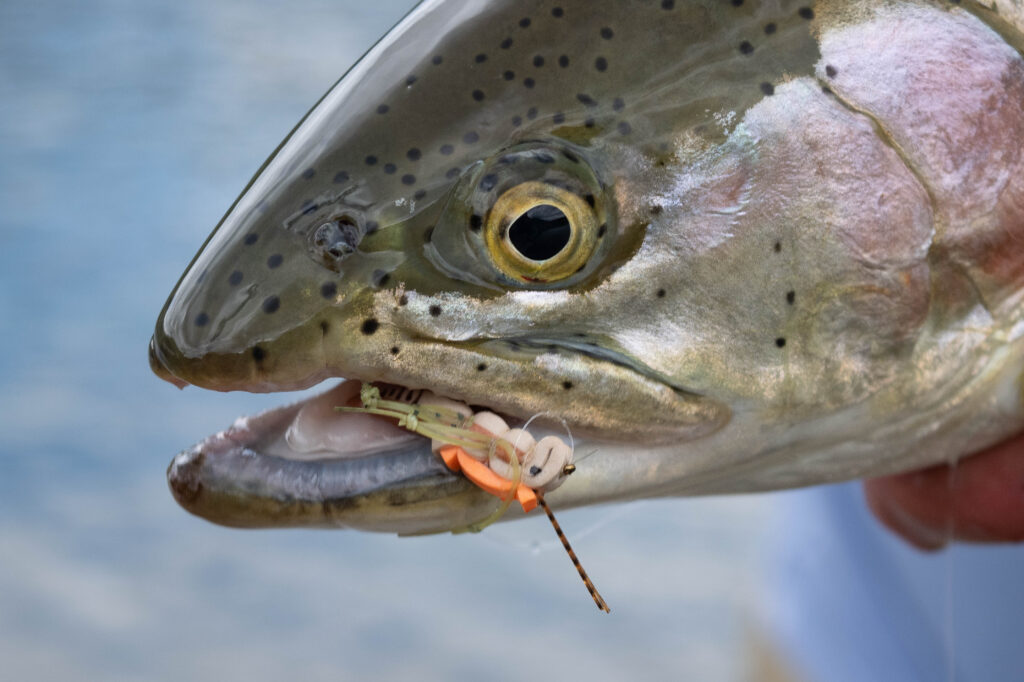
Ants are criminally underrated on Montana rivers. They fall into the water throughout the summer and early fall in huge numbers, and trout eat them quietly and consistently — often without making a visible rise. A black foam ant or parachute ant fished through foam lines and back eddies will pick off fish that haven’t moved for hours. Particularly effective on the Missouri during the summer months when the hatch activity slows in the middle of the day.
Spruce Moth – Sizes #10–14
The spruce moth hatch is one of Montana’s most underappreciated events. On rivers near forested drainages — the Gallatin, Blackfoot, and upper Clark Fork especially — spruce moths fall onto the water in late summer and trigger aggressive surface feeding. A tan or cream elk hair pattern fished close to the banks during this hatch can produce some of the best dry fly fishing of the season. If you’re fishing western Montana rivers in August and September, carry a handful.
Building Your Montana Fly Box
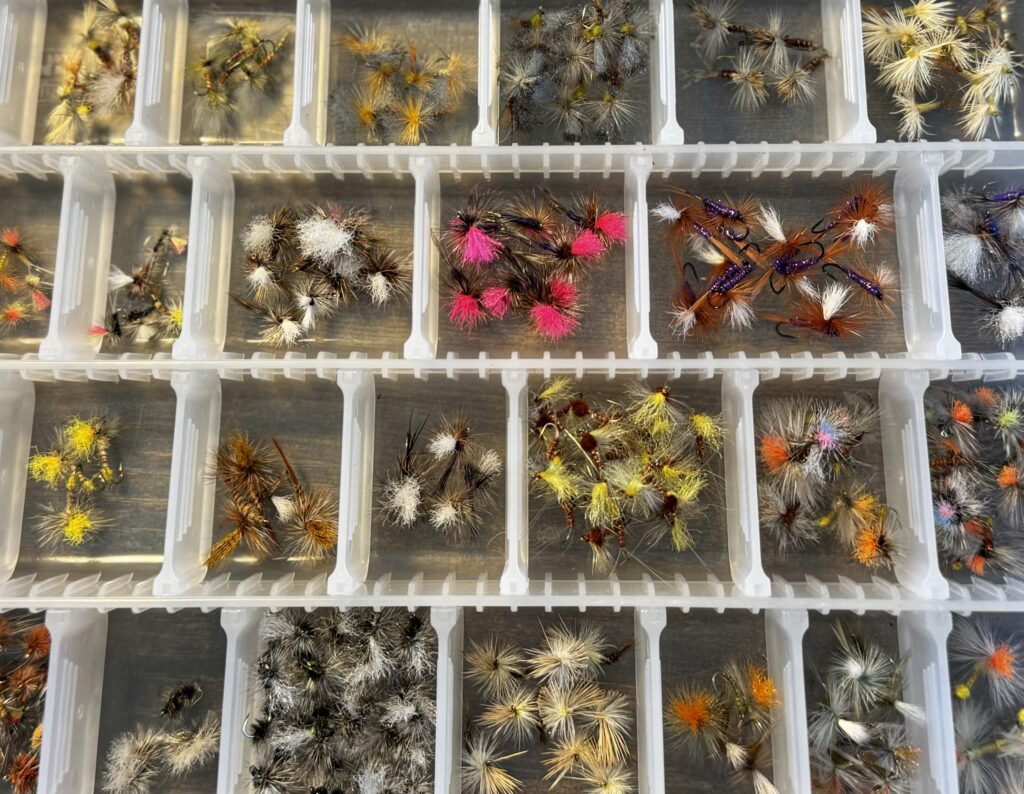
The patterns above cover the major seasons and situations you’ll encounter with the best flies for fly fishing Montana’s rivers. A few practical tips for building the box:
Tailor your selection to where you’re fishing. The Missouri’s technical tailwater demands smaller, more precise imitations — midges, Pheasant Tails, and PMD patterns in sizes #16–22. Freestone rivers like the Madison and Yellowstone reward bigger, bolder presentations — Pat’s Rubber Legs, Chubby Chernobyls, and large hoppers all play a bigger role.
Don’t neglect the dropper setup. One of the most effective systems on Montana rivers all season long is a large dry fly with a nymph trailing 18–24 inches below. It covers the surface and the column simultaneously and often outfishes either fly fished alone.
Check the Missouri River hatch chart before your trip to understand what’s coming off the water when you’re there — it’s the fastest way to prioritize what to buy and what to leave on the shelf.
If you’d rather skip the guesswork entirely and fish with someone who knows exactly what’s working, book a guided trip and let us handle the fly selection. That’s what we’re here for.
Frequently Asked Questions
What is the best all-around fly for Montana? If you could only fish one fly across all of Montana’s rivers, the Parachute Adams in sizes #14–18 would cover more situations than anything else. For nymphing, the Pheasant Tail is equally universal.
What are the best flies for fly fishing Montana freestone rivers? Pat’s Rubber Legs, Chubby Chernobyl, Elk Hair Caddis, Foam Grasshopper, and Woolly Bugger are all highly effective on freestone rivers like the Madison, Yellowstone, Gallatin, Blackfoot, and Clark Fork.
What flies work on the Missouri River specifically? The Missouri is a technical tailwater. Zebra Midges, Pheasant Tails, PMD patterns, caddis dries, and Parachute Adams in smaller sizes (#16–22) are the foundation. Check our Missouri River hatch chart for current timing.
What size flies should I use in Montana? It depends on the river and the time of year. Freestone rivers generally fish larger flies (#6–14) while tailwaters demand smaller patterns (#16–22). During specific hatches, matching the size of the natural is always more important than matching the color.
When is the best time to fly fish Montana? May through September is peak season, with the salmon fly hatch in late June, PMDs and caddis through July, and hoppers and terrestrials dominating August and September. Fall fishing for large brown trout on streamers is excellent through October.
Ready to Fish Montana?

 Fly Fishing the Yellowstone River
Leave a Reply